Library
Browse and search novels
2 novels found

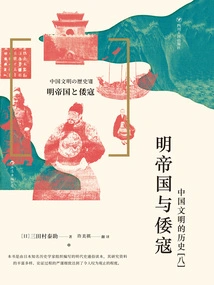
中国文明的历史(八):明帝国与倭寇
(japan) Taisuke Mitamura
This book is a popular history of the Ming Dynasty compiled by a well-known Japanese historian organization. It uses a magnificent view of Asian history to tell the entire historical process of the Ming Dynasty from the peasant uprising at the end of the Yuan Dynasty, the establishment of the Ming Dynasty, to the demise of the Ming Dynasty. It focuses on the theme of Japanese pirates, focusing on elucidating the relationship between the Ming Dynasty and Japan, the origin and development of Japanese pirates, and Toyotomi Hideyoshi's Greater East Asia concept.

宦官:侧近政治的构造
(japan) Taisuke Mitamura
What is a eunuch? Who created eunuchs? Where does the eunuch's power come from? Why do lowly eunuchs often become the key force in Chinese history? How can eunuchs, who seem to have always been notorious, survive for thousands of years? Behind these problems, the history of eunuchs may be related to some deep factors in Chinese history and society. The famous Japanese Sinologist Taisuke Mitamura proposed the concept of "closer politics" to observe eunuchs in Chinese history based on an extensive collection of historical examples. He selected three eunuch groups, Han, Tang, and Ming, as the active eras, and discussed the activity characteristics and historical fate of eunuchs in each era within the framework of monarch power and side politics. He believed that eunuchs were "the shadow of the emperor" and "the agent of the monarch." The eunuch system and the monarchy system were mutually exclusive, or an indispensable part of monarchy. After the book was published, it was widely praised and won Japan's "Mainichi Publishing Culture Award". It has been best-selling for half a century and has become a classic for understanding Chinese history.