Library
Browse and search books
4 novels found
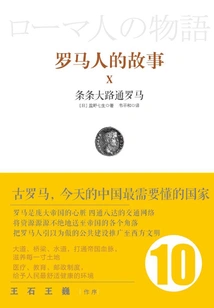
罗马人的故事10:条条大路通罗马
(japan) Shiono Nansei
It is a must-read for business elites and politicians in Japan and South Korea, and a must-read for education! Wang Shi and Wang Wei wrote the preface, and Wu Xiaobo, Qin Shuo, and Wu Bofan jointly recommended it. All roads lead to Rome, the roads of the Roman Empire started from Rome, and nothing in the world reflects the genius of the Romans more than infrastructure. As the heart of a huge empire, Rome followed an extensive transportation network. Hardware avenues, bridges, and waterways opened up the bloodline of the empire and nourished every inch of land; software medical care, education, and postal systems gave the people the most comfortable and healthy environment and the power of knowledge. The uncanny craftsmanship and down-to-earth national spirit create a great milestone in civilization.
It is a must-read for business elites and politicians in Japan and South Korea, and a must-read for education! Wang Shi and Wang Wei wrote the preface, and Wu Xiaobo, Qin Shuo, and Wu Bofan jointly recommended it. All roads lead to Rome, the roads of the Roman Empire started from Rome, and nothing in the world reflects the genius of the Romans more than infrastructure. As the heart of a huge empire, Rome followed an extensive transportation network. Hardware avenues, bridges, and waterways opened up the bloodline of the empire and nourished every inch of land; software medical care, education, and postal systems gave the people the most comfortable and healthy environment and the power of knowledge. The uncanny craftsmanship and down-to-earth national spirit create a great milestone in civilization.
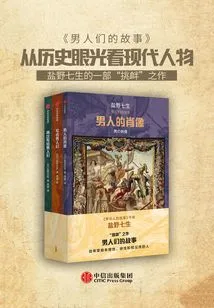
Stories of Men (set of 3 Volumes)
Literature男人们的故事(套装3册)
(japan) Shiono Nansei
"The Story of the Romans" is a book about history and evaluation of men today by the author Shiono Nanao. "Stories of Men" can be said to be a complete record of men from ancient to modern times, writing stories from Pericles, Alexander the Great, Caesar, Napoleon, to film director Fellini, athlete Lewis, and even ordinary restaurant waiters. Shiono looks at modern characters from a historical perspective, and interprets men in history from a modern perspective. "Portrait of a Man" talks about Alexander the Great, Julius Caesar, Oda Nobunaga, Medici, Napoleon, Churchill and other most admired men in history. Tired of hearing praises about them, let's take a look at Shiono Nansei, who has a clear distinction between love and hate, and how he evaluates them sharply. "For Men" will open your eyes. In the book, Shiono talks about many hot topics today: men's fashionable dressing methods, inequality between men and women, the importance of food and appearance, the definition of successful and sexy men, etc. Shiono even used his own personal experience to give advice to straight men who don't know what gifts to give to women – "What this salesman gave was a simple silver bracelet and a scarf that was pure silk but nothing special. But he understands etiquette and knows how to give gifts. Directly. It was really boring when I handed it to the other person. He put the bracelet on me with his own hands and gently put the scarf around my neck. The coolness when the bracelet was on my wrist, the soft feeling when the scarf was wrapped around my neck, and the sensual pleasure like a spring breeze, still feel like yesterday after 20 years.
"The Story of the Romans" is a book about history and evaluation of men today by the author Shiono Nanao. "Stories of Men" can be said to be a complete record of men from ancient to modern times, writing stories from Pericles, Alexander the Great, Caesar, Napoleon, to film director Fellini, athlete Lewis, and even ordinary restaurant waiters. Shiono looks at modern characters from a historical perspective, and interprets men in history from a modern perspective. "Portrait of a Man" talks about Alexander the Great, Julius Caesar, Oda Nobunaga, Medici, Napoleon, Churchill and other most admired men in history. Tired of hearing praises about them, let's take a look at Shiono Nansei, who has a clear distinction between love and hate, and how he evaluates them sharply. "For Men" will open your eyes. In the book, Shiono talks about many hot topics today: men's fashionable dressing methods, inequality between men and women, the importance of food and appearance, the definition of successful and sexy men, etc. Shiono even used his own personal experience to give advice to straight men who don't know what gifts to give to women – "What this salesman gave was a simple silver bracelet and a scarf that was pure silk but nothing special. But he understands etiquette and knows how to give gifts. Directly. It was really boring when I handed it to the other person. He put the bracelet on me with his own hands and gently put the scarf around my neck. The coolness when the bracelet was on my wrist, the soft feeling when the scarf was wrapped around my neck, and the sensual pleasure like a spring breeze, still feel like yesterday after 20 years.
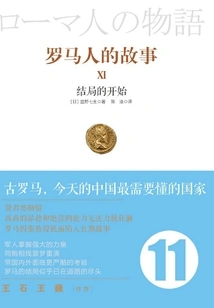
罗马人的故事11:结局的开始
(japan) Shiono Nansei
It is a must-read for business elites and politicians in Japan and South Korea, and a must-read for education! Wang Shi and Wang Wei wrote the preface, and Wu Xiaobo, Qin Shuo, and Wu Bofan jointly recommended it. Farewell to the century of virtuous kings, has the aura of the empire faded? Marcus Aurelius, the Roman philosopher emperor, realized Plato's ideals. However, noble moral character and excellent abilities cannot turn the tide. Aurelius burned his heart and soul to extend the life of the empire. Although he won praise from later generations, the afterglow of the setting sun gradually enveloped the empire. The long-term military tension has given the soldiers great power, and military leaders who strictly guard the borders have become contenders for the throne. The fighting between compatriots seems to be a repeat of the late first century. The empire was bound to face harsher tests both inside and outside it, and Rome seemed to be at the end of the road.
It is a must-read for business elites and politicians in Japan and South Korea, and a must-read for education! Wang Shi and Wang Wei wrote the preface, and Wu Xiaobo, Qin Shuo, and Wu Bofan jointly recommended it. Farewell to the century of virtuous kings, has the aura of the empire faded? Marcus Aurelius, the Roman philosopher emperor, realized Plato's ideals. However, noble moral character and excellent abilities cannot turn the tide. Aurelius burned his heart and soul to extend the life of the empire. Although he won praise from later generations, the afterglow of the setting sun gradually enveloped the empire. The long-term military tension has given the soldiers great power, and military leaders who strictly guard the borders have become contenders for the throne. The fighting between compatriots seems to be a repeat of the late first century. The empire was bound to face harsher tests both inside and outside it, and Rome seemed to be at the end of the road.
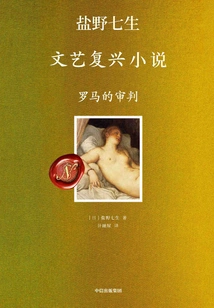
Roman Judgment
General Fiction罗马的审判
(japan) Shiono Nansei
There is Greek specialty wine exuding the scent of pine, roasted guinea chicken served on a silver plate decorated with the coat of arms of the Medici family, Pecorino goat cheese, and snacks made of almond flour wrapped in cream that can be swallowed in one bite. There are also studios of artists in the center of Florence in the 16th century, major banks all over Europe, and a dazzling array of shops filled with foreign goods. You will pass by plainly dressed civilian women cooking Egyptian bean soup in a cauldron, and you will have a heated discussion about Machiavelli's prophecies with aristocrats wearing fine satin and lace. What's even more incredible is that you can also go to watch and "interrupt" Michelangelo's own creation of the Sistine Chapel's ceiling frescoes! Not only that, the love drama between a handsome man and an elegant geisha, the power struggle between ambitious young people, and the complex relationships between the great powers at that time are all presented in this "Renaissance Novel" series. Marco came to Rome, Olympia's hometown, and met Michelangelo, the painter of the Sistine Chapel ceiling. He was influenced by art. Under the leadership of Enzo, he immersed himself in searching for ancient ruins every day and felt the charm of ancient Rome. After learning about Olympia's past, he decided to cross social barriers and marry her. However, when Venice lost a naval battle with Turkey, Marco's sense of national honor forced him to return to Venice. The fate of the two people once again encountered the impact of the historical wave.
There is Greek specialty wine exuding the scent of pine, roasted guinea chicken served on a silver plate decorated with the coat of arms of the Medici family, Pecorino goat cheese, and snacks made of almond flour wrapped in cream that can be swallowed in one bite. There are also studios of artists in the center of Florence in the 16th century, major banks all over Europe, and a dazzling array of shops filled with foreign goods. You will pass by plainly dressed civilian women cooking Egyptian bean soup in a cauldron, and you will have a heated discussion about Machiavelli's prophecies with aristocrats wearing fine satin and lace. What's even more incredible is that you can also go to watch and "interrupt" Michelangelo's own creation of the Sistine Chapel's ceiling frescoes! Not only that, the love drama between a handsome man and an elegant geisha, the power struggle between ambitious young people, and the complex relationships between the great powers at that time are all presented in this "Renaissance Novel" series. Marco came to Rome, Olympia's hometown, and met Michelangelo, the painter of the Sistine Chapel ceiling. He was influenced by art. Under the leadership of Enzo, he immersed himself in searching for ancient ruins every day and felt the charm of ancient Rome. After learning about Olympia's past, he decided to cross social barriers and marry her. However, when Venice lost a naval battle with Turkey, Marco's sense of national honor forced him to return to Venice. The fate of the two people once again encountered the impact of the historical wave.