Library
Browse and search novels
4 novels found

The New History of Taige (complete Collection)
General Fiction新史太阁记(全集)
(japan) Shima Ryotaro
Ryotaro Shima, Japan's most popular historical novelist, tells the legendary life of Toyotomi Hideyoshi, the most outstanding man in the Warring States Period. Toyotomi Hideyoshi, who was born in a humble family and suffered many hardships as a young man, was appreciated by Oda Nobunaga and made great achievements in the troubled times of the Warring States Period. Mogu's "One Night Castle", Kanazaki's retreat battle, Tottori Castle due to food shortages, and Takamatsu Castle's water attack. China counterattacked to quell Mitsuhide's rebellion; it fought a decisive battle on Mount Saigare, wiping out the Katsu family's forces; it appeased Maori and showed gentleness to Ieyasu, finally ending the Warring States period, unifying Japan, and accomplishing its great cause of dominating the world.

Tokugawa Ieyasu: the Overlord's House
General Fiction德川家康:霸王之家
(japan) Shima Ryotaro
He was born in the closed and backward Sanhe area. He was separated from his biological mother when he was three years old and was taken as a hostage in another country when he was six years old. The bitter and miserable life of a hostage has tempered his incomparable tenacity and alert and steady personality. When he became an adult, he succeeded him as the city lord, but there were many wealthy families in his territory and powerful enemies outside his territory. In order to survive in troubled times, he did not hesitate to act as cannon fodder for Imagawa Yoshimoto, and then led the Mikawa samurai to follow Oda Nobunaga in various expeditions. He had just won his own living space, but he had to kill his wife and son in order to win Nobunaga's trust. After Nobunaga dreamed of destroying Honnōji Temple, Hideyoshi took control of the situation first. On the one hand, he bowed to the knees of generations of noble samurai and bowed at the feet of Hideyoshi, who was born in a humble family; on the other hand, he devoted himself to expanding his sphere of influence in local areas. When the opportunity came, he struck decisively and completely destroyed potential enemies. His greatest characteristic is summed up as "patience". Perhaps in order to be able to compete with many geniuses, this ordinary person with neither extraordinary creativity nor outstanding talent can only use "patience" to temper and improve himself. But patience is to go a further distance. He, uncreative, devoted himself to imitating the strengths of others, combining Takeda's art of war, Nobunaga's decisiveness, and Hideyoshi's strategies. He conquered Nobunaga and Hideyoshi with his integrity and loyalty, but when Hideyoshi died, he suddenly became a cunning leader. It can be seen that his integrity and loyalty are by no means sincere, but just a way of doing things to cover up his sharp edge. Ryotaro Shiba uses smooth and sharp writing to describe the tortuous life of Tokugawa Ieyasu, the founder of a dynasty, from hostage to king, allowing readers to deeply understand Tokugawa Ieyasu's brilliance, forbearance and cunning as a strategist.

A Collection of Shiba Ryotaro's Classic Historical Works (a Set of 9 Volumes in Total)
General Fiction司马辽太郎经典历史作品集(套装共9册)
(japan) Shima Ryotaro
Ryotaro Shiba, a master of historical novels, has been the most popular writer in Japan for nine consecutive years. He is a master of historical novels beloved by Japanese national writer Masato Sakai and others. His memorial hall was designed by the international architect Tadao Ando himself. The sense of on-site restoration is like the memories of those who witnessed it, witnessing the tragic end of Japan's Warring States Period and the final fight to the death of the heroes at the end of the road. The collection of Ryotaro Shiba's works (9 volumes in total) includes the author's most representative works, including "The Shinshi Taikaku Chronicles (Part 1 and 2)", "The Story of the National Robbers: Saito Michizan (First and Second Editions)", "The Story of the National Robbers: Oda Nobunaga (First and Second Editions)", and "The Castle (Part 1, 2 and 2)".

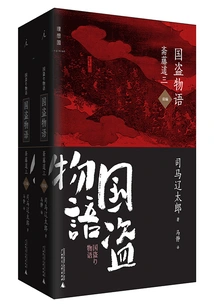
国盗物语:织田信长(套装共两册)
(japan) Shima Ryotaro
Preface: After conquering Mino, Saito Douzan fell under the blade of his adopted son Yoshiryu's rebellion. He placed his dream of unifying the world on his son-in-law Oda Nobunaga. Nobunaga, who suddenly attacked Imagawa Yoshimoto at the beginning of the Yuan Dynasty, took the opportunity to avenge his father-in-law Dozo, and got the help of his wise ministers Kinoshita Tokichiro and Takenaka Hanbei to outwit Mino. Nobunaga, who aspired to go to the capital, then prepared to dominate the Kyoto area... This article describes Nobunaga's innovative tactics and employment skills, and shows his strong and angry personality through his adviser Akechi Mitsuhide. Post-editing: Oda Nobunaga, who launched his attack at lightning speed, was able to go to the capital, support Ashikaga Yoshiaki as general, and gradually implement the ideal of spreading military force all over the world. However, an insurmountable gap developed between Nobunaga and his important minister Akechi Mitsuhide. The extroverted passion and the delicate feeling of introverted depression - both of them were favored by Saito Dozo, and they admired each other's talents but were ultimately incompatible. As the final chapter, this chapter depicts two strong personalities with a modern sense and reveals the truth of the "Honnoji Incident".