Library
Browse and search books
11 novels found
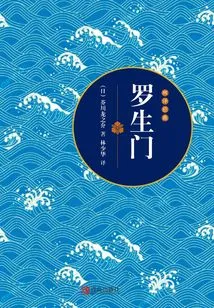
Rashomon
General Fiction罗生门
(japan) Ryunosuke Akutagawa
Akutagawa Ryunosuke's classic masterpiece, translated by the famous translator Lin Shaohua. The book contains twelve short stories by Ryunosuke Akutagawa and a caprice "Warnings of the Dwarf". "Rashomon" pushes people to the limit of life and death choices with a suffocating and tense layout, conveying for the first time the author's perspective and understanding of human nature, as well as his helplessness and despair; "Nose" condenses all kinds of subtle and complex psychological activities into three or four thousand words, which is his entry into the palace of literature; "In the Jungle" uses different testimonies or confessions of several people on the same case to show the subtleties of human nature in a confusing and confusing way. This story was adapted to the screen by Akira Kurosawa under the title "Rashomon" and won the Academy Award for Foreign Language Film.
Akutagawa Ryunosuke's classic masterpiece, translated by the famous translator Lin Shaohua. The book contains twelve short stories by Ryunosuke Akutagawa and a caprice "Warnings of the Dwarf". "Rashomon" pushes people to the limit of life and death choices with a suffocating and tense layout, conveying for the first time the author's perspective and understanding of human nature, as well as his helplessness and despair; "Nose" condenses all kinds of subtle and complex psychological activities into three or four thousand words, which is his entry into the palace of literature; "In the Jungle" uses different testimonies or confessions of several people on the same case to show the subtleties of human nature in a confusing and confusing way. This story was adapted to the screen by Akira Kurosawa under the title "Rashomon" and won the Academy Award for Foreign Language Film.
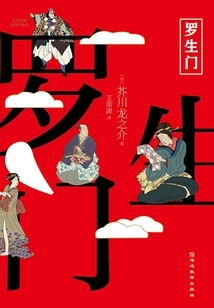
Rashomon
Literature罗生门
(japan) Ryunosuke Akutagawa
As night fell, a general who had been kicked out by his master came to Rashomon. Born in troubled times, Rashomon has not been repaired all year round. Now it has become a terrifying place where corpses are piled up and crows gather. The family will be homeless. If he wants to survive, he has to do whatever it takes, but he can't make up his mind. When he was hesitating, he found an old woman pulling out the dead man's hair inside the door. The family general was horrified, and after careful questioning, he learned that the old woman was forced by life and had no choice but to do this. The general was greatly touched after hearing this, and finally made up his mind, snatched the old woman's clothes and fled from Rashomon without trace. The novel is exquisitely conceived and has a tortuous plot. It describes the choices made by people at the bottom of society when faced with life and death. It conveys the author's thoughts on human nature and is thought-provoking. This book collects the most representative short stories and short stories by Akutagawa Ryunosuke. Although some works have been published for nearly a hundred years, they still have tenacious vitality and have been repeatedly sought after and praised by the world. In the 1950s, "Rashomon" was put on the movie screen by Akira Kurosawa. The film of the same name won the "Oscar Award for Best Foreign Language Film" and received great praise around the world.
As night fell, a general who had been kicked out by his master came to Rashomon. Born in troubled times, Rashomon has not been repaired all year round. Now it has become a terrifying place where corpses are piled up and crows gather. The family will be homeless. If he wants to survive, he has to do whatever it takes, but he can't make up his mind. When he was hesitating, he found an old woman pulling out the dead man's hair inside the door. The family general was horrified, and after careful questioning, he learned that the old woman was forced by life and had no choice but to do this. The general was greatly touched after hearing this, and finally made up his mind, snatched the old woman's clothes and fled from Rashomon without trace. The novel is exquisitely conceived and has a tortuous plot. It describes the choices made by people at the bottom of society when faced with life and death. It conveys the author's thoughts on human nature and is thought-provoking. This book collects the most representative short stories and short stories by Akutagawa Ryunosuke. Although some works have been published for nearly a hundred years, they still have tenacious vitality and have been repeatedly sought after and praised by the world. In the 1950s, "Rashomon" was put on the movie screen by Akira Kurosawa. The film of the same name won the "Oscar Award for Best Foreign Language Film" and received great praise around the world.
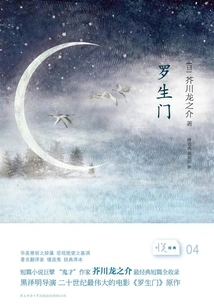
Rashomon
General Fiction罗生门
(japan) Ryunosuke Akutagawa
During a war, a servant who was kicked out of his home by his master was wondering whether to starve to death or become a robber. He happened to come to a place called Rashomon where dead bodies were piled everywhere. He plucked up the courage to go in and find some belongings. As a result, a ragged old woman was found pulling hair from the body of a young woman... "Rashomon" uses a weather-proof layout to push people to the limit of life and death choices, thus showing the inescapability of "evil" and conveying the author's understanding of people and his helplessness, pessimism and despair about life.
During a war, a servant who was kicked out of his home by his master was wondering whether to starve to death or become a robber. He happened to come to a place called Rashomon where dead bodies were piled everywhere. He plucked up the courage to go in and find some belongings. As a result, a ragged old woman was found pulling hair from the body of a young woman... "Rashomon" uses a weather-proof layout to push people to the limit of life and death choices, thus showing the inescapability of "evil" and conveying the author's understanding of people and his helplessness, pessimism and despair about life.
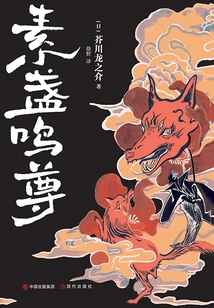
Suzhan Mingzun
General Fiction素盏鸣尊
(japan) Ryunosuke Akutagawa
The six stories based on ancient Japanese stories vividly show the ancient Japan written by the great writer Akutagawa Ryunosuke. When everyone only cheered for the moment when the hero ascended the altar, he offered blessings for every step of the hero's twilight years. He brought the dead bones sleeping in the dust of history back to life, and brought saints and villains to the stage at the same time. While laughing and cursing, his writing style was more compassionate than any preacher.
The six stories based on ancient Japanese stories vividly show the ancient Japan written by the great writer Akutagawa Ryunosuke. When everyone only cheered for the moment when the hero ascended the altar, he offered blessings for every step of the hero's twilight years. He brought the dead bones sleeping in the dust of history back to life, and brought saints and villains to the stage at the same time. While laughing and cursing, his writing style was more compassionate than any preacher.
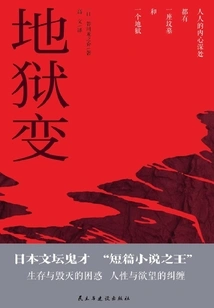
Hell Changes
General Fiction地狱变
(japan) Ryunosuke Akutagawa
This book contains a total of 11 short stories by Ryunosuke Akutagawa. The works represented by "Hell Transformation" express the life tragedy of a lonely person "art for art's sake". To achieve the ideal of "art supremacy" through self-destruction, behind this heavy price is the painful roar of a lonely soul. Starting from a unique narrative perspective and narrative structure, the author sternly observed the Japanese social psychology of that time where "others are hell". This abnormal individual psychology gradually evolved into a habitual social psychology, which is thought-provoking.
This book contains a total of 11 short stories by Ryunosuke Akutagawa. The works represented by "Hell Transformation" express the life tragedy of a lonely person "art for art's sake". To achieve the ideal of "art supremacy" through self-destruction, behind this heavy price is the painful roar of a lonely soul. Starting from a unique narrative perspective and narrative structure, the author sternly observed the Japanese social psychology of that time where "others are hell". This abnormal individual psychology gradually evolved into a habitual social psychology, which is thought-provoking.
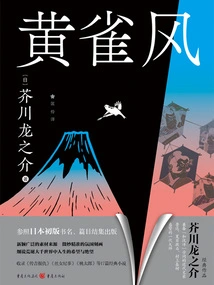
Oriole Wind
General Fiction黄雀风
(japan) Ryunosuke Akutagawa
This is the seventh volume in the series and contains seventeen short stories. Akutagawa Ryunosuke is recognized as the "king of short stories". Most of his stories are based on historical allusions, using ancient metaphors to describe the present, and criticizing current problems. The seventeen stories included in this book illustrate the author's philosophy of life that transcends the vulgar and ugly reality, with far-reaching intentions. The writing style of the novel is elegant and pretty, with skillful skills, full of interest and unique style, showing a certain artistic conception and aesthetic interest. The material is novel and the plot is novel. With cold writing and concise and powerful language, it reveals the selfishness and weakness hidden deep in human nature. It is worth reading.
This is the seventh volume in the series and contains seventeen short stories. Akutagawa Ryunosuke is recognized as the "king of short stories". Most of his stories are based on historical allusions, using ancient metaphors to describe the present, and criticizing current problems. The seventeen stories included in this book illustrate the author's philosophy of life that transcends the vulgar and ugly reality, with far-reaching intentions. The writing style of the novel is elegant and pretty, with skillful skills, full of interest and unique style, showing a certain artistic conception and aesthetic interest. The material is novel and the plot is novel. With cold writing and concise and powerful language, it reveals the selfishness and weakness hidden deep in human nature. It is worth reading.
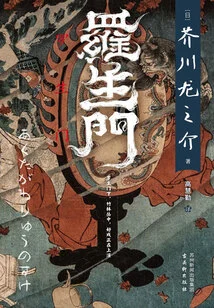
Rashomon
General Fiction罗生门
(japan) Ryunosuke Akutagawa
"Rashomon" collects many short stories by Japanese writer Ryunosuke Akutagawa, represented by "Rashomon" and "In the Bamboo Forest". It uses a weather-proof layout to push people to the limit of life and death choices, showing the inescapability of "evil" and conveying Akutagawa's feelings. Ryunosuke's helplessness and despair towards human nature also shows that in a one-dimensional society, people living in it have become one-dimensional people. Such people have lost their freedom and creativity and no longer imagine or pursue another life different from real life.
"Rashomon" collects many short stories by Japanese writer Ryunosuke Akutagawa, represented by "Rashomon" and "In the Bamboo Forest". It uses a weather-proof layout to push people to the limit of life and death choices, showing the inescapability of "evil" and conveying Akutagawa's feelings. Ryunosuke's helplessness and despair towards human nature also shows that in a one-dimensional society, people living in it have become one-dimensional people. Such people have lost their freedom and creativity and no longer imagine or pursue another life different from real life.
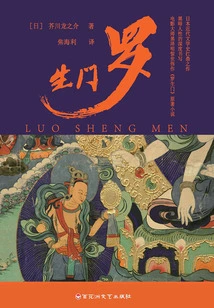
Rashomon
General Fiction罗生门
(japan) Ryunosuke Akutagawa
This book contains a total of 31 short stories and short stories by Akutagawa Ryunosuke. "Rashomon" uses a weather-proof layout to push people to the limit of life and death choices, thereby showing the inescapability of "evil" and conveying the author's understanding of human nature. The plot of this work is simple and the language is concise. Although it is a historical novel based on old themes, it is endowed with a certain meaning and describes the people at the bottom of society who are tenaciously struggling to survive. It is not a historical novel in a simple sense. We cannot judge whether everyone's choice is absolutely right or wrong. We should treat the choice of survival and human nature rationally. Everyone may have been to Rashomon. The whole book depicts the contradictory relationship between survival and human nature, and each novel is thought-provoking.
This book contains a total of 31 short stories and short stories by Akutagawa Ryunosuke. "Rashomon" uses a weather-proof layout to push people to the limit of life and death choices, thereby showing the inescapability of "evil" and conveying the author's understanding of human nature. The plot of this work is simple and the language is concise. Although it is a historical novel based on old themes, it is endowed with a certain meaning and describes the people at the bottom of society who are tenaciously struggling to survive. It is not a historical novel in a simple sense. We cannot judge whether everyone's choice is absolutely right or wrong. We should treat the choice of survival and human nature rationally. Everyone may have been to Rashomon. The whole book depicts the contradictory relationship between survival and human nature, and each novel is thought-provoking.
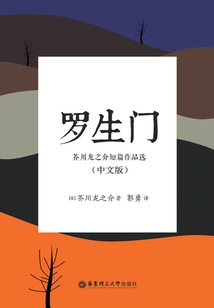
罗生门:芥川龙之介短篇作品选(中文版)
(japan) Ryunosuke Akutagawa
At dusk, under the decadent Rashomon clan, a fired servant was waiting for the rain to stop. Just when he was confused about his future and struggling between surviving by stealing and starving to death morally, he saw an old woman on the tower pulling out the long hair of an unknown corpse, preparing to braid it into a wig and sell it for money. The horrifying scene before him prompted him to make a decision... When pushed to the edge of life and death, is the choice of the domestic servant a matter of course? Are the good parts of human nature always vulnerable? Is the end of the choice between good and evil only despair with no way out? A selection of 11 short stories by Ryunosuke Akutagawa, including masterpieces such as "Rashomon", "The Nose" and "Yam Porridge".
At dusk, under the decadent Rashomon clan, a fired servant was waiting for the rain to stop. Just when he was confused about his future and struggling between surviving by stealing and starving to death morally, he saw an old woman on the tower pulling out the long hair of an unknown corpse, preparing to braid it into a wig and sell it for money. The horrifying scene before him prompted him to make a decision... When pushed to the edge of life and death, is the choice of the domestic servant a matter of course? Are the good parts of human nature always vulnerable? Is the end of the choice between good and evil only despair with no way out? A selection of 11 short stories by Ryunosuke Akutagawa, including masterpieces such as "Rashomon", "The Nose" and "Yam Porridge".
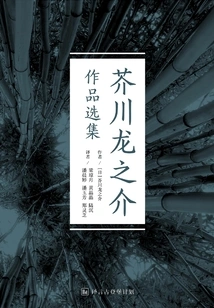
芥川龙之介作品选集·译言古登堡计划
(japan) Ryunosuke Akutagawa
"Selected Works of Akutagawa Ryunosuke" collects "non-representative works" of Akutagawa Ryunosuke, including essays, reviews, short stories and novellas from different periods, including several posthumous manuscripts. The author is known for his emphasis on grammatical skills and concise writing. The novels included in this book are mainly historical and religious themes, with clear layers, gorgeous presentation, and coincident with Western stream-of-consciousness elements. Some are quite bizarre, and some are adapted from Chinese classical novels. The prose is emotionally delicate, melancholic but not dull, and the commentary articles are lively and full of ridicule. As the saying goes, "Written is like its person". Different types of works from different periods can allow readers to understand the author from many aspects.
"Selected Works of Akutagawa Ryunosuke" collects "non-representative works" of Akutagawa Ryunosuke, including essays, reviews, short stories and novellas from different periods, including several posthumous manuscripts. The author is known for his emphasis on grammatical skills and concise writing. The novels included in this book are mainly historical and religious themes, with clear layers, gorgeous presentation, and coincident with Western stream-of-consciousness elements. Some are quite bizarre, and some are adapted from Chinese classical novels. The prose is emotionally delicate, melancholic but not dull, and the commentary articles are lively and full of ridicule. As the saying goes, "Written is like its person". Different types of works from different periods can allow readers to understand the author from many aspects.
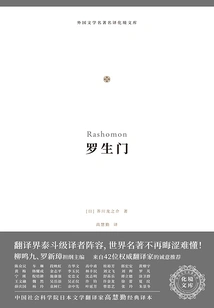
Rashomon (kajing Bunko)
General Fiction罗生门(化境文库)
(japan) Ryunosuke Akutagawa
This book contains a total of twenty-one short stories and short stories by Akutagawa. The plots of his novels are exquisite and novel, with twists and turns. His representative work "Rashomon" presents the limits of human choice, "The Nose" shows the subtle changes of human nature, and "In the Bamboo Forest" allows readers to have a complex perspective on human nature. In addition to these works that brought him worldwide fame, this book also contains rare domestic works such as "The Lord of the Sixth Palace" and "Xiaobai", which are touching and have a profound aftertaste.
This book contains a total of twenty-one short stories and short stories by Akutagawa. The plots of his novels are exquisite and novel, with twists and turns. His representative work "Rashomon" presents the limits of human choice, "The Nose" shows the subtle changes of human nature, and "In the Bamboo Forest" allows readers to have a complex perspective on human nature. In addition to these works that brought him worldwide fame, this book also contains rare domestic works such as "The Lord of the Sixth Palace" and "Xiaobai", which are touching and have a profound aftertaste.