Library
Browse and search books
4 novels found
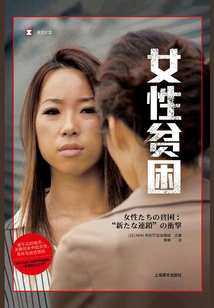
Female Poverty (Translated Documentary)
Literature女性贫困(译文纪实)
(japan) Nhk Special Program Recording Team
Domestic violence, debt, oppression, neglect... Beneath the exquisite make-up is a miserable and collapsed world. Following "The Working Poor", we are once again pursuing "women's invisible poverty". What is eating away at the future of young women? The NHK recording team has released first-hand information to delve deeply into hot issues such as women, youth and the persistence of poverty in Japanese society. What about undergraduate graduation? --"Actually, scholarships are also liabilities. If I were told that I owe more than 6 million yuan, what would a man think?" (24-Year-old Xiao Ai) Even getting married can't get rid of poverty. --"Single mothers in their twenties have weak interpersonal relationships and are easily closed in their own space. Some were abused by their husbands and ran away penniless without even having time to change their clothes." (Staff from the "Tokyo Love Single-Parent Families Support Center") Porn shops have become "life-saving straws." -- "This kind of job pays well. If my daughter wants to do this in the future, I think I will agree." (Twenty-one-year-old Xiaohua) This book is a collection of programs such as "Can't See Tomorrow - The Increasing Poverty of Young Women" produced by the special reporting team of Japan's NHK TV station. It focuses on the increasingly serious social problems in Japan such as female and child poverty, single-mother and child families, and the intergenerational transmission of poverty. It is worth understanding, reflecting on, and taking lessons from for Chinese readers.
Domestic violence, debt, oppression, neglect... Beneath the exquisite make-up is a miserable and collapsed world. Following "The Working Poor", we are once again pursuing "women's invisible poverty". What is eating away at the future of young women? The NHK recording team has released first-hand information to delve deeply into hot issues such as women, youth and the persistence of poverty in Japanese society. What about undergraduate graduation? --"Actually, scholarships are also liabilities. If I were told that I owe more than 6 million yuan, what would a man think?" (24-Year-old Xiao Ai) Even getting married can't get rid of poverty. --"Single mothers in their twenties have weak interpersonal relationships and are easily closed in their own space. Some were abused by their husbands and ran away penniless without even having time to change their clothes." (Staff from the "Tokyo Love Single-Parent Families Support Center") Porn shops have become "life-saving straws." -- "This kind of job pays well. If my daughter wants to do this in the future, I think I will agree." (Twenty-one-year-old Xiaohua) This book is a collection of programs such as "Can't See Tomorrow - The Increasing Poverty of Young Women" produced by the special reporting team of Japan's NHK TV station. It focuses on the increasingly serious social problems in Japan such as female and child poverty, single-mother and child families, and the intergenerational transmission of poverty. It is worth understanding, reflecting on, and taking lessons from for Chinese readers.
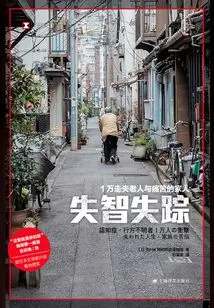
失智失踪:1万走失老人与痛苦的家人(译文纪实)
(japan) Nhk Special Program Recording Team
"This is your home" - I need to tell her over and over again\u002Fhim. Winner of the Japan Literature Promotion Society Kikuchi Kan Prize, this book collects a large number of very representative cases, reflecting the problems of family care for the elderly with dementia and the shortcomings of insufficient social support in Japanese society, and giving a glimpse of the serious problems faced by the aging society. "Why can't I find it? Every day is like hell." "I dare not relax even for 5 minutes... Even so, he is still lost." Today in Japan, there are more than 8 million confirmed and potential dementia patients, and 1 in every 4 elderly people has the disease. Dementia has become a national disease. Many people are afraid to tell those around them that a family member has dementia due to fear of prejudice. These patients are at high risk of getting lost, missing, or even dying in familiar neighborhoods. The NHK special program recording team interviewed more than 400 families to face the plight of people with dementia and their families, and explore the road to "building a city where people with dementia can live with peace of mind."
"This is your home" - I need to tell her over and over again\u002Fhim. Winner of the Japan Literature Promotion Society Kikuchi Kan Prize, this book collects a large number of very representative cases, reflecting the problems of family care for the elderly with dementia and the shortcomings of insufficient social support in Japanese society, and giving a glimpse of the serious problems faced by the aging society. "Why can't I find it? Every day is like hell." "I dare not relax even for 5 minutes... Even so, he is still lost." Today in Japan, there are more than 8 million confirmed and potential dementia patients, and 1 in every 4 elderly people has the disease. Dementia has become a national disease. Many people are afraid to tell those around them that a family member has dementia due to fear of prejudice. These patients are at high risk of getting lost, missing, or even dying in familiar neighborhoods. The NHK special program recording team interviewed more than 400 families to face the plight of people with dementia and their families, and explore the road to "building a city where people with dementia can live with peace of mind."
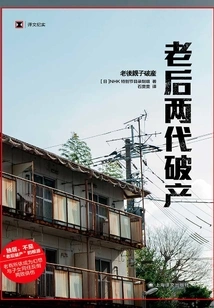
老后两代破产(译文纪实)
(japan) Nhk Special Program Recording Team
Living alone is not the root cause of "bankruptcy in old age". Having someone to depend on in old age becomes a fantasy, and living with children is a lose-lose situation. The NHK special program recording team adheres to the consistent concepts of "experimentation", "exclusivity" and striving to "move" the public, boldly innovates the method of collecting materials, dares to challenge various topics, and is committed to digging out the truth of the incident. Over the past decades, thousands of TV programs have been produced and broadcast, and a large number of books reflecting the real problems of Japanese society have been released, such as "The Unconnected Society", "Female Poverty", and "Bankruptcy after Old Age". The "bankruptcy of the second generation" caused by "living with family" is becoming increasingly common. If you leave your job to take care of your elderly parents, you will lose your income; if you return to the workplace and work to make money, your parents will live alone during the day. Children who have returned to their parents in middle age are in a dilemma. Today, when the traditional way of family existence is being shaken, can we avoid "both generations suffer losses"?
Living alone is not the root cause of "bankruptcy in old age". Having someone to depend on in old age becomes a fantasy, and living with children is a lose-lose situation. The NHK special program recording team adheres to the consistent concepts of "experimentation", "exclusivity" and striving to "move" the public, boldly innovates the method of collecting materials, dares to challenge various topics, and is committed to digging out the truth of the incident. Over the past decades, thousands of TV programs have been produced and broadcast, and a large number of books reflecting the real problems of Japanese society have been released, such as "The Unconnected Society", "Female Poverty", and "Bankruptcy after Old Age". The "bankruptcy of the second generation" caused by "living with family" is becoming increasingly common. If you leave your job to take care of your elderly parents, you will lose your income; if you return to the workplace and work to make money, your parents will live alone during the day. Children who have returned to their parents in middle age are in a dilemma. Today, when the traditional way of family existence is being shaken, can we avoid "both generations suffer losses"?
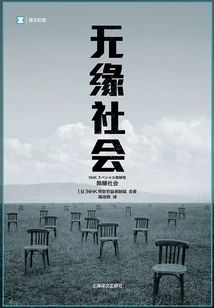
Missing Society
Literature无缘社会
(japan) Nhk Special Program Recording Team
"Missing Society" is a collection of works by senior interview reporters from NHK TV station. The topic of the interview is "Modern Man's Lonely Old Age and Death." Old age, few children, unemployment, unmarriedness, and urbanization have created a group of people who have no contact with them when they are alive. They have no jobs, spouses, children, and do not return to their hometowns. When they die, no one knows, and even if they are discovered, no one knows. When people claim their corpses, they can't even know their names. Their lives are summarized in a few-word notice for claiming their remains. They are called "the undead", and the society they live in will gradually change from a "destined society" to an "undestined society." Every year, 32,000 people in Japan embark on the path of "unfortunate death". Among them, there are working-class people who have not been late for leave in the company for 20 years but turned into homeless people on the street overnight; there are travelers who travel alone; there are women who have never been married; there are empty-nesters who have children far away from them; there are young people who have only made friends on the Internet. Social connections are becoming increasingly fragile. Even people in their 30s and 40s in ordinary families feel the cloud of dying alone. The special program recording team of Japan's NHK TV station combined the reporters' real interview notes into this book after the program became popular. It presents to everyone the tragic death scenes of those who are not paid attention to in today's society, and calls for social vigilance and reflection. Because after the interview, when the identities of these unintentional deceased gradually became clear, we discovered that they were almost all the same people as us.
"Missing Society" is a collection of works by senior interview reporters from NHK TV station. The topic of the interview is "Modern Man's Lonely Old Age and Death." Old age, few children, unemployment, unmarriedness, and urbanization have created a group of people who have no contact with them when they are alive. They have no jobs, spouses, children, and do not return to their hometowns. When they die, no one knows, and even if they are discovered, no one knows. When people claim their corpses, they can't even know their names. Their lives are summarized in a few-word notice for claiming their remains. They are called "the undead", and the society they live in will gradually change from a "destined society" to an "undestined society." Every year, 32,000 people in Japan embark on the path of "unfortunate death". Among them, there are working-class people who have not been late for leave in the company for 20 years but turned into homeless people on the street overnight; there are travelers who travel alone; there are women who have never been married; there are empty-nesters who have children far away from them; there are young people who have only made friends on the Internet. Social connections are becoming increasingly fragile. Even people in their 30s and 40s in ordinary families feel the cloud of dying alone. The special program recording team of Japan's NHK TV station combined the reporters' real interview notes into this book after the program became popular. It presents to everyone the tragic death scenes of those who are not paid attention to in today's society, and calls for social vigilance and reflection. Because after the interview, when the identities of these unintentional deceased gradually became clear, we discovered that they were almost all the same people as us.