Library
Browse and search books
1 novel found
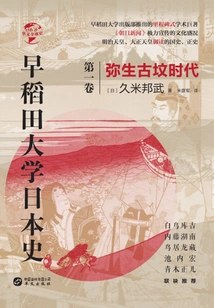
早稻田大学日本史(卷一):弥生古坟时代
(japan) Kumi Kunitake
"History of Japan at Waseda University (Volume 1): The Yayoi Tumulus Period" writes from Japan's prehistoric society to the reign of Emperor Tenmu. The author, Professor Kuni Takeshi, quoted extensively from Kojiki, Nihonshoki, Chinese historical books, relevant materials collected by Shosoin, and research results of Japanese and European historians during the Meiji period. He placed Japanese history in the history of ancient Asia centered on Chinese history, and elaborated on the ancient territory of Japan, the origins of Japanese religion and politics, Izanozun and Izanagi. Zang Ranzun follows the contents of the Eight Continents, the ancient times of Korea and Fujian, the Hotaru Rebellion, the unification of Japan, the Takachiho Palace era, the Great Japanese Empire, the era of the missing history of the Great Japanese Empire, the Second Empire of the Japanese Empire, the establishment of national counties, the expansion of the Japanese Kingdom, the strife of the aristocrats in the capital, the changes of Nona Tsukushi, the reform of the state religion and government, the restoration of Emperor Tenji, Emperor Tenmu's rectification of the imperial court, etc. Professor Kuni Takeshi investigated the origin and development of the Japanese from the perspective of ethnography and anthropology, and interpreted the "Kojiki" and "Nihon Shoki" from an empirical perspective, and unearthed many historical facts that are thought-provoking.
"History of Japan at Waseda University (Volume 1): The Yayoi Tumulus Period" writes from Japan's prehistoric society to the reign of Emperor Tenmu. The author, Professor Kuni Takeshi, quoted extensively from Kojiki, Nihonshoki, Chinese historical books, relevant materials collected by Shosoin, and research results of Japanese and European historians during the Meiji period. He placed Japanese history in the history of ancient Asia centered on Chinese history, and elaborated on the ancient territory of Japan, the origins of Japanese religion and politics, Izanozun and Izanagi. Zang Ranzun follows the contents of the Eight Continents, the ancient times of Korea and Fujian, the Hotaru Rebellion, the unification of Japan, the Takachiho Palace era, the Great Japanese Empire, the era of the missing history of the Great Japanese Empire, the Second Empire of the Japanese Empire, the establishment of national counties, the expansion of the Japanese Kingdom, the strife of the aristocrats in the capital, the changes of Nona Tsukushi, the reform of the state religion and government, the restoration of Emperor Tenji, Emperor Tenmu's rectification of the imperial court, etc. Professor Kuni Takeshi investigated the origin and development of the Japanese from the perspective of ethnography and anthropology, and interpreted the "Kojiki" and "Nihon Shoki" from an empirical perspective, and unearthed many historical facts that are thought-provoking.