Library
Browse and search books
10 novels found
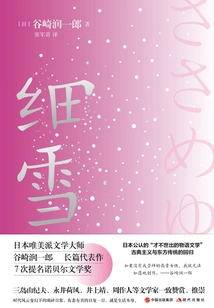
Fine Snow
General Fiction细雪
(japan) Junichiro Tanizaki
"Snow" is a novel written by Junichiro Tanizaki, a representative writer of Japanese aesthetic literature. The whole book consists of three volumes: the first, middle and second volumes, totaling more than 400,000 words. "Snow" is a genre novel describing the love story between Japanese middle-class young men and women. The story follows Yukiko, the third of the four daughters of the declining wealthy Makioka family in Osaka, on a blind date as the main line, and the marriage and love experiences of the other three sisters as auxiliary lines. The time span is five years from 1936 to 1941. In the end, Yukiko's blind date was successful, and everything ended before the Pearl Harbor incident. This book describes a Japanese story against the background of war, but the war only appears in a few words in the background. The book slowly unfolds the customs, social events, foreign exchanges, etc. Of Japanese society at that time, presenting a detailed picture of the life of the middle and upper classes in the Kansai region of Japan. It is known as a superior genre novel with a classic style. "Snow" is not only the pinnacle of Tanizaki Junichiro's personal works, but also an outstanding representative work of the entire Showa literary world. The work has been translated into various languages and has been adapted into many films and TV shows.
"Snow" is a novel written by Junichiro Tanizaki, a representative writer of Japanese aesthetic literature. The whole book consists of three volumes: the first, middle and second volumes, totaling more than 400,000 words. "Snow" is a genre novel describing the love story between Japanese middle-class young men and women. The story follows Yukiko, the third of the four daughters of the declining wealthy Makioka family in Osaka, on a blind date as the main line, and the marriage and love experiences of the other three sisters as auxiliary lines. The time span is five years from 1936 to 1941. In the end, Yukiko's blind date was successful, and everything ended before the Pearl Harbor incident. This book describes a Japanese story against the background of war, but the war only appears in a few words in the background. The book slowly unfolds the customs, social events, foreign exchanges, etc. Of Japanese society at that time, presenting a detailed picture of the life of the middle and upper classes in the Kansai region of Japan. It is known as a superior genre novel with a classic style. "Snow" is not only the pinnacle of Tanizaki Junichiro's personal works, but also an outstanding representative work of the entire Showa literary world. The work has been translated into various languages and has been adapted into many films and TV shows.
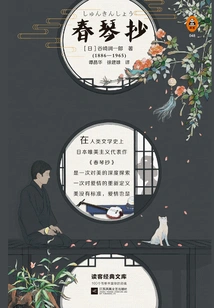
Chunqin Copy
General Fiction春琴抄
(japan) Junichiro Tanizaki
Junichiro Tanizaki's most famous masterpiece, hardcover collection, brand new translation, finely edited and revised. He always writes love that drives everyone crazy! To understand the rare Japanese aesthetics, start with "Shunchinchao"! A masterpiece of oriental aestheticism praised by masters such as Nagai Kafeng and Mishima Yukio! Kawabata Yasunari: It is difficult to describe such a masterpiece, except sighing. In the history of human literature, "Shuncho", a representative work of Japanese aestheticism, is a subversion of traditional aesthetic tastes, an in-depth exploration of beauty, and a profound exploration of Japanese love. Beauty has no standards, and neither does love. This book contains three important works by Tanizaki Junichiro in his later period: "Shuncho", "Tales of the Blind Blind", and "The Moon and the Kyogen Master". It is also the epitome of the return of "Tanizaki aesthetics" to Japanese classical and oriental traditions. A new translation by two well-known translators, allowing you to experience the aesthetic world of Junichiro Tanizaki up close.
Junichiro Tanizaki's most famous masterpiece, hardcover collection, brand new translation, finely edited and revised. He always writes love that drives everyone crazy! To understand the rare Japanese aesthetics, start with "Shunchinchao"! A masterpiece of oriental aestheticism praised by masters such as Nagai Kafeng and Mishima Yukio! Kawabata Yasunari: It is difficult to describe such a masterpiece, except sighing. In the history of human literature, "Shuncho", a representative work of Japanese aestheticism, is a subversion of traditional aesthetic tastes, an in-depth exploration of beauty, and a profound exploration of Japanese love. Beauty has no standards, and neither does love. This book contains three important works by Tanizaki Junichiro in his later period: "Shuncho", "Tales of the Blind Blind", and "The Moon and the Kyogen Master". It is also the epitome of the return of "Tanizaki aesthetics" to Japanese classical and oriental traditions. A new translation by two well-known translators, allowing you to experience the aesthetic world of Junichiro Tanizaki up close.
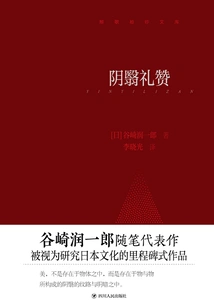
Praise to the Shadows
Literature阴翳礼赞
(japan) Junichiro Tanizaki
Junichiro Tanizaki is a famous modern Japanese writer. He entered the Taisho literary world as an aesthetic writer. He has been active in the Taisho and Showa eras and has been nominated for the Nobel Prize for Literature many times. He has written numerous works with rich themes and far-reaching influence. He is honored as "Literary Master" and "Otani Saki" in Japan. His famous works such as "Fine Snow", "Chun Qin Chao" and "Idiot's Love" are also familiar to Chinese readers. Mr. Tanizaki is not only a master of novels, but also a master of essays. "In Praise of Shadows" is his most famous essay collection. This collection of essays was published by Chuo Koron Publishing House in 1975 and includes six essays published by Mr. Tanizaki from 1930 to 1948.
Junichiro Tanizaki is a famous modern Japanese writer. He entered the Taisho literary world as an aesthetic writer. He has been active in the Taisho and Showa eras and has been nominated for the Nobel Prize for Literature many times. He has written numerous works with rich themes and far-reaching influence. He is honored as "Literary Master" and "Otani Saki" in Japan. His famous works such as "Fine Snow", "Chun Qin Chao" and "Idiot's Love" are also familiar to Chinese readers. Mr. Tanizaki is not only a master of novels, but also a master of essays. "In Praise of Shadows" is his most famous essay collection. This collection of essays was published by Chuo Koron Publishing House in 1975 and includes six essays published by Mr. Tanizaki from 1930 to 1948.
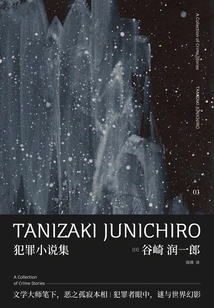
谷崎润一郎作品集:犯罪小说集(新民说)
(japan) Junichiro Tanizaki
"Crime Novels" collects seven of Tanizaki Junichiro's most representative crime stories. Compared with reasoning analysis and criminal techniques, Junichiro Tanizaki is more interested in the mysteries and secrets in daily life. In the process of searching for answers, unexpected criminal motives are revealed. His monologue-style criminal murmurs, indulgent sensory sketches, and gaze and thinking on the abyss of human nature and the dark side of the world all demonstrate Tanizaki's boundary exploration and style development in the field of crime literature, and he is praised as the origin of Japanese crime literature. This anthology includes "I", a piece that Junichiro Tanizaki is proud of, and "On the Road", which Edogawa Ranpo, the father of Japanese mystery novels, said "marked an era for detective novels". The works in this book also make many breakthroughs in novel techniques. There are confessional narratives with split personalities, dialogue novels in the form of scripts, and multiple structures that cleverly nest real life and opera stories. They are all of great pioneering significance in the history of literature.
"Crime Novels" collects seven of Tanizaki Junichiro's most representative crime stories. Compared with reasoning analysis and criminal techniques, Junichiro Tanizaki is more interested in the mysteries and secrets in daily life. In the process of searching for answers, unexpected criminal motives are revealed. His monologue-style criminal murmurs, indulgent sensory sketches, and gaze and thinking on the abyss of human nature and the dark side of the world all demonstrate Tanizaki's boundary exploration and style development in the field of crime literature, and he is praised as the origin of Japanese crime literature. This anthology includes "I", a piece that Junichiro Tanizaki is proud of, and "On the Road", which Edogawa Ranpo, the father of Japanese mystery novels, said "marked an era for detective novels". The works in this book also make many breakthroughs in novel techniques. There are confessional narratives with split personalities, dialogue novels in the form of scripts, and multiple structures that cleverly nest real life and opera stories. They are all of great pioneering significance in the history of literature.
Chunqin Copy
General Fiction春琴抄
(japan) Junichiro Tanizaki
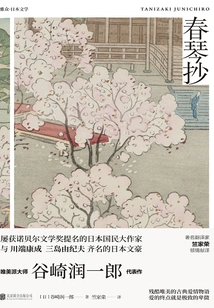
Chunqin, the daughter of a medicine merchant, is beautiful, elegant in manners, and excellent in piano skills. However, she has a changeable temperament due to her blindness since childhood. The person who takes care of Haruko's daily life is Sasuke, a young man four years older than her. Because he admires Haruko, he becomes his teacher and practices the shamisen diligently. After that, Haruko treated Sasuke increasingly harshly, almost to the point of being abusive, but Sasuke obeyed without complaint or regret. Haruko's surly character eventually caused her face to be disfigured due to being hated by others, and Sasuke did not hesitate to destroy his eyes in order to show his steadfastness... Cruel and beautiful, "Harukotso" is the pinnacle of Tanizaki Junichiro's creative career and a peak of Japanese aesthetics.
Chunqin, the daughter of a medicine merchant, is beautiful, elegant in manners, and excellent in piano skills. However, she has a changeable temperament due to her blindness since childhood. The person who takes care of Haruko's daily life is Sasuke, a young man four years older than her. Because he admires Haruko, he becomes his teacher and practices the shamisen diligently. After that, Haruko treated Sasuke increasingly harshly, almost to the point of being abusive, but Sasuke obeyed without complaint or regret. Haruko's surly character eventually caused her face to be disfigured due to being hated by others, and Sasuke did not hesitate to destroy his eyes in order to show his steadfastness... Cruel and beautiful, "Harukotso" is the pinnacle of Tanizaki Junichiro's creative career and a peak of Japanese aesthetics.
Blind Story
General Fiction盲目物语
(japan) Junichiro Tanizaki
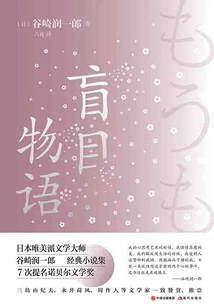
"Blind Story" is a classic collection of novels by Japanese writer Junichiro Tanizaki. This book includes the novels "Blind Story" and "Yoshino Kudzu" and the short story "Tattoo". "Tattoo" is an early work by Junichiro Tanizaki. It tells the story of Seiyoshi, a well-known tattoo artist who searched for a woman with supreme grace to create the pinnacle work of his life, and finally got what he wanted. The work was favored by Kafeng Nagai, the originator of Japanese aestheticism, for its novel conception and smooth writing. Since then, Junichiro Tanizaki has appeared on the stage of Japanese literature and began to be recognized by the literary circles at that time. "Yoshino Kudzu" tells the story of a protagonist, Tsumura, who came to his hometown of Yoshino in memory of his late mother, and what he and his companion "I" saw and heard in Yoshino. While telling various historical legends, the author expresses the euphemistic heart of the protagonist who turns from missing his mother who died young to pursuing a girl from a mountain village.
"Blind Story" is a classic collection of novels by Japanese writer Junichiro Tanizaki. This book includes the novels "Blind Story" and "Yoshino Kudzu" and the short story "Tattoo". "Tattoo" is an early work by Junichiro Tanizaki. It tells the story of Seiyoshi, a well-known tattoo artist who searched for a woman with supreme grace to create the pinnacle work of his life, and finally got what he wanted. The work was favored by Kafeng Nagai, the originator of Japanese aestheticism, for its novel conception and smooth writing. Since then, Junichiro Tanizaki has appeared on the stage of Japanese literature and began to be recognized by the literary circles at that time. "Yoshino Kudzu" tells the story of a protagonist, Tsumura, who came to his hometown of Yoshino in memory of his late mother, and what he and his companion "I" saw and heard in Yoshino. While telling various historical legends, the author expresses the euphemistic heart of the protagonist who turns from missing his mother who died young to pursuing a girl from a mountain village.
Fine Snow
General Fiction细雪
(japan) Junichiro Tanizaki
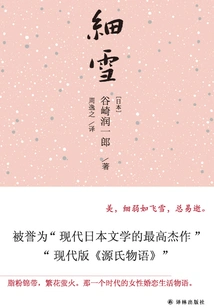
The stage of "Snow" is set in Osaka at the turn of the 1930s and 1940s. In the past, the famous Makoka family had four beautiful sisters: the eldest sister Tsuruko was conservative, the second sister Sachiko was harmonious, the third sister Yukiko was introverted, and the younger sister Taeko was unrestrained. The story takes the older and unmarried Yukiko's blind date experiences as the main line, and the ups and downs of Taeko's frustration in studying and her emotional entanglements with rich boys and ordinary youths. On one side is catching fireflies, admiring flowers, singing and dancing, on the other side there are floods, epidemics, hurricanes and wars. The work as a whole is like a slow-flowing river, with light and dark intertwining and dark eddies swirling; in it, the subtleties of human nature are fully revealed, and all kinds of flavors are present.
The stage of "Snow" is set in Osaka at the turn of the 1930s and 1940s. In the past, the famous Makoka family had four beautiful sisters: the eldest sister Tsuruko was conservative, the second sister Sachiko was harmonious, the third sister Yukiko was introverted, and the younger sister Taeko was unrestrained. The story takes the older and unmarried Yukiko's blind date experiences as the main line, and the ups and downs of Taeko's frustration in studying and her emotional entanglements with rich boys and ordinary youths. On one side is catching fireflies, admiring flowers, singing and dancing, on the other side there are floods, epidemics, hurricanes and wars. The work as a whole is like a slow-flowing river, with light and dark intertwining and dark eddies swirling; in it, the subtleties of human nature are fully revealed, and all kinds of flavors are present.
Crazy Love
General Fiction痴人之爱
(japan) Junichiro Tanizaki
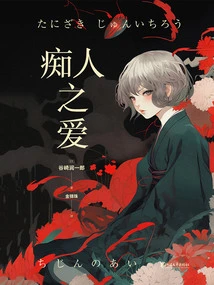
"Crazy Love" is the representative work of Junichiro Tanizaki, a master of Japanese aesthetic literature. It tells the story of a working-class man, Rangji, who falls in love with Naomi, a bartender, and wants to train her to become a noble woman and become his wife. However, Naomi is vain, conceited, romantic, and hides a conspiracy under her innocent appearance. Rangji is seduced by her charming appearance and meets her needs at all costs. In the end, she is trained to become her servant and is at her mercy. The novel shows the exchange of love between men and women during training and counter-training, and is an immortal literary classic that has long been hailed as the "Oriental version of "Lolita"". This book also includes Junichiro Tanizaki's short story "Tattoo" with a demonic style and the novella "Shuncho" that pursues ultimate aestheticism.
"Crazy Love" is the representative work of Junichiro Tanizaki, a master of Japanese aesthetic literature. It tells the story of a working-class man, Rangji, who falls in love with Naomi, a bartender, and wants to train her to become a noble woman and become his wife. However, Naomi is vain, conceited, romantic, and hides a conspiracy under her innocent appearance. Rangji is seduced by her charming appearance and meets her needs at all costs. In the end, she is trained to become her servant and is at her mercy. The novel shows the exchange of love between men and women during training and counter-training, and is an immortal literary classic that has long been hailed as the "Oriental version of "Lolita"". This book also includes Junichiro Tanizaki's short story "Tattoo" with a demonic style and the novella "Shuncho" that pursues ultimate aestheticism.
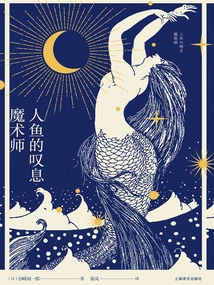
Mermaid's Lament·magician
General Fiction人鱼的叹息·魔术师
(japan) Junichiro Tanizaki
Junichiro Tanizaki's short story collection "Mermaid's Sigh: The Magician" consists of two stories: "The Mermaid's Sigh" and "The Magician". The story of "The Sigh of the Mermaid" takes place in Nanjing during the Qing Dynasty. The noble son Meng Shitao had a wealthy family, many wives and concubines, and lived an extremely luxurious life. However, he was tired of his current life and fell in love with the mermaid brought by the Westerners. For the sake of the mermaid, he decided to leave everything behind... "The Magician" tells the story of a man and woman who were originally in love, in order to prove their loyalty to each other, they went to watch the magician's performance, but were impressed by the magician's beauty and turned into a half-man and half-goat god. The two novels are Tanizaki Junichiro's early works. By vigorously describing the beauty of the senses, readers can feel Tanizaki's literary concept of beauty.
Junichiro Tanizaki's short story collection "Mermaid's Sigh: The Magician" consists of two stories: "The Mermaid's Sigh" and "The Magician". The story of "The Sigh of the Mermaid" takes place in Nanjing during the Qing Dynasty. The noble son Meng Shitao had a wealthy family, many wives and concubines, and lived an extremely luxurious life. However, he was tired of his current life and fell in love with the mermaid brought by the Westerners. For the sake of the mermaid, he decided to leave everything behind... "The Magician" tells the story of a man and woman who were originally in love, in order to prove their loyalty to each other, they went to watch the magician's performance, but were impressed by the magician's beauty and turned into a half-man and half-goat god. The two novels are Tanizaki Junichiro's early works. By vigorously describing the beauty of the senses, readers can feel Tanizaki's literary concept of beauty.
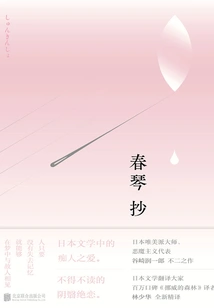
Chunqin Copy
General Fiction春琴抄
(japan) Junichiro Tanizaki
This book contains the most representative works of literary master Junichiro Tanizaki, "Shuncho" and "Yoshino Kudzu". Chunqin, the daughter of a businessman, has been blind since childhood. She is beautiful and intelligent, and has amazing talents in music. Apprentice Sasuke fell in love with her and learned skills from her while serving, and the two developed a relationship. Haruko is arrogant and domineering, but Sasuke is happy with Haruko's harsh treatment. Later, Chunqin was framed and disfigured, her self-esteem was greatly damaged, and she never showed her face to others. In order to keep Chunqin's beautiful image in his heart forever, and to continue to accompany Chunqin, Sasuke pricked his own eyes with needles...
This book contains the most representative works of literary master Junichiro Tanizaki, "Shuncho" and "Yoshino Kudzu". Chunqin, the daughter of a businessman, has been blind since childhood. She is beautiful and intelligent, and has amazing talents in music. Apprentice Sasuke fell in love with her and learned skills from her while serving, and the two developed a relationship. Haruko is arrogant and domineering, but Sasuke is happy with Haruko's harsh treatment. Later, Chunqin was framed and disfigured, her self-esteem was greatly damaged, and she never showed her face to others. In order to keep Chunqin's beautiful image in his heart forever, and to continue to accompany Chunqin, Sasuke pricked his own eyes with needles...