Library
Browse and search books
1 novel found
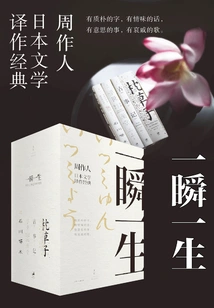
一瞬一生:周作人日本文学译作经典
(japan) Ishikawa Takuboku, Shikitei Sanma, Anmanlu, Seishonagon
"Pillow Grass", "Abbot's Chronicle" and "Tu Rancao" are together among the "three major essays in Japan", and together with "The Tale of Genji" are "the twin gems of Heian literature". It is the source and peak of Japanese essay literature. Mr. Zhou Zuoren's translation is still the earliest and most classic translation so far. He accurately grasped the classical works and restored the beauty of Japanese. If you want to understand the delicacy and beauty of Japanese literature, as well as the aesthetic taste in Japanese culture, "Pillow" is a work that cannot be surpassed. "Kojiki" was written in 712. It is the first written classic in Japanese history, one of the classic works of legends and stories of the Nara Dynasty in Japan, and a pioneering work of Japanese historical works. The book is divided into three volumes. The first volume records the origins and myths and legends of Japanese gods, focusing on the formation of Japan's territory and the beginning of the emperor. The two gods Ienaki and Ienami created the country on the orders of the gods. They entered into a divine marriage and gave birth to children that spanned the gods. After events such as "relinquishment of the country" and "celestial descent", the descendant of Amaterasu Omikami, the god Waiha Nobiko no Mikoto, was born, the first emperor of Japan, Emperor Jinmu, who ruled the China of Weihara according to the destiny. The middle volume and the second volume are the records and legends of the thirty-three generations of Japanese emperors from Emperor Jimmu to Emperor Suiko. Historical facts and fiction are mixed. The records mainly focus on the conquests and quelling chaos of the Japanese emperors, administrative establishment, royal family legends, etc. "Ukiyo Bathhouse" was written from 1809 to 1812. It is a representative work of the "comic book" in the classical literature of the Edo period in Japan. In the mist-shrouded bathhouse, the families are mixed up, and the world is mixed, weaving all kinds of interesting aspects of the life of the common people in Edo. The book consists of two parts. The first part describes the scene in the men's section of the bathhouse, which lasts from early morning to afternoon, with a lively and noisy atmosphere. There are dozens of characters among the bathers, including the paralyzed Dou Qi, a 70-year-old reclusive old man, Kinbei with his child, a quack doctor who plays nonsense, a stranger who mistakes someone else's underwear for a towel, a drunkard, a blind man, and 19 small scenes. The second part describes the women's section of the bathhouse, which is equally lively. There are women of various identities in the bathhouse, including geishas, maids, daughters, mothers, daughters-in-law, mothers-in-law, wet nurses, etc., With a wide age range, and a total of 16 small scenes. The characters of each of the men, women, and children who come to bathe are vivid and interesting through dialogue. "I Tasted the Taste of Things Too Soon - Collection of Poems by Ishikawa Takuboku" contains four short collections by Ishikawa Takuboku. "A Grip of Sand" contains 551 short songs, and "The Sad Toy" contains 194 short songs. These two song collections sincerely record the poet's sorrow and sighs in his life of poverty and illness. "Brief and Whistle" is a collection of six modern poems written by Ishikawa Takuboku, focusing on thinking about the real world. "An Edible Poetry" is a confessional article written by the poet about his poetry creation. He briefly describes his creative path and analyzes his own soul.
"Pillow Grass", "Abbot's Chronicle" and "Tu Rancao" are together among the "three major essays in Japan", and together with "The Tale of Genji" are "the twin gems of Heian literature". It is the source and peak of Japanese essay literature. Mr. Zhou Zuoren's translation is still the earliest and most classic translation so far. He accurately grasped the classical works and restored the beauty of Japanese. If you want to understand the delicacy and beauty of Japanese literature, as well as the aesthetic taste in Japanese culture, "Pillow" is a work that cannot be surpassed. "Kojiki" was written in 712. It is the first written classic in Japanese history, one of the classic works of legends and stories of the Nara Dynasty in Japan, and a pioneering work of Japanese historical works. The book is divided into three volumes. The first volume records the origins and myths and legends of Japanese gods, focusing on the formation of Japan's territory and the beginning of the emperor. The two gods Ienaki and Ienami created the country on the orders of the gods. They entered into a divine marriage and gave birth to children that spanned the gods. After events such as "relinquishment of the country" and "celestial descent", the descendant of Amaterasu Omikami, the god Waiha Nobiko no Mikoto, was born, the first emperor of Japan, Emperor Jinmu, who ruled the China of Weihara according to the destiny. The middle volume and the second volume are the records and legends of the thirty-three generations of Japanese emperors from Emperor Jimmu to Emperor Suiko. Historical facts and fiction are mixed. The records mainly focus on the conquests and quelling chaos of the Japanese emperors, administrative establishment, royal family legends, etc. "Ukiyo Bathhouse" was written from 1809 to 1812. It is a representative work of the "comic book" in the classical literature of the Edo period in Japan. In the mist-shrouded bathhouse, the families are mixed up, and the world is mixed, weaving all kinds of interesting aspects of the life of the common people in Edo. The book consists of two parts. The first part describes the scene in the men's section of the bathhouse, which lasts from early morning to afternoon, with a lively and noisy atmosphere. There are dozens of characters among the bathers, including the paralyzed Dou Qi, a 70-year-old reclusive old man, Kinbei with his child, a quack doctor who plays nonsense, a stranger who mistakes someone else's underwear for a towel, a drunkard, a blind man, and 19 small scenes. The second part describes the women's section of the bathhouse, which is equally lively. There are women of various identities in the bathhouse, including geishas, maids, daughters, mothers, daughters-in-law, mothers-in-law, wet nurses, etc., With a wide age range, and a total of 16 small scenes. The characters of each of the men, women, and children who come to bathe are vivid and interesting through dialogue. "I Tasted the Taste of Things Too Soon - Collection of Poems by Ishikawa Takuboku" contains four short collections by Ishikawa Takuboku. "A Grip of Sand" contains 551 short songs, and "The Sad Toy" contains 194 short songs. These two song collections sincerely record the poet's sorrow and sighs in his life of poverty and illness. "Brief and Whistle" is a collection of six modern poems written by Ishikawa Takuboku, focusing on thinking about the real world. "An Edible Poetry" is a confessional article written by the poet about his poetry creation. He briefly describes his creative path and analyzes his own soul.