Library
Browse and search books
1 novel found
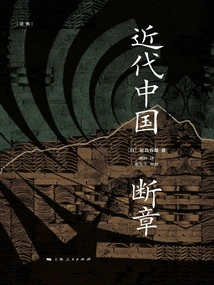
Fragments of Modern China
History近代中国断章
(japan) Haruojima
This book is the posthumous work of Japanese scholar Professor Haruo Harajima, focusing on the history and thought of Ming and Qing Dynasties in China. The so-called "Modern China" in the title of the book does not start from the Opium War in 1840, but dates back to the Ming and Qing Dynasties. It is a long period of "modern times". This contains the denial of the "Song Dynasty Modern Theory" centered on Western history, and hopes to explore the changes in Chinese society and thought since the Ming and Qing Dynasties from the inherent continuity of Chinese history. Since the author has personally experienced Chinese society after the reform and opening up, he not only explores China's structure from history, but also observes China from the scene and reality. His works are full of deep feelings for China, with solid content and unique insights. They are of great reference for us to understand the development of Chinese history since the Ming and Qing Dynasties. This book is mainly concerned with how traditional China transformed into modern times, that is, exploring the continuation and discontinuity relationship between tradition and modern times. It can be said that this is a work that explores the process of China's modernization. The author's focus is particularly on the "middle layer" between the state system and ordinary people. He points out that it is necessary to completely cut off the mutually beneficial relationship between officials and people, completely negate the emperor and slaves, compradors and warlords, and eliminate the soil where Ah Q was born. Only in this way can China's modernization be promoted. With a unique perspective and sharp analysis, it is a very in-depth work.
This book is the posthumous work of Japanese scholar Professor Haruo Harajima, focusing on the history and thought of Ming and Qing Dynasties in China. The so-called "Modern China" in the title of the book does not start from the Opium War in 1840, but dates back to the Ming and Qing Dynasties. It is a long period of "modern times". This contains the denial of the "Song Dynasty Modern Theory" centered on Western history, and hopes to explore the changes in Chinese society and thought since the Ming and Qing Dynasties from the inherent continuity of Chinese history. Since the author has personally experienced Chinese society after the reform and opening up, he not only explores China's structure from history, but also observes China from the scene and reality. His works are full of deep feelings for China, with solid content and unique insights. They are of great reference for us to understand the development of Chinese history since the Ming and Qing Dynasties. This book is mainly concerned with how traditional China transformed into modern times, that is, exploring the continuation and discontinuity relationship between tradition and modern times. It can be said that this is a work that explores the process of China's modernization. The author's focus is particularly on the "middle layer" between the state system and ordinary people. He points out that it is necessary to completely cut off the mutually beneficial relationship between officials and people, completely negate the emperor and slaves, compradors and warlords, and eliminate the soil where Ah Q was born. Only in this way can China's modernization be promoted. With a unique perspective and sharp analysis, it is a very in-depth work.