Library
Browse and search books
2 novels found
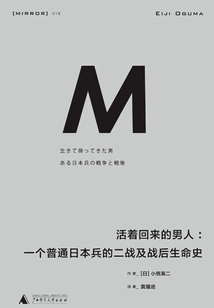
The Man Who Came Back Alive: an Ordinary Japanese Soldier's World War Ii and Postwar Life History
History活着回来的男人:一个普通日本兵的二战及战后生命史
(japan) Bear Eiji
The first history of Japanese life before and after World War II from a common people's perspective, recreating the lives and mental state of ordinary Japanese people. The protagonist in the book, Xiao Xiong Kenji (the author's father), was born in 1925. He was drafted and sent to Northeast China at the age of nineteen. He was later detained by the Soviet Union in a prisoner of war camp and worked in the harsh Siberia for three years. After returning to Japan alive, Kenji contracted tuberculosis, which was considered a terminal disease at the time, while constantly changing jobs. From the age of twenty-five to thirty, the most disappointing period of his life was spent alone in a sanatorium. Kenji, who lost half of his lungs, returned to society at the "old age" of thirty. Fortunately, he caught up with Japan's rapid economic growth and was able to climb from the "lower class of the lower class" to the "middle class of the lower class." After being promoted to a senior citizen, he even became a plaintiff together with Wu Xionggen, a "former Korean Japanese soldier" in Yanbian, China, and initiated a post-war lawsuit against the Japanese government for compensation. The author recorded the life trajectory of his father as an ordinary Japanese soldier with a plain narrative and a broad perspective, and at the same time incorporated the economic, policy, legal and other conditions of the same period, forming a "living history of the twentieth century." The first Japanese to stand on the plaintiff's bench with the Chinese to sue the Japanese government, telling the true experience of the "unrecorded majority".
The first history of Japanese life before and after World War II from a common people's perspective, recreating the lives and mental state of ordinary Japanese people. The protagonist in the book, Xiao Xiong Kenji (the author's father), was born in 1925. He was drafted and sent to Northeast China at the age of nineteen. He was later detained by the Soviet Union in a prisoner of war camp and worked in the harsh Siberia for three years. After returning to Japan alive, Kenji contracted tuberculosis, which was considered a terminal disease at the time, while constantly changing jobs. From the age of twenty-five to thirty, the most disappointing period of his life was spent alone in a sanatorium. Kenji, who lost half of his lungs, returned to society at the "old age" of thirty. Fortunately, he caught up with Japan's rapid economic growth and was able to climb from the "lower class of the lower class" to the "middle class of the lower class." After being promoted to a senior citizen, he even became a plaintiff together with Wu Xionggen, a "former Korean Japanese soldier" in Yanbian, China, and initiated a post-war lawsuit against the Japanese government for compensation. The author recorded the life trajectory of his father as an ordinary Japanese soldier with a plain narrative and a broad perspective, and at the same time incorporated the economic, policy, legal and other conditions of the same period, forming a "living history of the twentieth century." The first Japanese to stand on the plaintiff's bench with the Chinese to sue the Japanese government, telling the true experience of the "unrecorded majority".
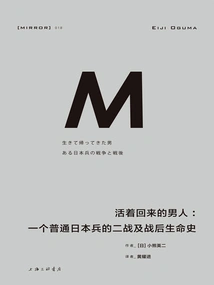
活着回来的男人:一个普通日本兵的二战及战后生命史(新版)
(japan) Bear Eiji
"The Man Who Came Back Alive" is a book that chronicles the life history of Japan before and after World War II from the perspective of ordinary people. The protagonist Kenji Xiong has been drafted at a young age, worked in a prisoner of war camp, contracted tuberculosis, caught up with the wave of rapid economic growth, and initiated a post-war lawsuit against Japan for compensation. This book is both an oral history, a popular history and a social history. The author records the life trajectory of his father as an ordinary Japanese soldier, showing the changes in the times before and after World War II, the changes in Japanese society after the war, and how individual destiny is affected by the great times. He also reflects on Japan's war crimes, forming a "living history of the 20th century."
"The Man Who Came Back Alive" is a book that chronicles the life history of Japan before and after World War II from the perspective of ordinary people. The protagonist Kenji Xiong has been drafted at a young age, worked in a prisoner of war camp, contracted tuberculosis, caught up with the wave of rapid economic growth, and initiated a post-war lawsuit against Japan for compensation. This book is both an oral history, a popular history and a social history. The author records the life trajectory of his father as an ordinary Japanese soldier, showing the changes in the times before and after World War II, the changes in Japanese society after the war, and how individual destiny is affected by the great times. He also reflects on Japan's war crimes, forming a "living history of the 20th century."