Library
Browse and search books
7 novels found
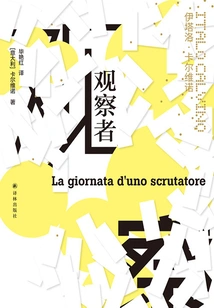
The Observer (calvino Classic)
General Fiction观察者(卡尔维诺经典)
(italy) Italo Calvino
Mo Yan and Wang Xiaobo praised! Calvino's "Ten Years of Sharpening a Sword" work follows the day of a scrutineer at the Turin election station, focusing on the absurd reality and criticizing the absurdity of reality. During the 1953 elections, Olmea was appointed as a scrutineer at a polling station in Turin. In order to win votes, rival parties ushered hordes of disabled people to the polls: amidst barking, laughing, and hideous deformities of all kinds, they collected the votes of bedridden patients. Olmea watched and reflected, and he wanted to turn the tide... In "The Observer", which came out in 1963, Calvino cut into today's life without hesitation and asked penetrating questions about life. Calvino is no longer a writer who criticizes uncertainty personally and psychologically, but a writer who describes the objective existence of this uncertainty in reality: the essence of this reality is difficult to explore.
Mo Yan and Wang Xiaobo praised! Calvino's "Ten Years of Sharpening a Sword" work follows the day of a scrutineer at the Turin election station, focusing on the absurd reality and criticizing the absurdity of reality. During the 1953 elections, Olmea was appointed as a scrutineer at a polling station in Turin. In order to win votes, rival parties ushered hordes of disabled people to the polls: amidst barking, laughing, and hideous deformities of all kinds, they collected the votes of bedridden patients. Olmea watched and reflected, and he wanted to turn the tide... In "The Observer", which came out in 1963, Calvino cut into today's life without hesitation and asked penetrating questions about life. Calvino is no longer a writer who criticizes uncertainty personally and psychologically, but a writer who describes the objective existence of this uncertainty in reality: the essence of this reality is difficult to explore.
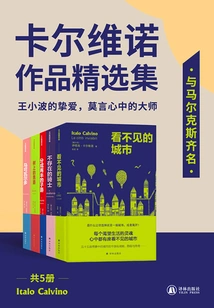
Selected Works of Calvino (5 Volumes in Total)
General Fiction卡尔维诺作品精选集(共5册)
(italy) Italo Calvino
This series selects representative works of Calvino's works that have both literary value and reader reputation, including "The Invisible City", "The Non-Existent Knight", "The Viscount in Two", "The Baron in the Trees" and "Marcovaldo". Italo Calvino is the most influential contemporary Italian writer in the world. His works have had a huge impact on the art of modern fiction with his unique and exquisite conception and profound and timeless way of thinking. Although he missed out on the Nobel Prize for Literature due to sudden death, he enjoyed the reputation of "writers' writers" together with Borges and became the idol of many world literature lovers. In this collection of works, the "Our Ancestors" trilogy has reached astonishing artistic heights and ideological depth, and was called "a model of lightness" by Wang Xiaobo. Mo Yan said that this series has influenced a generation of Chinese writers; "Invisible Cities" is Calvino's most famous work and is considered to be the ultimate presentation of Calvino's imagination...
This series selects representative works of Calvino's works that have both literary value and reader reputation, including "The Invisible City", "The Non-Existent Knight", "The Viscount in Two", "The Baron in the Trees" and "Marcovaldo". Italo Calvino is the most influential contemporary Italian writer in the world. His works have had a huge impact on the art of modern fiction with his unique and exquisite conception and profound and timeless way of thinking. Although he missed out on the Nobel Prize for Literature due to sudden death, he enjoyed the reputation of "writers' writers" together with Borges and became the idol of many world literature lovers. In this collection of works, the "Our Ancestors" trilogy has reached astonishing artistic heights and ideological depth, and was called "a model of lightness" by Wang Xiaobo. Mo Yan said that this series has influenced a generation of Chinese writers; "Invisible Cities" is Calvino's most famous work and is considered to be the ultimate presentation of Calvino's imagination...

Short Story Collection
Literature短篇小说集
(italy) Italo Calvino
This novel is simply intended to be evidence of how one of those who began his own literary experiment in 1945, then and now, has followed the fantasy of capturing a smell, a flash, a creak, a tone of life. A difficult idyll, a difficult memory, a difficult love, a difficult life. In these four volumes of short stories, Calvino lets his stories speak for themselves, keeping silent about what we expect, leaving us alone to resolve our hesitations, to listen to the endless rhythm of life, and to explore the hidden laws of the universe.
This novel is simply intended to be evidence of how one of those who began his own literary experiment in 1945, then and now, has followed the fantasy of capturing a smell, a flash, a creak, a tone of life. A difficult idyll, a difficult memory, a difficult love, a difficult life. In these four volumes of short stories, Calvino lets his stories speak for themselves, keeping silent about what we expect, leaving us alone to resolve our hesitations, to listen to the endless rhythm of life, and to explore the hidden laws of the universe.
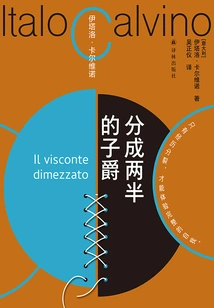
The Viscount in Two (calvino Centenary Edition)
General Fiction分成两半的子爵(卡尔维诺百年诞辰纪念版)
(italy) Italo Calvino
On the battlefield in the Middle Ages, Viscount Medardo leaped on his horse and drew his sword, but was blasted in half by a Turkish cannon. A complete man is thus divided into half a villain and half a saint. The Viscount said: "Not only am I torn and incomplete, but you are too, and everyone is." Every encounter between two creatures in the world is a fight between each other, and people experience the "complete" world in the fierce battle with themselves. Although the two-half Viscount Medardo eventually returned to being a whole person, it was clear that without that split, just one whole Viscount was not enough to make the world whole. On the battlefield in the Middle Ages, Viscount Medardo leaped on his horse and drew his sword, but was blasted in half by a Turkish cannon. A complete man is thus divided into half a villain and half a saint. The Viscount said: "Not only am I torn and incomplete, but you are too, and everyone is." Every encounter between two creatures in the world is a fight between each other, and people experience the "complete" world in the fierce battle with themselves. Although the two-half Viscount Medardo eventually returned to being a whole person, it was clear that without that split, just one whole Viscount was not enough to make the world whole.
On the battlefield in the Middle Ages, Viscount Medardo leaped on his horse and drew his sword, but was blasted in half by a Turkish cannon. A complete man is thus divided into half a villain and half a saint. The Viscount said: "Not only am I torn and incomplete, but you are too, and everyone is." Every encounter between two creatures in the world is a fight between each other, and people experience the "complete" world in the fierce battle with themselves. Although the two-half Viscount Medardo eventually returned to being a whole person, it was clear that without that split, just one whole Viscount was not enough to make the world whole. On the battlefield in the Middle Ages, Viscount Medardo leaped on his horse and drew his sword, but was blasted in half by a Turkish cannon. A complete man is thus divided into half a villain and half a saint. The Viscount said: "Not only am I torn and incomplete, but you are too, and everyone is." Every encounter between two creatures in the world is a fight between each other, and people experience the "complete" world in the fierce battle with themselves. Although the two-half Viscount Medardo eventually returned to being a whole person, it was clear that without that split, just one whole Viscount was not enough to make the world whole.
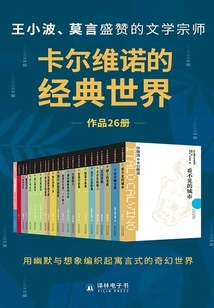
Calvino's Classic World (26 Volumes in Total)
General Fiction卡尔维诺的经典世界(共26册)
(italy) Italo Calvino
"The Classic World of Calvino" includes the following 26 works: "The Baron in the Trees", "The Viscount in Two", "The Non-Existent Knight", "The Invisible City", "Why Read Classics", "If on a Winter Night, a Traveler", "American Lectures", "The Complete Collection of Cosmic Curiosities", "Italian Fairy Tales (Set of 3 Volumes)", "The Hermits in Paris", "Short Stories", "Crazy Orlando", "The Castle of Crossed Destinies", "Palomar", "The Path to the Spider's Nest", "Smoke and Cloud" Argentine Ants" "When You Say\
"The Classic World of Calvino" includes the following 26 works: "The Baron in the Trees", "The Viscount in Two", "The Non-Existent Knight", "The Invisible City", "Why Read Classics", "If on a Winter Night, a Traveler", "American Lectures", "The Complete Collection of Cosmic Curiosities", "Italian Fairy Tales (Set of 3 Volumes)", "The Hermits in Paris", "Short Stories", "Crazy Orlando", "The Castle of Crossed Destinies", "Palomar", "The Path to the Spider's Nest", "Smoke and Cloud" Argentine Ants" "When You Say\
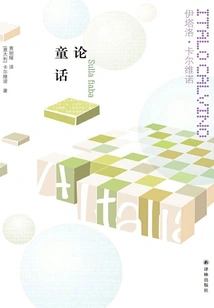
On Fairy Tales
Literature论童话
(italy) Italo Calvino
Because of Calvino, "Italian Fairy Tales" can become a classic comparable to "Andersen's Fairy Tales" and "Grimm's Fairy Tales". And Calvino, who single-handedly created this miracle, what are the basic rules and paradigms of classic fairy tales in his eyes? "On Fairy Tales" is Calvino's comprehensive summary of the work of writing Italian fairy tales, and it is also a love poem he dedicated to the world's fairy tales. Calvino studied fairy tales from all over the world and absorbed their wonder, simplicity, fun and morals into the arrangement and rewriting of Italian fairy tales. He is the well-deserved "Father of Italian Fairy Tales".
Because of Calvino, "Italian Fairy Tales" can become a classic comparable to "Andersen's Fairy Tales" and "Grimm's Fairy Tales". And Calvino, who single-handedly created this miracle, what are the basic rules and paradigms of classic fairy tales in his eyes? "On Fairy Tales" is Calvino's comprehensive summary of the work of writing Italian fairy tales, and it is also a love poem he dedicated to the world's fairy tales. Calvino studied fairy tales from all over the world and absorbed their wonder, simplicity, fun and morals into the arrangement and rewriting of Italian fairy tales. He is the well-deserved "Father of Italian Fairy Tales".
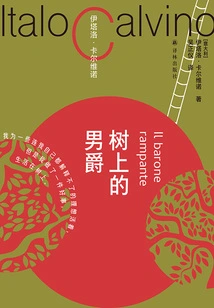
The Baron in the Trees (calvino Centenary Edition)
General Fiction树上的男爵(卡尔维诺百年诞辰纪念版)
(italy) Italo Calvino
Twelve-year-old Cosimo angrily left home and lived in a tree because he couldn't stand the snail meal cooked by his sister. From then on, his feet never set foot on the ground again: he read, hunted, put out fires, fought against pirates, and even fell in love and wrote in the trees. His tombstone is inscribed: "Living in the trees - always loving the earth - rising into the sky." Part one of the trilogy "Our Ancestors", including Calvino's own postscript: In "The Baron in the Trees" there is a path to wholeness - a non-individualistic wholeness achieved through unswerving efforts to make one's own choices.
Twelve-year-old Cosimo angrily left home and lived in a tree because he couldn't stand the snail meal cooked by his sister. From then on, his feet never set foot on the ground again: he read, hunted, put out fires, fought against pirates, and even fell in love and wrote in the trees. His tombstone is inscribed: "Living in the trees - always loving the earth - rising into the sky." Part one of the trilogy "Our Ancestors", including Calvino's own postscript: In "The Baron in the Trees" there is a path to wholeness - a non-individualistic wholeness achieved through unswerving efforts to make one's own choices.