Library
Browse and search books
2 novels found
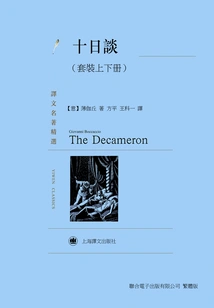
The Decameron (set of Volumes 1 and 2)
General Fiction十日谈(套装上下册)
(italian) Giovanni Boccaccio
The work "The Decameron (Set Volume 1 and 2)" tells the story of ten young men and women who took refuge in a villa during the plague epidemic in Florence in 1348. They feasted all day long, each telling a story every day, and told a hundred stories in ten days, hence the name "The Decameron". Many of the stories are based on historical events and medieval legends.
The work "The Decameron (Set Volume 1 and 2)" tells the story of ten young men and women who took refuge in a villa during the plague epidemic in Florence in 1348. They feasted all day long, each telling a story every day, and told a hundred stories in ten days, hence the name "The Decameron". Many of the stories are based on historical events and medieval legends.
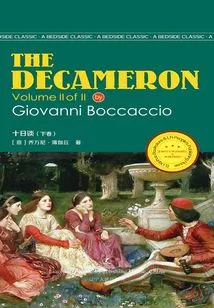
The Decameron (volume 2)
General Fiction十日谈(下卷)
(italian) Giovanni Boccaccio
Most of the stories in "The Decameron" are true events that happened. Some praise life in this world, some praise love, and some praise the value of freedom. At the same time, there are also stories aimed at exposing the cruelty and tyranny of officials, the hypocrisy of church priests and nuns, etc. Of course, there are also stories about the control of the spiritual world by the power of fate and the control of the spiritual world by the power of human will. Some stories also reveal the deceit and deceit between people. In fact, it is not difficult to see that in addition to real-life stories in Boccaccio's "The Decameron", there are also some stories that come from historical events and legends, and even refer to some oriental folk tales. Some stories feel obviously influenced by "The Arabian Nights". The author transplanted the plot of the story, and then narrated it to European readers with humanistic ideas. It is worth pointing out that this work is shrouded from beginning to end by the norms of what is tolerated in commercial promotion. Little cleverness, little tricks and other common tricks in business are raised to a new level. Malice, intrigues and other behaviors are punished by the author in some way. From the perspective of people in the Middle Ages, when comparing virtues such as loyalty and filial piety with malicious tricks and intrigues in the business world, the latter was unacceptable.
Most of the stories in "The Decameron" are true events that happened. Some praise life in this world, some praise love, and some praise the value of freedom. At the same time, there are also stories aimed at exposing the cruelty and tyranny of officials, the hypocrisy of church priests and nuns, etc. Of course, there are also stories about the control of the spiritual world by the power of fate and the control of the spiritual world by the power of human will. Some stories also reveal the deceit and deceit between people. In fact, it is not difficult to see that in addition to real-life stories in Boccaccio's "The Decameron", there are also some stories that come from historical events and legends, and even refer to some oriental folk tales. Some stories feel obviously influenced by "The Arabian Nights". The author transplanted the plot of the story, and then narrated it to European readers with humanistic ideas. It is worth pointing out that this work is shrouded from beginning to end by the norms of what is tolerated in commercial promotion. Little cleverness, little tricks and other common tricks in business are raised to a new level. Malice, intrigues and other behaviors are punished by the author in some way. From the perspective of people in the Middle Ages, when comparing virtues such as loyalty and filial piety with malicious tricks and intrigues in the business world, the latter was unacceptable.