Library
Browse and search books
3 novels found
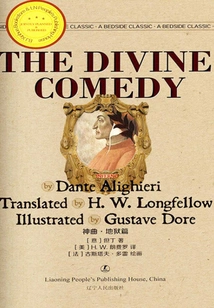
Divine Comedy·hell Chapter
General Fiction神曲·地狱篇
(italian) Dante
Dante's "Divine Comedy" is the most influential book in the Western world besides the Bible. Dante himself has become one of the three most famous poets in the West, known as the father of the Italian language and one of the three spiritual sources of literature. Recently, Dan Brown, the most influential best-selling author in the United States and the author of "The Da Vinci Code", has released a new book "Inferno", with a first edition of 2 million copies. The book is based on the first part of "Inferno" in Dante's "Divine Comedy" to unfold the plot. The book is expected to be adapted for screen next year (2014), which will usher in an enthusiastic response to "The Divine Comedy". This English translation is the most authoritative translation in the English-speaking world. It was translated by the famous 19th-century American poet Longfellow, and immediately became a classic translation in the English-speaking world after its publication.
Dante's "Divine Comedy" is the most influential book in the Western world besides the Bible. Dante himself has become one of the three most famous poets in the West, known as the father of the Italian language and one of the three spiritual sources of literature. Recently, Dan Brown, the most influential best-selling author in the United States and the author of "The Da Vinci Code", has released a new book "Inferno", with a first edition of 2 million copies. The book is based on the first part of "Inferno" in Dante's "Divine Comedy" to unfold the plot. The book is expected to be adapted for screen next year (2014), which will usher in an enthusiastic response to "The Divine Comedy". This English translation is the most authoritative translation in the English-speaking world. It was translated by the famous 19th-century American poet Longfellow, and immediately became a classic translation in the English-speaking world after its publication.
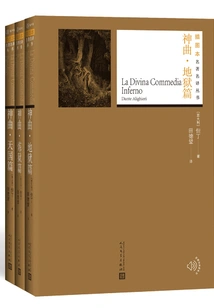
Divine Comedy: Hell, Purgatory, Heaven
Literature神曲:地狱篇、炼狱篇、天国篇
(italian) Dante
The long epic "Divine Comedy" (approximately 1307-1313) is Dante's most important masterpiece and a landmark work in the history of European and world literature. Through the author's dialogues with various famous figures in hell, purgatory and heaven, it provides an artistic summary of the field of medieval culture, and also vaguely reveals the dawn of humanistic thought in the Renaissance era.
The long epic "Divine Comedy" (approximately 1307-1313) is Dante's most important masterpiece and a landmark work in the history of European and world literature. Through the author's dialogues with various famous figures in hell, purgatory and heaven, it provides an artistic summary of the field of medieval culture, and also vaguely reveals the dawn of humanistic thought in the Renaissance era.
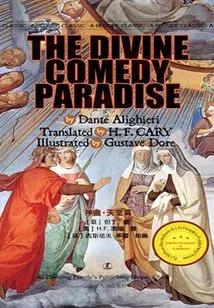
Divine Comedy·paradise
General Fiction神曲·天堂篇
(italian) Dante
The Divine Comedy is a cross-section of the human spiritual structure. From the perspective of Freudian psychology, hell is a world of self-indulgence, where human instincts and desires such as pride, jealousy, anger, laziness, greed for money, lust, and gluttony cannot be controlled; purgatory is where the self gradually purges away its sins and breaks away from the self to be reborn. Process, the seven kinds of sinful souls living in it, although they have sinned but to a lesser extent and have repented, are the self that can control themselves, and can ascend to heaven after repentance; heaven is the paradise of God, angels and good people, the embodiment of truth, goodness and beauty, and the superego that transcends control. From the three sections of human spiritual structure, corresponding to the three realms of the Divine Comedy, we can also see Dante's value orientation and exploration of human nature.
The Divine Comedy is a cross-section of the human spiritual structure. From the perspective of Freudian psychology, hell is a world of self-indulgence, where human instincts and desires such as pride, jealousy, anger, laziness, greed for money, lust, and gluttony cannot be controlled; purgatory is where the self gradually purges away its sins and breaks away from the self to be reborn. Process, the seven kinds of sinful souls living in it, although they have sinned but to a lesser extent and have repented, are the self that can control themselves, and can ascend to heaven after repentance; heaven is the paradise of God, angels and good people, the embodiment of truth, goodness and beauty, and the superego that transcends control. From the three sections of human spiritual structure, corresponding to the three realms of the Divine Comedy, we can also see Dante's value orientation and exploration of human nature.