Library
Browse and search books
1 novel found
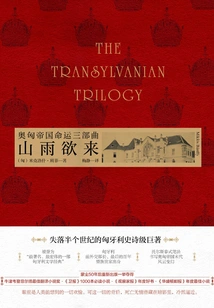
奥匈帝国命运三部曲:山雨欲来
(hungary) Miklós Banfi
Count Miklós Banfi, who came from a century-old Hungarian aristocratic family and once served as Hungary's Minister of Foreign Affairs, has seen the vicissitudes of the world throughout his life. He was the planner of the coronation ceremony of the last emperor of the Austro-Hungarian Empire. He also witnessed the final decline of the Austro-Hungarian Empire. Although he tried to turn the tide, he was unable to turn the tide. In his later years, he refined his life experiences and many laments about worldly affairs into this semi-autobiographical trilogy of novels. As an eyewitness of the historical scenes from 1904 to 1914 in the book, Banfi draws on the completely different fates of a pair of Hungarian aristocratic brothers with very different personalities, from the nightly singing in Budapest, to the hunting meeting in the country mansion, to the parliamentary meeting. From the turbulent times to the political treachery of the apocalypse, the plight of ordinary people, and the poignant love destined to tragedy, the writing is meticulous and gorgeous, and the story is twists and turns and gripping. The world that has disappeared for more than a hundred years seems to have come to life on the page. This trilogy was first published between 1934 and 1940. Although it was widely praised in Hungary, it unfortunately fell into the dust of the Second World War. It was not until the 1990s that Count Banfi's daughter Catalin Banfi-Yelen and the British writer Patrick Thursfield spent eight years of hard work before the English translation of this unparalleled masterpiece was released. Once it was released, it won the annual best novel award from major media and won the Oxford Weidenfield Award for Best Translated Novel.
Count Miklós Banfi, who came from a century-old Hungarian aristocratic family and once served as Hungary's Minister of Foreign Affairs, has seen the vicissitudes of the world throughout his life. He was the planner of the coronation ceremony of the last emperor of the Austro-Hungarian Empire. He also witnessed the final decline of the Austro-Hungarian Empire. Although he tried to turn the tide, he was unable to turn the tide. In his later years, he refined his life experiences and many laments about worldly affairs into this semi-autobiographical trilogy of novels. As an eyewitness of the historical scenes from 1904 to 1914 in the book, Banfi draws on the completely different fates of a pair of Hungarian aristocratic brothers with very different personalities, from the nightly singing in Budapest, to the hunting meeting in the country mansion, to the parliamentary meeting. From the turbulent times to the political treachery of the apocalypse, the plight of ordinary people, and the poignant love destined to tragedy, the writing is meticulous and gorgeous, and the story is twists and turns and gripping. The world that has disappeared for more than a hundred years seems to have come to life on the page. This trilogy was first published between 1934 and 1940. Although it was widely praised in Hungary, it unfortunately fell into the dust of the Second World War. It was not until the 1990s that Count Banfi's daughter Catalin Banfi-Yelen and the British writer Patrick Thursfield spent eight years of hard work before the English translation of this unparalleled masterpiece was released. Once it was released, it won the annual best novel award from major media and won the Oxford Weidenfield Award for Best Translated Novel.