Library
Browse and search books
3 novels found
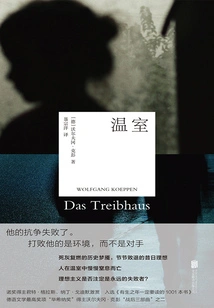
Greenhouse (part Two of the Postwar Trilogy)
General Fiction温室(战后三部曲之二)
(germany) Wolfgang Köppen
"Hothouse" is the second volume of Wolfgang Koepen's "Postwar Trilogy" and was hailed as "a rediscovered master work" by Publishers Weekly. The novel tells the story of the last two days of the life of Kitneuf, a small German politician. Kitneuf, who returned from exile, hoped to realize his ambition to rebuild his motherland, but Germany's entry into the European Defense Community and the return of militarization ruthlessly destroyed his ideals. Facing political corruption, he felt depressed and disappointed, and the sudden death of his wife made him even more devastated. In the end, Kitneuf, the eternal loser, ran onto the Rhine bridge leading to Biel... In "Greenhouse", Kopen combined a variety of writing techniques such as stream of consciousness, surrealism and confessional writing to depict the death of an idealist in a sharp and desperate tone. The social picture shown in "Greenhouse" is highly consistent with the social and cultural atmosphere of the time, and is considered to be the most outstanding work describing the nihilism of post-war Germany.
"Hothouse" is the second volume of Wolfgang Koepen's "Postwar Trilogy" and was hailed as "a rediscovered master work" by Publishers Weekly. The novel tells the story of the last two days of the life of Kitneuf, a small German politician. Kitneuf, who returned from exile, hoped to realize his ambition to rebuild his motherland, but Germany's entry into the European Defense Community and the return of militarization ruthlessly destroyed his ideals. Facing political corruption, he felt depressed and disappointed, and the sudden death of his wife made him even more devastated. In the end, Kitneuf, the eternal loser, ran onto the Rhine bridge leading to Biel... In "Greenhouse", Kopen combined a variety of writing techniques such as stream of consciousness, surrealism and confessional writing to depict the death of an idealist in a sharp and desperate tone. The social picture shown in "Greenhouse" is highly consistent with the social and cultural atmosphere of the time, and is considered to be the most outstanding work describing the nihilism of post-war Germany.
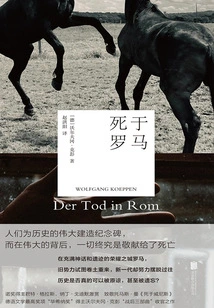
Death in Rome (part Three of the Postwar Trilogy)
General Fiction死于罗马(战后三部曲之三)
(germany) Wolfgang Köppen
"Death in Rome" is the final work of the famous German writer Wolfgang Koppen's "Postwar Trilogy". It caused great controversy after its publication in 1954. It has now become a well-deserved classic of German literature. It has been translated into more than 20 languages and is Koppen's most translated novel. The novel tells the story of the staggered reunion of different members of a German family in Rome after World War II. In this portrait of a fractured family, there are SS soldiers who miss the war, opportunistic bureaucrats, victims of the Nazi era, and descendants who escape reality. They each have their own thoughts, wandering around Rome, a city full of ancient myths and historical relics, trying to face the heavy past in their own way. Kepen once again demonstrates his unique creative style in this book: precise observation, delicate description, multiple perspectives, and introspective narrative. He captured the characters' inner and moral dilemmas with great insight, explored the conflict between personal destiny and social change, and conducted a profound interrogation of the soul of a nation. The conflict of social change tortures the soul of a nation from four perspectives: war, bureaucracy, religion, and art.
"Death in Rome" is the final work of the famous German writer Wolfgang Koppen's "Postwar Trilogy". It caused great controversy after its publication in 1954. It has now become a well-deserved classic of German literature. It has been translated into more than 20 languages and is Koppen's most translated novel. The novel tells the story of the staggered reunion of different members of a German family in Rome after World War II. In this portrait of a fractured family, there are SS soldiers who miss the war, opportunistic bureaucrats, victims of the Nazi era, and descendants who escape reality. They each have their own thoughts, wandering around Rome, a city full of ancient myths and historical relics, trying to face the heavy past in their own way. Kepen once again demonstrates his unique creative style in this book: precise observation, delicate description, multiple perspectives, and introspective narrative. He captured the characters' inner and moral dilemmas with great insight, explored the conflict between personal destiny and social change, and conducted a profound interrogation of the soul of a nation. The conflict of social change tortures the soul of a nation from four perspectives: war, bureaucracy, religion, and art.

Wolfgang Koepen's "postwar Trilogy" (set of 3 Volumes)
General Fiction沃尔夫冈·克彭 “战后三部曲”(套装共3册)
(germany) Wolfgang Köppen
The "Postwar Trilogy" ("Dove in the Grass", "Hothouse" and "Die in Rome") is the masterpiece of postwar German literary legend Wolfgang Koeppen (1906-1996). Their publication caused a sensation in the German literary world. The trilogy completely presents the social and political atmosphere of postwar Germany in a unique modernist style. It is recognized as a classic of postwar German literature and established Koppen's status as a master. Günter Grass, the famous German writer and Nobel Prize winner for literature, called him "the greatest contemporary German novelist". In 1962, Keppen won the Büchner Prize, the highest award for German literature, for his outstanding literary achievements.
The "Postwar Trilogy" ("Dove in the Grass", "Hothouse" and "Die in Rome") is the masterpiece of postwar German literary legend Wolfgang Koeppen (1906-1996). Their publication caused a sensation in the German literary world. The trilogy completely presents the social and political atmosphere of postwar Germany in a unique modernist style. It is recognized as a classic of postwar German literature and established Koppen's status as a master. Günter Grass, the famous German writer and Nobel Prize winner for literature, called him "the greatest contemporary German novelist". In 1962, Keppen won the Büchner Prize, the highest award for German literature, for his outstanding literary achievements.