Library
Browse and search books
2 novels found
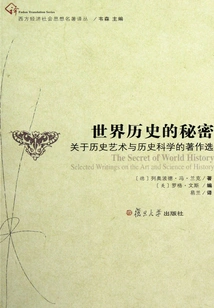
Secrets of World History
History世界历史的秘密
(germany) Leopold Von Ranke
This book is a collection of works selected by Professor Roger Vince, a well-known contemporary American history professor, around the theme of "Historical Art and Science" that best fully embodies Ranke's historical thoughts and opinions. It includes the introductions to Ranke's four most famous monographs that best reflect his attitude towards history, as well as some The little-known texts compiled from Ranke's original historiography or reading notes are important reflections of Ranke's historical thoughts, which fully demonstrate Ranke's critical methods of history and objective and impartial principles of writing history, the political nature of Ranke's history, and Ranke's thinking and exploration of historiography itself and history teaching. It can be said that this book is an important book for understanding Ranke and Ranke's history.
This book is a collection of works selected by Professor Roger Vince, a well-known contemporary American history professor, around the theme of "Historical Art and Science" that best fully embodies Ranke's historical thoughts and opinions. It includes the introductions to Ranke's four most famous monographs that best reflect his attitude towards history, as well as some The little-known texts compiled from Ranke's original historiography or reading notes are important reflections of Ranke's historical thoughts, which fully demonstrate Ranke's critical methods of history and objective and impartial principles of writing history, the political nature of Ranke's history, and Ranke's thinking and exploration of historiography itself and history teaching. It can be said that this book is an important book for understanding Ranke and Ranke's history.
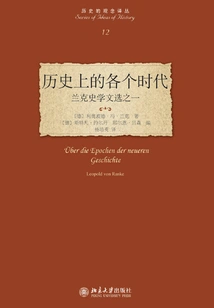
历史上的各个时代:兰克史学文选之一
(germany) Leopold Von Ranke
"Ages in History" was originally a transcript of Rank's lecture on history to the King of Bavaria in 1854, and was officially published in 1888 after his death. In a total of 19 lectures, Ranke outlined the basic characteristics of each era in European history. In the preface, he reflected on the concept of progress in human history, proposing that every era is special and has its own unique principles and effectiveness. Then, a series of historical events and their views are told in chronological order: during the Roman Empire, the connection between the East and the West was a prerequisite for Christianity to spread and become a world religion; the Middle Ages when nation-states and papal prerogatives were formed; the 18th century when European powers emerged; and the "revolutionary era" in which Ranke himself lived, which he called the era of crisis. Ultimately, he believed that while it was possible for humanity to progress materially, it was completely impossible to achieve moral perfection.
"Ages in History" was originally a transcript of Rank's lecture on history to the King of Bavaria in 1854, and was officially published in 1888 after his death. In a total of 19 lectures, Ranke outlined the basic characteristics of each era in European history. In the preface, he reflected on the concept of progress in human history, proposing that every era is special and has its own unique principles and effectiveness. Then, a series of historical events and their views are told in chronological order: during the Roman Empire, the connection between the East and the West was a prerequisite for Christianity to spread and become a world religion; the Middle Ages when nation-states and papal prerogatives were formed; the 18th century when European powers emerged; and the "revolutionary era" in which Ranke himself lived, which he called the era of crisis. Ultimately, he believed that while it was possible for humanity to progress materially, it was completely impossible to achieve moral perfection.