Library
Browse and search books
2 novels found
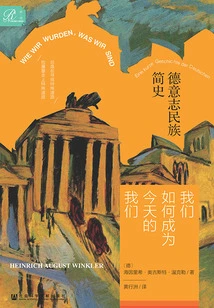
我们如何成为今天的我们:德意志民族简史
(germany) Heinrich August Winkler
Frank-Walter Steinmeier, the current president of Germany, commented: "It is Winkler's contribution that our country can remain ideologically open to freedom and democracy." Indeed, we need a great historian to accurately focus on all the development threads of the German national history and translate them into lessons that can be learned from today's political practice. There are many ethnic histories in the world that are easier to read than this one. The heavy disasters that occurred in the 20th century have undoubtedly shaped the self-perception of generations of people after the war, and they have always affected current public opinion and the country's political landscape within the framework of the European Union and global cooperation. And some older things, such as the ancient idea of empire, the revolution and reform of the 19th century, and the repeated pull between unity and freedom, have never lost their practical significance. How did we become who we are today? The journey of looking back at thousands of years of history is ultimately a journey of self-discovery. Does a special road belonging to Germany really exist? The brief history of the nation written by Winkler to answer this question may also serve as a mirror for enlightened and progressive citizens around the world.
Frank-Walter Steinmeier, the current president of Germany, commented: "It is Winkler's contribution that our country can remain ideologically open to freedom and democracy." Indeed, we need a great historian to accurately focus on all the development threads of the German national history and translate them into lessons that can be learned from today's political practice. There are many ethnic histories in the world that are easier to read than this one. The heavy disasters that occurred in the 20th century have undoubtedly shaped the self-perception of generations of people after the war, and they have always affected current public opinion and the country's political landscape within the framework of the European Union and global cooperation. And some older things, such as the ancient idea of empire, the revolution and reform of the 19th century, and the repeated pull between unity and freedom, have never lost their practical significance. How did we become who we are today? The journey of looking back at thousands of years of history is ultimately a journey of self-discovery. Does a special road belonging to Germany really exist? The brief history of the nation written by Winkler to answer this question may also serve as a mirror for enlightened and progressive citizens around the world.
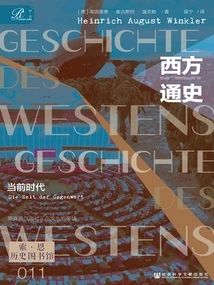
西方通史:当前时代
(germany) Heinrich August Winkler
This volume is the last volume in the four-volume "General History of the West" written by the German historian Winkler. Since the end of the Cold War, the world has become neither simpler nor more peaceful. Terrorist attacks, territorial disputes, global financial turmoil, financial and people's livelihood issues, the struggle between nation-state interests and supranational communities, the refugee crisis, and the Ebola epidemic have had a profound impact on all mankind. They have once again challenged what the "West" is and how the "West" will stand. This short period of contemporary history is full of crises and changes. It is not a final conclusion to the entire long history of the West, but an open discussion that faces current world issues head-on. As a responsible intellectual, historian Winkler did not shy away from talking about these issues because of the unforeseeable outcome and insufficient research documents. He admitted that all conclusions on contemporary history are inevitably tentative and subjective, and believed that to escape from real difficulties, international scholars need to be determined to be realistic, otherwise they will not be able to raise illuminating questions and substantive answers. It is this point that allows readers to see once again that "the West" is not a static "conclusion", but a dynamic development "process". It is the product of continuous shaping of ideology and political practice, and it is also a manifestation of continuous mistakes and self-regulation on the way to pursue values such as freedom and democracy. Winkler also firmly believes that the ideological legacy of 1776 and 1789 is still far from exhausted.
This volume is the last volume in the four-volume "General History of the West" written by the German historian Winkler. Since the end of the Cold War, the world has become neither simpler nor more peaceful. Terrorist attacks, territorial disputes, global financial turmoil, financial and people's livelihood issues, the struggle between nation-state interests and supranational communities, the refugee crisis, and the Ebola epidemic have had a profound impact on all mankind. They have once again challenged what the "West" is and how the "West" will stand. This short period of contemporary history is full of crises and changes. It is not a final conclusion to the entire long history of the West, but an open discussion that faces current world issues head-on. As a responsible intellectual, historian Winkler did not shy away from talking about these issues because of the unforeseeable outcome and insufficient research documents. He admitted that all conclusions on contemporary history are inevitably tentative and subjective, and believed that to escape from real difficulties, international scholars need to be determined to be realistic, otherwise they will not be able to raise illuminating questions and substantive answers. It is this point that allows readers to see once again that "the West" is not a static "conclusion", but a dynamic development "process". It is the product of continuous shaping of ideology and political practice, and it is also a manifestation of continuous mistakes and self-regulation on the way to pursue values such as freedom and democracy. Winkler also firmly believes that the ideological legacy of 1776 and 1789 is still far from exhausted.