Library
Browse and search books
1 novel found
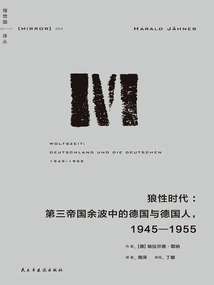
狼性时代:第三帝国余波中的德国与德国人,1945—1955(理性国译丛64)
(germany) Harald Jenner
Postwar Germany was a country full of occupiers, freed persons, displaced persons, evacuees, escapees and those burdened with war crimes. They plunder, steal, fake identities, and start everything from scratch in order to survive. Can this be done? When a country's order is gone, how can society be reborn in such chaos? How do people rebuild their lives in such a "wolf age" where "others are evil wolves"? The loss of living order, the fragmentation of families, the threat of hunger and poverty, the shadow of war guilt, the silence about the Holocaust, the ecstasy of escaping death - the aftermath of the Third Reich continues to affect this devastated country. This book is a cultural history of daily life and people's spiritual history in Germany after World War II. It focuses on the post-war life of Germans in the ten years after World War II, especially their spiritual mentality and emotional life. The author abandons grand narratives and political frameworks and starts from the daily lives of ordinary people: the mobilization to clean up ruins, the experience of material scarcity and the black market, the pursuit of instant gratification, the experience of the Great Migration, women's awareness of autonomy, the re-education of the Allies, the miracle of economic takeoff, the cultural policy of "reshaping ideas", changes in art and design fashion, and how Germans in daily life collectively avoid the guilt of the war. The chaotic and disordered life of the German people after the war was full of multiple aspects. People had sadness and self-pity for the war, but also the desire to start over immediately, the unscrupulous means to survive, and the desire to survive and enjoy life in time. Harald Jenner offers a new, panoramic account of the first postwar decade that sheds new light on Germany's postwar recovery and the realities of daily life. It also sheds light on how and why Germany was able to transform from a sinister fascist ideology into a modern democracy.
Postwar Germany was a country full of occupiers, freed persons, displaced persons, evacuees, escapees and those burdened with war crimes. They plunder, steal, fake identities, and start everything from scratch in order to survive. Can this be done? When a country's order is gone, how can society be reborn in such chaos? How do people rebuild their lives in such a "wolf age" where "others are evil wolves"? The loss of living order, the fragmentation of families, the threat of hunger and poverty, the shadow of war guilt, the silence about the Holocaust, the ecstasy of escaping death - the aftermath of the Third Reich continues to affect this devastated country. This book is a cultural history of daily life and people's spiritual history in Germany after World War II. It focuses on the post-war life of Germans in the ten years after World War II, especially their spiritual mentality and emotional life. The author abandons grand narratives and political frameworks and starts from the daily lives of ordinary people: the mobilization to clean up ruins, the experience of material scarcity and the black market, the pursuit of instant gratification, the experience of the Great Migration, women's awareness of autonomy, the re-education of the Allies, the miracle of economic takeoff, the cultural policy of "reshaping ideas", changes in art and design fashion, and how Germans in daily life collectively avoid the guilt of the war. The chaotic and disordered life of the German people after the war was full of multiple aspects. People had sadness and self-pity for the war, but also the desire to start over immediately, the unscrupulous means to survive, and the desire to survive and enjoy life in time. Harald Jenner offers a new, panoramic account of the first postwar decade that sheds new light on Germany's postwar recovery and the realities of daily life. It also sheds light on how and why Germany was able to transform from a sinister fascist ideology into a modern democracy.