Library
Browse and search books
7 novels found
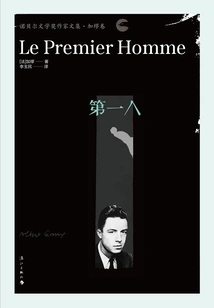
第一人(诺贝尔文学奖作家文集·加缪卷)
(french) Camus
Jacques Colmery, who grew up in a slum in Algeria, became famous at the age of forty. At the order of his mother, he searched for the grave of his father who died in the war and visited people who had been in contact with his father. However, no one could provide him with complete information. His father had long been forgotten. Jacques still knows nothing about the man who used to be his father, but in the process of searching for his roots, he recovered every bit of his own growth. The hardships and joys of his childhood life came to his face like scenes. Jacques finally understood that the land that had nourished him and the people on that land, due to poverty, would eventually be lost in a nameless world with no past and no future. "Everyone here is the first person." This book is an unfinished manuscript that was found in Camus's bag when he died suddenly. It is different from the "absurd" theme in the first stage of his creation and the "resistance" theme in the second stage. During this period, Camus experienced great setbacks after becoming famous and returned to his true nature with a new attitude, hoping to get closer to the true meaning of art.
Jacques Colmery, who grew up in a slum in Algeria, became famous at the age of forty. At the order of his mother, he searched for the grave of his father who died in the war and visited people who had been in contact with his father. However, no one could provide him with complete information. His father had long been forgotten. Jacques still knows nothing about the man who used to be his father, but in the process of searching for his roots, he recovered every bit of his own growth. The hardships and joys of his childhood life came to his face like scenes. Jacques finally understood that the land that had nourished him and the people on that land, due to poverty, would eventually be lost in a nameless world with no past and no future. "Everyone here is the first person." This book is an unfinished manuscript that was found in Camus's bag when he died suddenly. It is different from the "absurd" theme in the first stage of his creation and the "resistance" theme in the second stage. During this period, Camus experienced great setbacks after becoming famous and returned to his true nature with a new attitude, hoping to get closer to the true meaning of art.
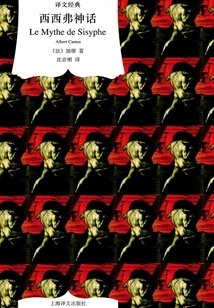
西西弗神话(译文经典)
(french) Camus
"The Myth of Sisyphus" is one of the representative works of Camus, the French literary master of absurd existential philosophy. It is Camus' in-depth and concentrated investigation and thorough and clear explanation of the philosophy of absurdity. Sisyphus, a Greek mythological figure who pushes rocks up mountains and performs never-ending hard labor, is undoubtedly a symbol of the absurdity of human existence; but at the same time, he is also a sign that human beings do not despair or despair, but rise up to resist in the midst of absurdity, and do not hesitate to fight against absurd fate to the end. Therefore, "The Myth of Sisyphus" is not so much a tragic self-portrait of the human condition as it is a victory song of liberal humanism. It constitutes a style that is both pathos and sublime. In the entire field of human culture and art, perhaps only Beethoven's "Symphony of Destiny" can rival it in taste.
"The Myth of Sisyphus" is one of the representative works of Camus, the French literary master of absurd existential philosophy. It is Camus' in-depth and concentrated investigation and thorough and clear explanation of the philosophy of absurdity. Sisyphus, a Greek mythological figure who pushes rocks up mountains and performs never-ending hard labor, is undoubtedly a symbol of the absurdity of human existence; but at the same time, he is also a sign that human beings do not despair or despair, but rise up to resist in the midst of absurdity, and do not hesitate to fight against absurd fate to the end. Therefore, "The Myth of Sisyphus" is not so much a tragic self-portrait of the human condition as it is a victory song of liberal humanism. It constitutes a style that is both pathos and sublime. In the entire field of human culture and art, perhaps only Beethoven's "Symphony of Destiny" can rival it in taste.
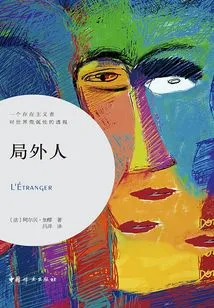
Outsider
General Fiction局外人
(french) Camus
"The Stranger" is Camus' famous work, a masterpiece of existential literature, and a representative work of absurd novels. The novel tells the story of an ordinary young clerk who lives numbly in aimless inertia all day long. One day he went to the beach for vacation, got involved in a conflict, and committed a murder. Because "he did not shed a tear at his mother's funeral", he was sentenced to death by the court in the name of "the French people". The novel elaborates on an important proposition of existentialism: the absurdity and strangeness of human society in modern life lead to individual despair and nihilism. By calmly describing the entire process of a little person being "demonized" by the judicial authorities, it profoundly satirizes the hypocrisy and foolhardy nature of modern law.
"The Stranger" is Camus' famous work, a masterpiece of existential literature, and a representative work of absurd novels. The novel tells the story of an ordinary young clerk who lives numbly in aimless inertia all day long. One day he went to the beach for vacation, got involved in a conflict, and committed a murder. Because "he did not shed a tear at his mother's funeral", he was sentenced to death by the court in the name of "the French people". The novel elaborates on an important proposition of existentialism: the absurdity and strangeness of human society in modern life lead to individual despair and nihilism. By calmly describing the entire process of a little person being "demonized" by the judicial authorities, it profoundly satirizes the hypocrisy and foolhardy nature of modern law.
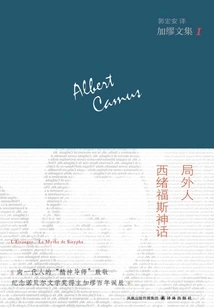
Camus Collected Works 1: the Outsider: the Myth of Sisyphus
General Fiction加缪文集1:局外人·西绪福斯神话
(french) Camus
"The Outsider: The Myth of Sisyphus" is the first volume of Camus's collected works translated by Guo Hongan. It includes the philosophical novel "The Outsider" and the collection of essays "The Myth of Sisyphus". "The Myth of Sisyphus the Outsider" focuses on Camus' absurd philosophy. He tried to tell people that having no hope is not the same as despair, and being awake does not lead to obedience. People should realize that their only wealth is life, and life is bound to disappear, but at the same time it can be developed as much as possible. People should and can gain the courage to survive in this world, and even happiness. The "absurdity" he proposed is "sober reason that confirms its own boundaries." He rejected eternity while affirming the beauty of the world and the joy of life.
"The Outsider: The Myth of Sisyphus" is the first volume of Camus's collected works translated by Guo Hongan. It includes the philosophical novel "The Outsider" and the collection of essays "The Myth of Sisyphus". "The Myth of Sisyphus the Outsider" focuses on Camus' absurd philosophy. He tried to tell people that having no hope is not the same as despair, and being awake does not lead to obedience. People should realize that their only wealth is life, and life is bound to disappear, but at the same time it can be developed as much as possible. People should and can gain the courage to survive in this world, and even happiness. The "absurdity" he proposed is "sober reason that confirms its own boundaries." He rejected eternity while affirming the beauty of the world and the joy of life.
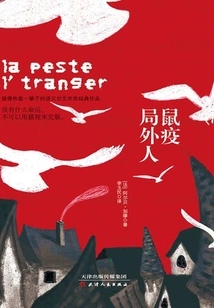
鼠疫·局外人(诺贝尔文学奖作品)
(french) Camus
This book collects the two most famous novels of the literary master Camus, "The Plague" and "The Stranger". "The Plague" is one of Camus's most important masterpieces. It describes the story of a large number of people represented by the protagonist Dr. Rieux who struggled to fight against the plague after an outbreak of plague in a city called Oran in North Africa. "The Stranger" is Camus' famous work. It can be called one of the most epoch-making novels in the Western literary world in the 20th century. The "Outsider" has thus become one of the most classic characters in Western literature (philosophy).
This book collects the two most famous novels of the literary master Camus, "The Plague" and "The Stranger". "The Plague" is one of Camus's most important masterpieces. It describes the story of a large number of people represented by the protagonist Dr. Rieux who struggled to fight against the plague after an outbreak of plague in a city called Oran in North Africa. "The Stranger" is Camus' famous work. It can be called one of the most epoch-making novels in the Western literary world in the 20th century. The "Outsider" has thus become one of the most classic characters in Western literature (philosophy).

Collected Works of Camus 2: Fall, Exile and Kingdom
General Fiction加缪文集2:堕落·流放与王国
(french) Camus
"The Fall, Exile and the Kingdom" is the second volume of Camus's collected works translated by Guo Hongan. It includes the novella "The Fall" and the short story collection "Exile and the Kingdom", which focuses on the writer's deep reflection on social reality. Albert Camus (1913-1960), French novelist and dramatist, one of the representative writers of existentialism, won the Nobel Prize for Literature in 1957. Before the 1950s, Camus was always regarded as an existentialist, although he denied it many times. After Camus published his philosophical essay "The Rebel" in 1951, it triggered a year-long debate with Sartre and others, and finally broke with Sartre. Only then did people discover that Camus was a representative figure of the philosophy of the absurd and its literature.
"The Fall, Exile and the Kingdom" is the second volume of Camus's collected works translated by Guo Hongan. It includes the novella "The Fall" and the short story collection "Exile and the Kingdom", which focuses on the writer's deep reflection on social reality. Albert Camus (1913-1960), French novelist and dramatist, one of the representative writers of existentialism, won the Nobel Prize for Literature in 1957. Before the 1950s, Camus was always regarded as an existentialist, although he denied it many times. After Camus published his philosophical essay "The Rebel" in 1951, it triggered a year-long debate with Sartre and others, and finally broke with Sartre. Only then did people discover that Camus was a representative figure of the philosophy of the absurd and its literature.

Exile and Kingdom
General Fiction放逐与王国
(french) Camus
Camus's mature work after winning the Nobel Prize deeply explores "spiritual exile" and "soul destination", and directly attacks the spiritual dilemma of modern people. Classic translation by Liu Senyao. Specially included is the translator's preface, which provides an in-depth explanation of the creative background and is a key to a deeper understanding of Camus's literary world and existential philosophical vision. This book was the last work published by Camus during his lifetime, and he won the Nobel Prize for Literature in the same year. This collection of short stories contains six stories set in Europe, Africa, and South America and vary in style from symbolic to realistic to interior monologue. Each story focuses on an exiled character who is struggling in the vastness of nothingness or a strange foreign land, searching for an outlet for freedom and life between reality and hope. Through six stories, this book depicts lonely lives in different situations: women trapped in formal marriages, workers frustrated by capitalists, lonely humanitarians, seemingly smooth artists, self-exiled engineers... Everyone deviates from the secular track, but finds some kind of self-belonging in the wrong path - even if that belonging is still not understood by ordinary people.
Camus's mature work after winning the Nobel Prize deeply explores "spiritual exile" and "soul destination", and directly attacks the spiritual dilemma of modern people. Classic translation by Liu Senyao. Specially included is the translator's preface, which provides an in-depth explanation of the creative background and is a key to a deeper understanding of Camus's literary world and existential philosophical vision. This book was the last work published by Camus during his lifetime, and he won the Nobel Prize for Literature in the same year. This collection of short stories contains six stories set in Europe, Africa, and South America and vary in style from symbolic to realistic to interior monologue. Each story focuses on an exiled character who is struggling in the vastness of nothingness or a strange foreign land, searching for an outlet for freedom and life between reality and hope. Through six stories, this book depicts lonely lives in different situations: women trapped in formal marriages, workers frustrated by capitalists, lonely humanitarians, seemingly smooth artists, self-exiled engineers... Everyone deviates from the secular track, but finds some kind of self-belonging in the wrong path - even if that belonging is still not understood by ordinary people.