Library
Browse and search novels
7 novels found

Notre Dame De Paris
General Fiction巴黎圣母院
(france) Victor Hugo
"Notre Dame de Paris" uses bizarre and contrasting techniques to tell a story that happened in France in the 15th century: Frollo, the deputy bishop of Notre Dame de Paris, was sanctimonious and vicious, loving first and then hating, and persecuting the gypsy girl Esmeralda. The ugly but kind-hearted bell ringer Quasimodo sacrifices his life to save the girl. The novel exposes the hypocrisy of religion, declares the bankruptcy of asceticism, praises the kindness, friendship and self-sacrifice of the lower working people, and reflects Hugo's humanitarian thoughts.

Notre Dame De Paris
General Fiction巴黎圣母院
(france) Victor Hugo
Set in France in 1482, this book creates vivid images - the innocent and pure Gypsy girl Esmeralda, the young and handsome guard captain Phobis, the sanctimonious and sinister bishop's deputy Frollo, the deformed and ugly but kind-hearted bell ringer Quasi Mordo... The work takes the relationship between these characters as the main line and tells a strange story with the distinctive colors of the customs of 15th century Paris. Esmeralda, the incarnation of beauty and goodness, was finally slandered as a "witch" and a "murderer" by the church and the court, and was sentenced to hanging; Quasimordo finally recognized Frollo's ferocious face, pushed him down from the top of the bell tower and fell to death. He came to the execution ground and escaped into the cemetery with Esmeralda's body... Rich imagination, grotesque plots, and peculiar structures constitute the author's eternal destiny theme of telling the contradictions between human beings, religion, society, and nature. This translation is free and easy, using mostly short sentences and a lively rhythm.


The Laughing Man (complete Collection)
General Fiction笑面人(全集)
(france) Victor Hugo
The story takes place in England at the end of the seventeenth century. The protagonist Guan Bolan is the son of a British senator and the heir to property and title. In order to achieve ulterior motives, after the death of his parents, the king ordered him to be sold to child traffickers. The child traffickers performed disfiguring surgery on the child's face, leaving an everlasting weird smile on his face. By chance, due to the needs of the British political arena, Guan Bolan regained the title of knight. However, he hated the aristocratic life. After the parliament denounced the crimes of the aristocracy, he returned to his companions. At this time, Deya was very ill and was dying. After seeing Guan Bolan for the last time, she passed away. Guan Bolan was so sad that after Deya passed away, he chose to commit suicide by throwing himself into the sea...

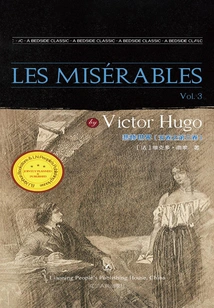
Les Misérables (volume 2 of 5)
General Fiction悲惨世界(五卷之第二卷)
(france) Victor Hugo
In France, there is a priest who is called Monsieur Myrière. He focused his main energy on religious preaching to the poor. On many occasions, he almost spent all his money to help the poor. There are few luxuries in his life, except for a relatively expensive set of silverware. There was a criminal who was released after being imprisoned for 19 years. This criminal's name was Jean Valjean. The main reason he was imprisoned was because he stole a loaf of bread and tried to escape from prison. After being released, he came to a town called Dini and wanted to stay in a small hotel. However, according to the laws of this town, he must show his valid identification. Because of his criminal record, the hotel rejected him. Although he can pay his bills, everyone else in town has closed their doors. Only M. Myrière opened the door to him. Jean Valjean didn't know how to respond to Mr. Myrière's friendly gesture. At this age, I have never been treated sincerely by anyone. Unfortunately, after he was released from prison, he was short of money, so he couldn't help but steal the priest's set of silverware and ran away. Mr. Myrière did not call the police. However, Jean Valjean was arrested. The police brought Jean Valjean back to Mr. Myrière. The priest did not tell the truth to the police and concealed the fact that his silverware was stolen by Jean Valjean. It is tantamount to saying that the priest lied. However, he kindly reminded Jean Valjean that the set of silverware was expensive, and now he just hoped that Jean Valjean would live a good life from now on. The implication is to tell Jean Valjean not to continue on the path of crime. The priest's words touched his inner world, and Jean Valjean began to fight between heaven and man. Even as his mind was in confusion, Jean Valjean stole a few steel jumpers from a boy's pocket. Finally, Jean Valjean decided to change his mind and open up a new life path from now on. He came to Monterey, just offshore. This time he hid his true identity. He sold the silverware and used the money as start-up capital to open a factory. Later he became the mayor of this place. At this moment, a girl named Fang Ting also came to the same city. Her arrival eventually caused a turmoil. Jean Valjean's true identity was exposed, and the police officer Javi who had been looking for him appeared. Jean Valjean had to embark on the road to escape again...

Notre Dame De Paris
General Fiction巴黎圣母院
(france) Victor Hugo
She is both old and young, both abrupt and mysterious; she is the cradle and mother of Quasimodo, and the lair where Frollo plots his conspiracy; she is Esmeralda's refuge, and the demon attacked by the Beggar Gang; she is the temple that is feared by all, and the palace where all fates are rubbed. Whether her soul is good or evil, it is always closely related to all living things... She is, incomparable, Notre Dame de Paris.

维克多·雨果回忆录(华文全球史)
(france) Victor Hugo
This book records what Victor Hugo saw, heard, felt, and thought for nearly fifty years from 1823 to 1871. It was praised by Le Figaro as "one of the documents of French history in the 19th century." In this epic work, Victor Hugo comprehensively records and profoundly analyzes a series of magnificent and major historical events such as the Coup of 18 Brumaire, the Napoleonic Wars, the Restoration of the Bourbon Dynasty, the July Revolution of 1830, the June Uprising of 1848, the Franco-Prussian War, and the Paris Commune Uprising.

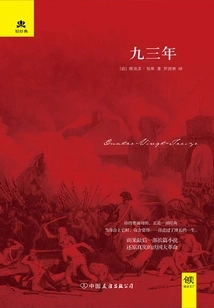
1993 (hugo Collection)
General Fiction九三年(雨果精选集)
(france) Victor Hugo
"1993" is an important work in the later years of the famous French writer Victor Hugo, and it is also his last novel. In the novel, Hugo created three central characters, the Marquis de Landenac, the leader of the Vendée rebels, his grandnephew, Govan, the commander of the Republican Army who suppressed the rebellion, and Simourdain, Govan's tutor and commissioner of the Public Security Commission. He developed an intricate plot around them, depicting the historical scene of the desperate struggle between the bourgeoisie and the feudal forces in 1793.