Library
Browse and search novels
5 novels found

Dog-like Spring
General Fiction狗样的春天
(france) Patrick Modiano
Sometimes you can't help but think that our memories are similar to instant photos, just short and immediate fragments. In the spring of 1964, "I" met photographer Jan Sen, who worked for an American magazine. The two of us had a brief friendship. After that, he suddenly disappeared. Some people said that he went to Mexico, taking all the photos with him, leaving no trace of his existence. Thirty years later, "I" accidentally found a photo of the two of us, and just at this time, Jan Sen came back. Is this a coincidence? Is it just that the spring of 1964 was as bad as the spring of 1994? "I" met Jan Sen again, and the reunited friends once again fell into the memory and tracking of the past...
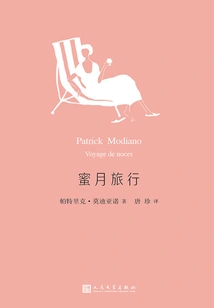

Honeymoon (modiano Series)
General Fiction蜜月旅行(莫迪亚诺作品系列)
(france) Patrick Modiano
"Honeymoon" was published in 1990 and is Modiano's fifteenth novel. In the summer of August, a forty-year-old man was traveling in Milan and heard that a French woman committed suicide in a hotel room in Milan. He wanted to know more details about this tragedy, but accidentally discovered that this woman looked familiar. He was lost in reminiscing about the past. After returning to Paris, he arranged a disappearance, leaving his relatives and friends to rediscover the traces of Ingrid Tyson and her husband Rigo Tyson. The story of Ingrid's life takes him back in time, when the couple had fled the war and were taking refuge in a hotel on the Côte d'Azur...

Desolate Villa
General Fiction凄凉别墅
(france) Patrick Modiano
"Villa Bleue" was published in 1975. It is Patrick Modiano's fourth novel. It was shortlisted for the Prix Goncourt that year and won the French Booksellers Award the following year. In 1994, it was adapted into the film "The Perfume of Ivonne" by French director Patrice Lecomte. Eighteen-year-old Parisian youth Victor Kemara wandered to a summer resort across a lake from Switzerland. In a luxury resort hotel, he met the beautiful girl Ivona and fell in love. Also with Ivona was Dr. René Mante, who was several years older than them. The three of them went to casinos and parties and lived a leisurely life with nothing to do. Ivona wants to become a movie star, and Victor is determined to go to the United States with Ivona to fulfill her movie dream. He asks her to meet at the train station and leave together... Twelve years later, Victor revisits the old place to pursue the lost time, and the past is like the mist shrouding the lakeside, leaving many mysteries.

Dora Bruder (modiano Series)
General Fiction多拉·布吕代(莫迪亚诺作品系列)
(france) Patrick Modiano
"Dora Bruder" tells the story: In 1988, Patrick Modiano saw a missing person notice in the "Paris Evening News" on New Year's Eve in 1941: "Missing girl Dora Bruder, fifteen years old, 1.55 Meters, oval face, gray maroon eyes, wearing a red coat, burgundy pullover, navy skirt and hat, maroon sneakers." The people who published the newspaper were looking for Dora. The Jewish girl left Catholic boarding school that winter and never returned. For ten years, Modiano worked tirelessly to search for all information about Dora. Why did she want to escape the school that sheltered her at the height of Nazi rule? Another official reference to Dora is a list of Jews sent from Paris to Auschwitz in September 1942. Modiano gradually discovered that more unknown people, more stories and histories also disappeared in that turbulent era. The story of Dora Bruder also reminded him of his troubled teenage years. Modiano used superb montage techniques to create this classic work about loss and memory that is between fiction and documentary.

Night Patrol
General Fiction夜巡
(france) Patrick Modiano
"Night Watch" was published in 1969. It was Modiano's second novel and was shortlisted for the Goncourt Literary Prize that year. This is also Modiano's first work to be translated into English. The narrator of the novel works for the resistance organization "The Underground Knights", but he also serves the French Gestapo. How to become a traitor and how not to become a traitor? This question always bothered him. In this shocking book, both tender and brutal, Modiano attempts to exorcise this bygone era, even though he did not live in occupied Paris. He awakens the dead and leads them with a rushing tune to complete this strange night patrol.