Library
Browse and search books
6 novels found
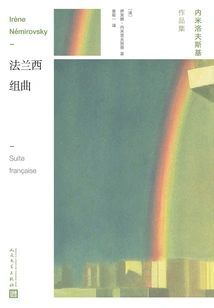
French Suite (nemilovsky Collection)
General Fiction法兰西组曲(内米洛夫斯基作品集)
(france) Jelena Nemirovsky
After more than half a century of silence, Nemirovsky's posthumous work "Suite Française" was finally published in 2004, and won the Renaudot Literary Award that year. The prize, awarded for the first time to a late author, also brought Nemirovsky's legend back into the public eye. The novel was supposed to be composed of five different "movements" (see Appendix 1 "Manuscript Notes" of this book), but Nemilovsky only had time to finish writing the first two movements before he was killed by the Nazis. The first movement "June Storm" depicts the great escape from Paris in 1940, grimly outlining the various behaviors of capitalists, civilians, soldiers and farmers on the escape route. The second movement "Adagio" moves from the road to a small town, where a subtle confrontation and affection unfolds between the small town residents and the German soldiers. The fate of each named person, the undelivered bad news, the unfinished love, and the unacted awakening all push the narrative charm of the realist novel to its peak. Now here's a more prosaic question that I've never been able to find an answer to: Don't people forget the characters from the previous book when they read the next one? It is to avoid this that I am going to write a work of a thousand pages instead of one consisting of several volumes. --Jelena Nemirovsky
After more than half a century of silence, Nemirovsky's posthumous work "Suite Française" was finally published in 2004, and won the Renaudot Literary Award that year. The prize, awarded for the first time to a late author, also brought Nemirovsky's legend back into the public eye. The novel was supposed to be composed of five different "movements" (see Appendix 1 "Manuscript Notes" of this book), but Nemilovsky only had time to finish writing the first two movements before he was killed by the Nazis. The first movement "June Storm" depicts the great escape from Paris in 1940, grimly outlining the various behaviors of capitalists, civilians, soldiers and farmers on the escape route. The second movement "Adagio" moves from the road to a small town, where a subtle confrontation and affection unfolds between the small town residents and the German soldiers. The fate of each named person, the undelivered bad news, the unfinished love, and the unacted awakening all push the narrative charm of the realist novel to its peak. Now here's a more prosaic question that I've never been able to find an answer to: Don't people forget the characters from the previous book when they read the next one? It is to avoid this that I am going to write a work of a thousand pages instead of one consisting of several volumes. --Jelena Nemirovsky
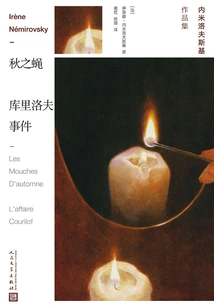
秋之蝇 库里洛夫事件(内米洛夫斯基作品集)
(france) Jelena Nemirovsky
The novel "Autumn Flies" was first released in 1931 and was written based on Nemirovsky's personal experience. The protagonist Tatyana is a loyal and capable servant and a wet nurse for several children of the Kalina family. After the Russian Revolution broke out, the Kalina family began to flee. She stayed behind to look after the house, buried the Kalina family's youngest son Yuri, who died tragically, and traveled thousands of miles to deliver jewelry sewn into clothes to the owner's family. Later, she settled with them in Paris. However, just as the Kalina family began to enjoy their new life, Tatyana's obsession with the old days became increasingly redundant, struggling feebly like a fly in autumn... The killer Leon M received the task of the Revolutionary Committee to eliminate the Minister of National Education Kurilov. He had to wait patiently for nine months and take action to trigger a big reaction when the Prussian Emperor came to visit. As a result, the killer disguised himself as a Swiss doctor and lurked around Kurilov. For nine months, he listened to Kurilov's heartfelt conversations, observed Kurilov's family and staff, and even eavesdropped on their conversations. Can enough understanding offset hatred? Will the complexities of human nature get in the way of the mission? In short, after nine months, Kurorive must die.
The novel "Autumn Flies" was first released in 1931 and was written based on Nemirovsky's personal experience. The protagonist Tatyana is a loyal and capable servant and a wet nurse for several children of the Kalina family. After the Russian Revolution broke out, the Kalina family began to flee. She stayed behind to look after the house, buried the Kalina family's youngest son Yuri, who died tragically, and traveled thousands of miles to deliver jewelry sewn into clothes to the owner's family. Later, she settled with them in Paris. However, just as the Kalina family began to enjoy their new life, Tatyana's obsession with the old days became increasingly redundant, struggling feebly like a fly in autumn... The killer Leon M received the task of the Revolutionary Committee to eliminate the Minister of National Education Kurilov. He had to wait patiently for nine months and take action to trigger a big reaction when the Prussian Emperor came to visit. As a result, the killer disguised himself as a Swiss doctor and lurked around Kurilov. For nine months, he listened to Kurilov's heartfelt conversations, observed Kurilov's family and staff, and even eavesdropped on their conversations. Can enough understanding offset hatred? Will the complexities of human nature get in the way of the mission? In short, after nine months, Kurorive must die.
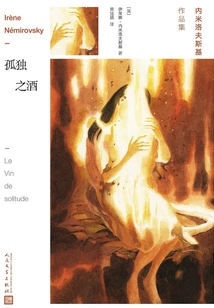
The Wine of Loneliness (nemilovsky Collection)
General Fiction孤独之酒(内米洛夫斯基作品集)
(france) Jelena Nemirovsky
The novel "The Wine of Loneliness" was first published in 1935. The autobiographical text is both cold and hot. Nemirovsky used the protagonist Elena in the novel to tell the story of his disgusted childhood: a Russian middle-class family that suffered changes, endless escapes, a speculative businessman father, a greedy and selfish mother, absent family ties, abnormal love, and an isolated situation where only the tutor was warm. After her mother drove away her tutor, the precocious girl decided to use love to avenge her mother. When successful revenge could not stop the absurdity of her original family, she made another choice... "I am lonely, but my loneliness is bitter and intoxicating." About the author The legendary female writer Irène Némirovsky (1903-1942) was born in 1903 in Kiev to a family of Ukrainian Jewish bankers. After the October Revolution, she moved to Paris and entered the French literary scene with her debut novel "David Goedel". Her powerful writing style made it difficult for readers to believe that the author was a young woman. Later, she wrote many novels such as "The Ball", "The Kurilov Incident", "Isabel" and "Prey". After the outbreak of World War II, Nemirovsky began to flee, and creation became both difficult and dangerous. In the summer of 1942, she was murdered in Auschwitz. The unfinished and ambitious work "Suite Française" followed her eldest daughter Denis through the war. It was published in 2004 and won the Renaudot Literary Award that year. Nemirovsky became the only writer to win this award with a posthumous work.
The novel "The Wine of Loneliness" was first published in 1935. The autobiographical text is both cold and hot. Nemirovsky used the protagonist Elena in the novel to tell the story of his disgusted childhood: a Russian middle-class family that suffered changes, endless escapes, a speculative businessman father, a greedy and selfish mother, absent family ties, abnormal love, and an isolated situation where only the tutor was warm. After her mother drove away her tutor, the precocious girl decided to use love to avenge her mother. When successful revenge could not stop the absurdity of her original family, she made another choice... "I am lonely, but my loneliness is bitter and intoxicating." About the author The legendary female writer Irène Némirovsky (1903-1942) was born in 1903 in Kiev to a family of Ukrainian Jewish bankers. After the October Revolution, she moved to Paris and entered the French literary scene with her debut novel "David Goedel". Her powerful writing style made it difficult for readers to believe that the author was a young woman. Later, she wrote many novels such as "The Ball", "The Kurilov Incident", "Isabel" and "Prey". After the outbreak of World War II, Nemirovsky began to flee, and creation became both difficult and dangerous. In the summer of 1942, she was murdered in Auschwitz. The unfinished and ambitious work "Suite Française" followed her eldest daughter Denis through the war. It was published in 2004 and won the Renaudot Literary Award that year. Nemirovsky became the only writer to win this award with a posthumous work.
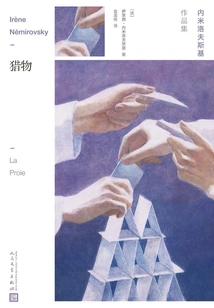
Prey (nemilovsky Collection)
General Fiction猎物(内米洛夫斯基作品集)
(france) Jelena Nemirovsky
The novel "The Prey" was first published in 1938. It is a Stendhal-style novel. Jean-Luc, a young man from the bottom of society, marries a rich girl for love, hoping to rise through the ranks through his talents. After hitting the wall in the upper class, he alienated the rich lady and turned to work for a smooth politician to seek social status. However, just before he became famous, love struck again in another form, causing Jean-Luc to lose everything. The hunter eventually becomes his own prey. Although Nemilovsky is a woman, she writes about the life of a crazy and ordinary man. "It's so difficult to live alone these days. It requires a lot of courage and a lot of love..."
The novel "The Prey" was first published in 1938. It is a Stendhal-style novel. Jean-Luc, a young man from the bottom of society, marries a rich girl for love, hoping to rise through the ranks through his talents. After hitting the wall in the upper class, he alienated the rich lady and turned to work for a smooth politician to seek social status. However, just before he became famous, love struck again in another form, causing Jean-Luc to lose everything. The hunter eventually becomes his own prey. Although Nemilovsky is a woman, she writes about the life of a crazy and ordinary man. "It's so difficult to live alone these days. It requires a lot of courage and a lot of love..."
Isabel (nemilovsky Collection)
General Fiction伊莎贝尔(内米洛夫斯基作品集)
(france) Jelena Nemirovsky
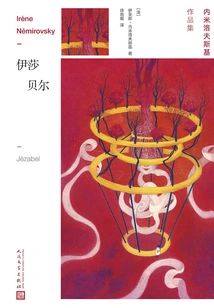
The novel "Isabel" was first published in 1936. Isabel is the character Jezebel in the Old Testament. She was the queen of King Ahab of ancient Israel. She persecuted the prophets because of her belief in pagan gods and became synonymous with vicious women. The protagonist of the novel, Gladys, also committed an irreparable crime due to her twisted fanaticism: in court, the beautiful and enchanting Gladys was accused of killing a promising college student. The crowd stared at her every move: she was old but well-maintained; she had a lover from the upper class, but she refused to get married; the dead poor student might have been another lover of hers; why did such a charming woman have to kill someone? Following "David Geddel", "The Ball" and "The Wine of Loneliness", Nemilovsky concentrated on and thoroughly portrayed the image of a witch and the morbid desire for youth.
The novel "Isabel" was first published in 1936. Isabel is the character Jezebel in the Old Testament. She was the queen of King Ahab of ancient Israel. She persecuted the prophets because of her belief in pagan gods and became synonymous with vicious women. The protagonist of the novel, Gladys, also committed an irreparable crime due to her twisted fanaticism: in court, the beautiful and enchanting Gladys was accused of killing a promising college student. The crowd stared at her every move: she was old but well-maintained; she had a lover from the upper class, but she refused to get married; the dead poor student might have been another lover of hers; why did such a charming woman have to kill someone? Following "David Geddel", "The Ball" and "The Wine of Loneliness", Nemilovsky concentrated on and thoroughly portrayed the image of a witch and the morbid desire for youth.
The Life of Chekhov (collected Works of Nemirovsky)
General Fiction契诃夫的一生(内米洛夫斯基作品集)
(france) Jelena Nemirovsky
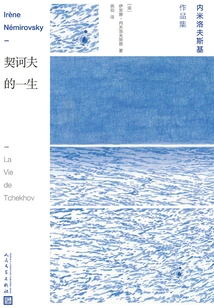
The biography "Chekhov's Life" was first published in 1946, telling the "fireworks" life of Russian literary master Anton Chekhov. Chekhov was born in poverty and initially wrote novels just to make a living, until he met an older Bole who guided and encouraged him through letters. Literary successes and failures came one after another, and illness and loneliness often accompanied him, but he always maintained sincerity and goodwill towards the people around him. The turbulent words written by Nemilovsky actually calmed down and softened when describing Chekhov. "However, among the indifferent crowd, Chekhov's wife and mother cuddled tightly and supported each other. Among all the people in the world, they were the only ones Chekhov ever truly loved deeply." Only when you see this and close the page can you really understand what is "mixed with fun, sadness and quiet disappointment" and what is "crystal indifference." Behind the fatigue and loneliness, I always hope to capture a glimmer of pure beauty that lights up the world - this is Chekhov written by Elena Nemirovsky, and it is also Elena Nemirovsky herself. --Yuan Xiaoyi
The biography "Chekhov's Life" was first published in 1946, telling the "fireworks" life of Russian literary master Anton Chekhov. Chekhov was born in poverty and initially wrote novels just to make a living, until he met an older Bole who guided and encouraged him through letters. Literary successes and failures came one after another, and illness and loneliness often accompanied him, but he always maintained sincerity and goodwill towards the people around him. The turbulent words written by Nemilovsky actually calmed down and softened when describing Chekhov. "However, among the indifferent crowd, Chekhov's wife and mother cuddled tightly and supported each other. Among all the people in the world, they were the only ones Chekhov ever truly loved deeply." Only when you see this and close the page can you really understand what is "mixed with fun, sadness and quiet disappointment" and what is "crystal indifference." Behind the fatigue and loneliness, I always hope to capture a glimmer of pure beauty that lights up the world - this is Chekhov written by Elena Nemirovsky, and it is also Elena Nemirovsky herself. --Yuan Xiaoyi