Library
Browse and search books
4 novels found
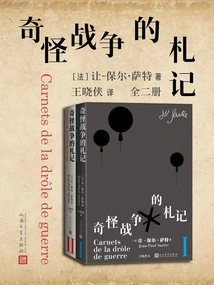
Notes of a Strange War (Two Volumes)
Literature奇怪战争的札记(全二册)
(france) Jean-paul Sartre
"Notes on a Strange War" was written by Sartre on the eve of World War II. At that time, Sartre was drafted into the army and came to a school in Alsace. He raced against time to record his thoughts, feelings, thoughts, ideas, and memories. He wrote non-stop from morning to night. He himself said that he kept writing from dawn to night, even going to cafes and going to mass. Sartre said: "Even in the midst of battle, I would sit down suddenly because I immediately wanted to write down what I felt and saw." These notebooks are extremely valuable for studying the formation of Sartre's thoughts, because they record Sartre's views on Heidegger, Nizen, his childhood, the system of existence, Flaubert, etc. The notes also record Sartre's ideological activities at that time, such as "waking up in the middle of the night and thinking about issues of will" and "discovering a theory of time." Researchers believe that the greatest value of these notes is that they show that Sartre found himself in a special environment and bid farewell to the Sartre of the past.
"Notes on a Strange War" was written by Sartre on the eve of World War II. At that time, Sartre was drafted into the army and came to a school in Alsace. He raced against time to record his thoughts, feelings, thoughts, ideas, and memories. He wrote non-stop from morning to night. He himself said that he kept writing from dawn to night, even going to cafes and going to mass. Sartre said: "Even in the midst of battle, I would sit down suddenly because I immediately wanted to write down what I felt and saw." These notebooks are extremely valuable for studying the formation of Sartre's thoughts, because they record Sartre's views on Heidegger, Nizen, his childhood, the system of existence, Flaubert, etc. The notes also record Sartre's ideological activities at that time, such as "waking up in the middle of the night and thinking about issues of will" and "discovering a theory of time." Researchers believe that the greatest value of these notes is that they show that Sartre found himself in a special environment and bid farewell to the Sartre of the past.
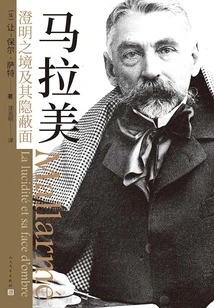
马拉美:澄明之境及其隐蔽面
(france) Jean-paul Sartre
Mallarmé was a French Symbolist poet and essayist, and he was a representative figure of early Symbolist poetry along with Rimbaud and Paul Verlaine. Mallarmé made an indelible contribution to the development of French poetry and literature. Mallarmé is very difficult to understand. These two reasons are enough to explain why the master of Symbolism, Mallarmé, is still being continuously and patiently interpreted by scholars in France and around the world even after the death of symbolist literature and art for so long. Sartre conducted research on Mallarmé and Symbolist poetry. Sartre raised a universal question through his critical biography of Mallarmé: Does the literature of the death of God (Nietzsche's language) still exist? Mallarmé's tragedy lies in his determination to become a "capital man", to engage in "capital poetry" at all costs, and then turn the great failure of poetry into a great failure of poetry.
Mallarmé was a French Symbolist poet and essayist, and he was a representative figure of early Symbolist poetry along with Rimbaud and Paul Verlaine. Mallarmé made an indelible contribution to the development of French poetry and literature. Mallarmé is very difficult to understand. These two reasons are enough to explain why the master of Symbolism, Mallarmé, is still being continuously and patiently interpreted by scholars in France and around the world even after the death of symbolist literature and art for so long. Sartre conducted research on Mallarmé and Symbolist poetry. Sartre raised a universal question through his critical biography of Mallarmé: Does the literature of the death of God (Nietzsche's language) still exist? Mallarmé's tragedy lies in his determination to become a "capital man", to engage in "capital poetry" at all costs, and then turn the great failure of poetry into a great failure of poetry.

Wall
Literature墙
(france) Jean-paul Sartre
"The Wall" is one of Sartre's masterpieces. Includes Sartre's famous works "The Wall" and "Nausea", as well as "A Life in Letters" which is considered to represent his highest artistic achievement. The five works collected in the short story collection "The Wall" put forward a basic proposition of existential philosophy: "People are free, and their destiny depends on their own choices." "Nausea" puts forward another basic proposition of existential philosophy in a literary form: "Existence without essence is equal to nothingness." The popular explanation is "To live in confusion is equal to a blank." The autobiographical novel "The Literary Life" tells the author's own process of self-recognition and self-realization in a witty and interesting way, explaining the starting point of existential thought and the entire theory.
"The Wall" is one of Sartre's masterpieces. Includes Sartre's famous works "The Wall" and "Nausea", as well as "A Life in Letters" which is considered to represent his highest artistic achievement. The five works collected in the short story collection "The Wall" put forward a basic proposition of existential philosophy: "People are free, and their destiny depends on their own choices." "Nausea" puts forward another basic proposition of existential philosophy in a literary form: "Existence without essence is equal to nothingness." The popular explanation is "To live in confusion is equal to a blank." The autobiographical novel "The Literary Life" tells the author's own process of self-recognition and self-realization in a witty and interesting way, explaining the starting point of existential thought and the entire theory.
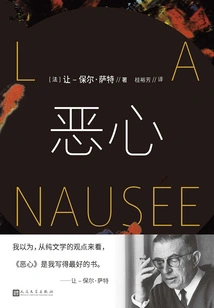
Nausea
General Fiction恶心
(france) Jean-paul Sartre
"Nausea" is a diary novella written by French writer Jean-Paul Sartre, first published in 1938. "Nausea" is the first novella in which Sartre combined his philosophical thoughts with literary forms and used novels to express "existence". Sartre assumes that the protagonist suffers from a disease in the book, and points out that this disease can be suffered by everyone. Therefore, Roquentin sometimes suffers from "nausea" when he is in a state of discomfort, and we can also suffer from "nausea". Roquentin is fighting, trying to get rid of his real existence, to identify with one or some artworks from the past, or even a piece of jazz music "A Moment of Time", to achieve some kind of freedom. This is the central idea that Sartre wants to express in this book: "being and freedom."
"Nausea" is a diary novella written by French writer Jean-Paul Sartre, first published in 1938. "Nausea" is the first novella in which Sartre combined his philosophical thoughts with literary forms and used novels to express "existence". Sartre assumes that the protagonist suffers from a disease in the book, and points out that this disease can be suffered by everyone. Therefore, Roquentin sometimes suffers from "nausea" when he is in a state of discomfort, and we can also suffer from "nausea". Roquentin is fighting, trying to get rid of his real existence, to identify with one or some artworks from the past, or even a piece of jazz music "A Moment of Time", to achieve some kind of freedom. This is the central idea that Sartre wants to express in this book: "being and freedom."