Library
Browse and search novels
22 novels found

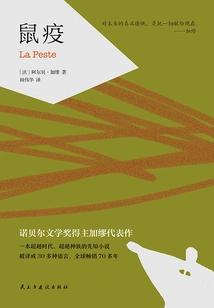
Camus Trilogy: the Plague
General Fiction加缪三部曲:鼠疫
(france) Albert Camus
"The Plague" is a fable novel that describes a plague disaster that occurred in a small town called Oran in North Africa, and the process of people's resistance to the plague. Camus uses a third-person perspective throughout the novel to depict various social pictures of life and death struggles during the epidemic. He ends the novel with a short-lived victory, clarifying that the pathological social phenomenon has led to the long-term presence of plague in human life. The exclamation issued by the work is not an accusation but a beautiful expectation, a metaphor for people's choices and struggles in the face of absurd situations. Camus deeply hopes that social viruses like the plague can disappear forever, freeing mankind from these senseless disasters. True redemption is not victory after a fight, but the ability to find the strength to live and peace of mind in suffering.

Camus Trilogy: the Myth of Sisyphus
Literature加缪三部曲:西西弗神话
(france) Albert Camus
If you keep looking for the meaning of life, you will never live it. The only real duty of a person born into this absurd world is to survive. It is awareness of one's own life, one's own resistance, one's own freedom.

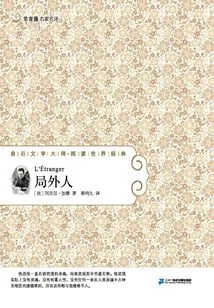
The Outsider (translation Classic)
General Fiction局外人(译文经典)
(france) Albert Camus
There is no book more sad or lonely than this! "The Outsider" is one of Camus' famous and representative novels. It can be called one of the most famous novels with epoch-making significance in the entire Western literary world in the 20th century. "The Outsider" has thus become one of the most classic characters and one of the most important keywords in Western literature and philosophy. It has become an image representation of the predicament of modern people's lives: each of us is an "outsider."

Outsider
General Fiction局外人
(france) Albert Camus
This book is a famous work by French writer Camus. It is divided into two parts: the first part describes what happened to the protagonist Meursault three days after his mother died. Not only did he not show any pain for his mother's death, he even seemed indifferent; one day because of the bright sun, he impulsively shot and killed an Arab. The second part is about Meursault being arrested, tried and sentenced to death. In the court, the examining judge, the instructing priest, the prosecutor and the defense lawyer did not waste much time talking about the case itself. Instead, they repeatedly criticized his soul and personality. However, he always felt innocent and the whole process was absurd. Camus ingeniously depicted the prejudices of the human heart, the nihility of life, and the absurdity of society. The "outsider" has thus become one of the most classic characters and one of the most important keywords in Western literature and philosophy.

加缪代表作:局外人+鼠疫(套装2册)
(france) Albert Camus
"The Stranger" is Camus' famous work, a masterpiece of existential literature, and a representative work of absurd novels. The novel tells the story of an ordinary young clerk who lives numbly in aimless inertia. One day he goes to the beach for vacation, gets involved in a conflict and commits a murder. Because "he did not shed tears at his mother's funeral", he is sentenced to death by the court in the name of "the French people". The novel elaborates on an important proposition of existentialism: the absurdity and strangeness of human society lead to individual despair and emptiness. "The Plague" is one of Camus' important masterpieces. By describing the outbreak of plague in a city called Oran in North Africa, the story of a large number of people represented by the protagonist Dr. Rieux struggling to face the plague. It vividly demonstrates the great liberal humanitarian spirit of those who dare to face the bleak life and possess the fearless spirit of "knowing that it is impossible to do it". They rise up against the absurd and insist on truth and justice in despair.

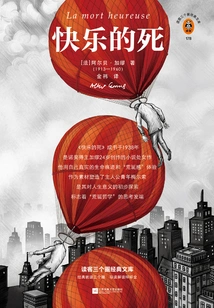
Camus's Masterpieces (all 4 Volumes)
General Fiction加缪代表作(全4册)
(france) Albert Camus
"Happy Death": Mersault, a small employee in the company, does boring work day after day and lives an unchanging life. He is lonely, nihilistic, and has no interest in the entire world. After orchestrating a murder, he gained vast wealth and was able to escape his eight-hour day job, becoming rich and free. Start traveling and traveling around... Can you be happy if you have money? Can you be happy if you have time? Can you be happy with a lover and love? How can we truly feel self-satisfaction and happiness? Meursault kept thinking about these issues during his journey and explored the joy of living... "The Outsider": Meursault, a small company clerk, was accused by the court of murder, but was eventually sentenced to death because he "did not cry when his mother was buried." In our society, anyone who does not cry at his mother's funeral is liable to death. --Camus

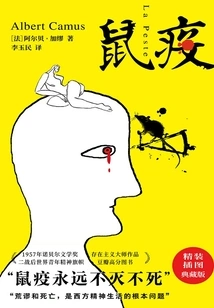
鼠疫(汉译世界文学名著丛书)
(france) Albert Camus
"The Plague" tells the story of a small city in North Africa called Oran. The plague suddenly struck, claiming hundreds of lives, and changed the entire city's administrative management, social order, and moral conscience. A large number of people, represented by the protagonist Dr. Rieux, fought hard in the face of the plague, showing the true brave man still resisted in the midst of absurdity, and the liberal humanitarian spirit of insisting on truth and justice in despair. When the city's residents shifted from initial indifference to self-preservation to a unified fight against the plague, the plague suddenly disappeared. In this novel, the plague that suddenly rages and disappears is a specific disaster and an absurd symbol with multiple interpretation spaces. "The Plague" aims to restore the original face of truth in the absurd real world, return heroism to its due secondary status, reveal the theme of resistance to absurdity, and is an important work that embodies Camus' absurd philosophy. "The Plague" won the French Criticism Prize in 1947 and has been a best-seller for many years.

Outsider
General Fiction局外人
(france) Albert Camus
"The Outsider" is one of Camus' famous and representative novels. It can be called one of the most epoch-making and famous novels in the entire Western literary world in the 20th century. "The Outsider" has thus become one of the most classic characters and one of the most important keywords in Western literature and philosophy.

First Person
General Fiction第一个人
(france) Albert Camus
"First Man" is a collection of literary works by Nobel Prize winner Camus, which includes two works. One is the autobiographical novel "The First Man", and the other is the monologue novel "The Fall". "The First Man" tells the story of Jacques Cormery, who grew up in a slum and embarked on a journey to find his roots after becoming famous. He visited people who had interacted with his father, but no one could provide him with complete information. In the process of searching for his father, he also recovered every bit of his own growth. Another monologue novel "Fall" is a first-person self-narration and self-reflection to explore the meaning of life. Both works truly reproduce the author's mental journey of exploring human existence and the meaning of life.

Caligula
Literature卡利古拉
(france) Albert Camus
This book is a four-act tragedy created by Albert Camus. It is based on the life of the ancient Roman tyrant Caligula and profoundly reflects Camus' existentialism and absurd philosophy. In the play, Caligula begins to question the meaning and value of life after experiencing the shock of the death of his beloved lover. He found that personality, dignity, and even pain were meaningless in the face of death, which triggered his extreme use of power and destruction of the existing order. He became a tyrant who wantonly trampled on the original human system, good and evil, and emotions, trying to find truth and eternity through power and expose the hypocrisy of the world. Through the image of Caligula, Camus explores the way humans deal with themselves in the face of an absurd world, showing the destructive consequences of abuse of power and personal madness. At the same time, he also put forward profound thoughts about human existence and freedom, and explored how to find personal meaning and value in an absurd world.

The Plague (english Version)
General FictionThe Plague 鼠疫(英文版)
(france) Albert Camus
"The Plague" is based on the outbreak of plague in the Algerian city of Oran, and uses the fight against the epidemic by doctor Rieux and other citizens to explore the perseverance, absurdity and meaning of existence of human nature under disaster.

Plague
General Fiction鼠疫
(france) Albert Camus
A timeless classic! "Plague" helps you understand the rumors, panic and truth during the epidemic! This is the most important masterpiece of Nobel Prize winner Camus. Camus won the 1957 Nobel Prize for Literature for this book! It was published in 1947 and has been selling well ever since! The whole world is re-reading "The Plague" in 2020! It topped the bestseller lists in Italy, France, and the United Kingdom; Japan printed an additional 150,000 copies in just one month, and the cumulative print volume exceeded one million, triggering a purchase restriction craze! Recommended reading list by Shanghai infectious disease expert Dr. Zhang Wenhong: If you understand the epidemic, you will not panic! When the epidemic disrupts the life we are accustomed to, this book tells you: the plague is life, nothing more than that. When all kinds of chaos, panic, and rumors break out with the epidemic, this book tells you: the only way to fight the plague is to be sincere. When we are overwhelmed by the explosive news about the epidemic and fall into anxiety, this book tells you: in times of crisis, the first way ordinary people can play a role is to do their jobs well. The new "Reader's Edition" of "The Plague", 4 must-read reasons: 1. Original 10,000-word introduction: Written by a doctor of literature from Sorbonne University in Paris during the epidemic, it provides an in-depth interpretation of "The Plague". 2. Classic translation: French literal translation by Li Yumin, a French translator and professor at the First Normal University. 3. Special production: "A Brief History of Viruses Affecting Humanity", sorting out the top ten viruses that affect human civilization. 4. Special compilation: "Chronology of Camus's Life and Creation" A plague swept through an ordinary small town unexpectedly. The increasing death toll broke the ordinary lives of the citizens: panic spread, rumors spread wildly, chaos replaced calm and became daily life... But there is a group of people in this city who spontaneously assume the responsibility of treating plague patients and maintaining urban order. They come from all walks of life: doctors, civil servants, journalists, priests, etc. They are not shining heroes. They are just a bunch of ordinary people. "The Plague", first published in 1947, describes this sudden epidemic and the story of how ordinary people fought against it. It presents many attitudes of human beings against suffering and death. It affirms the power of human beings to face absurdity and fight against fate, and gives modern people important enlightenment about survival.

磨铁经典文库系列:加缪文集(全五册)
(france) Albert Camus
This book contains five immortal classics by Nobel Prize-winning writer Albert Camus: his first novel "Happy Death", his famous work and global phenomenon bestseller "The Outsider", "The Plague", the most representative novel of absurd philosophy and a must-read work on modern public crises, and the foundation of absurd philosophy. "The Myth of Sisyphus", one of the most important ideological works of the 20th century, as well as Douban's 9.0 High-scoring translation of the essay collection "There is an Invincible Summer in Me" (complete with 17 essays in "Anti and Positive", "Wedding Collection" and "Summer Collection").

The Myth of Sisyphus
Literature西西弗神话
(france) Albert Camus
"The Myth of Sisyphus" is a collection of philosophical essays by Camus. The book is divided into three parts and conducts in-depth philosophical discussions on absurdity, suicide and other philosophical issues. In addition, the book includes a comprehensive chronology of Camus's life and creation, a special preface by Camus to the American edition, and a special supplement of "Hope and Absurdity in the Works of Franz Kafka" from 1943. The whole book expresses that after facing the absurdity of life, Camus was determined not to turn to external gods or fall into complete despair. He wanted to find happiness from life itself and within.

加缪笔记:1935—1959(精选集)
(france) Albert Camus
For about twenty-five years, from his early entry into the literary world in 1935 to his sudden death in 1960, Camus recorded his thoughts on creation and life in the form of notes. He wrote a total of nine exercise books for students, including literature, philosophy, politics, views on human destiny, as well as writing plans, reading notes, scenery, travel notes, contacts, etc., Presenting to readers what Camus saw, heard, thought, and did as an artist, writer, and philosopher through concise and clear words.

There is an Invincible Summer in Me
Literature在我身上有一个不可战胜的夏天
(france) Albert Camus
In 1937, Camus first encountered the absurd in his first work, "The Right and the Back". In his twenties, his thinking has touched the boundaries of existence. The following year, he introduced his body to writing, turned to the sun, rocks, wind and salt on the Mediterranean coast of Algeria, and indulged in the perception of the land and body. "Wedding Collection" thus becomes one of the brightest chapters in his works. In 1954, Camus compiled the essays he had written about the Mediterranean since 1936 and published "Summer Collection". In an era of absurdity and chaos, he used calm and restrained language to think about how people should live upright and honestly, and how to nurture an "invincible summer" in the middle of winter. "There is an Invincible Summer in Me" contains three collections of essays: "The Back and the Right", "The Wedding Collection" and "The Summer Collection", which span seventeen years of writing and together constitute Camus's spiritual journey from perceptual experience to rational speculation, and from night to light.

Outsider
General Fiction局外人
(france) Albert Camus
This book is a novella. This book centers on the image of Meursault, a small clerk, and tells the absurd story of how he was legally charged with manslaughter, but was sentenced to death for not showing emotion at his mother's funeral. From the perspective of an "outsider" who is incompatible with society, Camus uses objective and calm narrative techniques to profoundly reveal the absurd nature of the world through a moral trial that Meursault experienced in the name of law. At the same time, this book is also a modern literary work, describing the protagonist's various experiences and inner world in daily life. The novel delves into the complexity of interpersonal relationships and an individual's position in society, encouraging readers to understand and accept the world around them with an open mind.

Camus Trilogy: the Outsider
General Fiction加缪三部曲:局外人
(france) Albert Camus
One day, my mother died. The people attending the funeral sat across from me, shaking their heads, as if they were here to judge me. I shot a man five times on the beach. In the court, the judge was sitting upright, reporters were whispering to each other, and a dark crowd surrounded me. They really came to judge me. They seemed to exclude me when the case was being heard. None of the steps were taken without my involvement, and they decided my fate without consulting me. It may sound ridiculous, but this is my real life.

反与正·婚礼集·夏天集(郭宏安译加缪文集)
(france) Albert Camus
"The Right and Back" was written when Camus was 24 years old and became the source of his future creations. The book traces childhood life, revealing the opposition between poverty and happiness everywhere. "Wedding Collection" includes four essays, which eulogize the combination of man and nature with a rich lyrical style. Love for life and secret despair, these two symbiotic emotions are fully reflected in the book. "Summer Collection" presents another side of the origin of Camus's thoughts, that is, while refusing to succumb to history, he promotes the pursuit of beauty in poverty. At the end of this book is appended the speech Miao delivered in Sweden after winning the Nobel Prize for Literature in 1957.
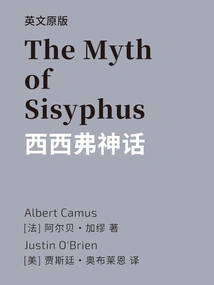

The Myth of Sisyphus
Literature西西弗神话
(france) Albert Camus
"The Myth of Sisyphus" is a philosophical treatise by the French author Camus, which is a concentrated expression of his "philosophy of the absurd" thoughts. Among all Camus's literary works and philosophical essays, "absurdity" is the most important concept he emphasized. Camus believed that the absurd was born from "the confrontation between the call of mankind and the irrational silence of the world." In this book, he analyzes and explores the thoughts of many philosophers, such as Jaspers, Kierkegaard, Husserl, Heidegger, and Shestov, and also comments on the literary masterpieces of Dostoevsky and others, all with the purpose of elucidating his concept of "absurdity", and further points out: "To live is to experience the absurd. To experience the absurd, the first thing is to look directly at it." He guides us to understand our own destiny like Sisyphus, resist our own destiny, and live without hesitation.

Outsider
General Fiction局外人
(france) Albert Camus
This book is one of the masterpieces of Nobel Prize winner Albert Camus. The book tells the story of a young man who is indifferent to the outside world and has no pursuit of life. He accidentally got involved in a conflict while on vacation at the beach, committed murder, and had to go to court. He was eventually sentenced to death for not shedding tears at his mother's funeral. The whole book uses a first-person narrative technique to strongly contrast the protagonist's inner activities with the absurd surrounding environment, satirizing the hypocrisy and absurd nature of the society at that time.

Plague
General Fiction鼠疫
(france) Albert Camus
"The Plague" is a symbolic novel. The novel tells the story of the people of Ahlan City uniting to fight and defeat the plague. It fully explains how people should face absurd philosophy. This book is Camus's representative work in the so-called "Resistance Series". The author believes that we should not just realize that human life is meaningless, but should express the value of resistance and action in these works, express the unity of people in resistance and the dignity that people will find in themselves.