Library

Browse and search novels

13 novels found

Civilization Story

(english) Herbert George Wells

180K0

"The Story of Civilization" is a popular history of world civilization. This book discusses the history of the world spanning five continents from the formation of the earth, the origin of living things and human beings to the modern World War I. It does not have the academic spirit of a serious historical work, and it got rid of the intolerance of nationalism and even Eurocentrism earlier than many works of that era. The book focuses on the heritage of human culture, including ideas, culture, religion and other heritages, which are truly valuable things in the course of human civilization.

General History of the World (2 Volumes in Total)

(english) Herbert George Wells

675K0

It is indeed not an easy task to write an interesting, easy-to-read, easy-to-understand world history work that does not require more than a million words, but Wells has accomplished this seemingly impossible task well in "A General History of the World". This book traces the beginnings of human civilization to World War II. The ups and downs of ancient Egypt, ancient Greece, ancient Rome, Christian society, the Islamic world, and great powers such as the United Kingdom, France, and the United States are presented to readers in an orderly manner. The rich knowledge and broad vision provided by "General History of the World" are not inferior to any masterpieces of imperial history.

Time Machine

Time Machine

General Fiction

(english) Herbert George Wells

62K01

"The Time Machine" is a science fiction novel published by the famous British novelist Herbert George Wells in 1895. This book is also Wells' first science fiction novel. Some critics identified the publication of this book as "the first year of the birth of science fiction." The work describes a scientist who travels to AD 802,701 through a time travel machine. At this time, the earth was full of palace-like buildings. Humanity evolved into two categories: the Eloi and the Morlocks. The author will describe the elegant nobles as animals raised by Moloch and also used as food, showing a gloomy scene of human degradation.

Invisible Man

Invisible Man

General Fiction

(english) Herbert George Wells

100K0

Griffin, a genius chemist, suffered from albinism since childhood. He was obsessed with studying the color of the body, which led to his fascination with invisibility. He eventually invented a drug that can make the entire body completely transparent. However, after he experimented on himself, he was unable to return to his original state and became invisible. The invisible Griffin could no longer live in London, so he came to a remote town to live in seclusion, hoping to slowly find a way to become invisible. But due to his stubbornness and extreme despair, he gradually embarked on a wrong path.

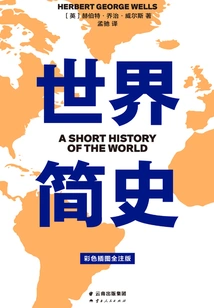
A Brief History of the World

(english) Herbert George Wells

203K7.9

"A Brief History of the World" (also known as "Wells' Brief History of the World") is a unique world history written by the famous British writer H. G. Wells. The content traces back to the beginning of human civilization and down to the Second World War. There are unique narratives on ancient Egypt, ancient Greece and Rome, the European Renaissance, the Reformation, the British Industrial Revolution, the American War of Independence, the French Revolution, etc. Eastern culture, including Confucianism and Taoism, are all involved. Wells wrote history as a writer, with a brilliant literary talent, so it is highly readable and has been loved by readers all over the world since its publication.

A Brief History of the World

(english) Herbert George Wells

166K0

A Brief History of the World is a classic work by Herbert George Wells. The book includes a total of 67 chapters, using a brisk and concise style to present the historical knowledge of living things since the origin of life and the current stage of human beings to readers in an orderly manner. From the beginning of human civilization, the origin of life, the evolution of species, to the end of World War I and the reconstruction of world politics and economy. It includes the history of the rise and fall of great powers in the entire process of human civilization, including representative ones such as ancient Egypt, ancient Greece, the Renaissance, the Reformation, the British Industrial Revolution, the American War of Independence, and the French Revolution, as well as a unique exposition of Eastern culture. After reading the whole book, readers will have a general understanding of the overall picture of world history, which will help them gain an in-depth understanding and research of the entire world history or the history of a specific period or country. This book tells historical knowledge in the form of popular science to avoid being boring. It is easy to become interested and understand the content for any reader who likes history and wants to understand it.

A Brief History of the World

(english) Herbert George Wells

693K6.9

Wells' "A Brief History of the World" (also translated as "Outline of World History") has eight parts and thirty-eight chapters, starting from the earth in the universe and ending with the First World War, recreating the rise and fall of ancient Egypt, ancient Greece, ancient Rome, the United Kingdom, the United States, France and other superpowers. The author peels off the long and complicated historical materials and presents them one by one, in a simple and easy-to-understand narrative manner, making it a hearty read. It can be called a world history like "Historical Records". Once this book was published in 1920, it immediately caused a sensation and was reprinted many times.

A Brief History of the World

(english) Herbert George Wells

199K6.714

The time node of "A Brief History of the World" is from the earth in the universe to the "Versailles Peace Treaty" after the First World War. It is a unique world history. From the origin of human civilization to the end of the First World War, it re-presents the various tastes of human civilization in front of people. In this book, the author gives unique descriptions of ancient Egypt, ancient Greece and Rome, the European Renaissance, the Reformation, the American War of Independence, etc., And also touches on Eastern cultures such as Confucianism and Taoism. The author does not use boring piles of literary historical materials to make statements, but uses a stripped-down method to simplify the complicated literary historical materials and present this period of history clearly in front of people. It can be called a representative work of world history.

A Brief History of the World

(english) Herbert George Wells

200K0

"A Brief History of the World" is a unique history of the world written by the British historian Herbert George Wells. With an extremely broad vision and a brisk and concise style, it sorts out the history of mankind since the origin of biology. The content of this book traces back to the beginning of human civilization, the origin of life, and the evolution of species, to the end of World War I and the reconstruction of world politics and economy. The book has unique descriptions of ancient Egypt, ancient Greece and Rome, the European Renaissance, the Reformation, the British Industrial Revolution, the American War of Independence, the French Revolution, etc.; It also touches on Eastern culture, including Confucianism and Taoism.

A Brief History of the World (hardcover Revised Edition)

(english) Herbert George Wells

209K0

Herbert George Wells (1866-1946), a famous British science fiction writer and social thinker, was one of the three masters of British realist novels in the early 20th century. His representative work is "The Time Machine". Wells wrote more than one hundred works in his lifetime, covering various fields such as literature, science, history, society, politics and so on. He was one of the most prolific writers in modern times. After World War I, he created the 1 million-word "Outline of World History", which showed his side as a historian. "A Brief History of the World" is another popular classic of history after his masterpiece "Outline of World History".

Time Machine

Time Machine

General Fiction

(english) Herbert George Wells

93K0

I am a scientist living in London, England, and I have invented a time machine. Is time travel possible? Before exploration, there is no truth! I decided to try it myself. Taking it, I traveled to the future AD 802, 701. The scene in front of me was incredible... "The Time Machine is a foundational work in science fiction, pioneering the theme of time travel. Its story is twists and turns, full of tension, and has far-reaching implications. It is still shocking to read today. It is a must-read classic in science fiction literature." - Liu Cixin (author of "The Three-Body Problem" and winner of the Hugo Award)

Interstellar War

Interstellar War

General Fiction

(english) Herbert George Wells

113K0

"The War of the Worlds" is a science fiction novel by Herbert George Wells, first published in 1898. In the story, Martians with a highly developed civilization descended from the sky in an aircraft. After a brief period of silence, they began to implement an organized plan to conquer the earth. The human army was vulnerable to the Martians' advanced weapons. Towns were destroyed, traffic was paralyzed, tens of millions of people fled in panic, and the world fell into extreme chaos. However, just when the earth was about to be completely conquered, the Martians suffered an unexpected defeat... "Star Wars" written by Herbert George Wells is the earliest science fiction novel with the theme of "alien invasion". It has been very popular since its inception and has been adapted into countless movies, TV series, radio dramas, comics, games, etc., Including the movie of the same name directed by Spielberg and starring Tom Cruise.

Vs Martians

Vs Martians

General Fiction

(english) Herbert George Wells

87K0

This is the masterpiece of British science fiction master George Wells. The novel tells the story of Martians with round bodies and waving octopus-like tentacles who came to the Earth in circular aircraft. They used thermal light energy weapons and chemical weapons to attack the Earthlings. They were rampant, killing everywhere, and people fled London one after another. Just when people fell into despair, Martians died in large numbers. The remaining Martians sat in their aircraft and left the earth in despair. It turns out that they, like the red grass they brought, have no immunity to pathogenic bacteria on the earth. This book describes for the first time an invasion from interstellar space (alien).