Library
Browse and search books
1 novel found
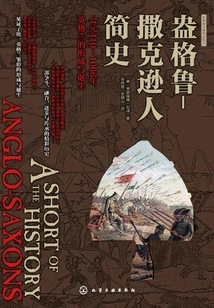
盎格鲁-撒克逊人简史
(english) Henrietta Lizer
From the early 5th century AD, when the Anglo-Saxons from Germanic tribes immigrated to Britain, to William the Great's Norman Conquest in 1066, this period of history is seen as the embryonic stage of the formation of unified England. In 410 AD, the Roman legions withdrew from Britain, and the migration of the Anglo-Saxons ushered in the "dark age" of Britain's post-Roman era. During this period, the interaction of society, culture, economy and politics stirred up wonderful historical moments in the long history of England. The Anglo-Saxons conquered the Britons and established several kingdoms such as Northumbria, Mercia, Wessex, and Kent. Kings and their successors fought with each other to expand their power. As a result, the hierarchical order developed and England gradually integrated. The Anglo-Saxons experienced a change of faith, and a unified religious language played an important role in maintaining the political order of each kingdom, and also improved the level of civilization in England during the Anglo-Saxon period. In the Anglo-Saxon era of more than 600 years, with regime changes, frequent wars, faith games, and civilizational progress, a unified England gradually took shape. Henrietta Lizer's latest analysis of surprising finds in Anglo-Saxon archeology and art explores the relationships between the kingdoms of Britain after the Roman withdrawal, the Christianization of the Anglo-Saxons, the rule of Mercia, the rise of Wessex, the return of the Vikings, and the end of the Anglo-Saxon era.
From the early 5th century AD, when the Anglo-Saxons from Germanic tribes immigrated to Britain, to William the Great's Norman Conquest in 1066, this period of history is seen as the embryonic stage of the formation of unified England. In 410 AD, the Roman legions withdrew from Britain, and the migration of the Anglo-Saxons ushered in the "dark age" of Britain's post-Roman era. During this period, the interaction of society, culture, economy and politics stirred up wonderful historical moments in the long history of England. The Anglo-Saxons conquered the Britons and established several kingdoms such as Northumbria, Mercia, Wessex, and Kent. Kings and their successors fought with each other to expand their power. As a result, the hierarchical order developed and England gradually integrated. The Anglo-Saxons experienced a change of faith, and a unified religious language played an important role in maintaining the political order of each kingdom, and also improved the level of civilization in England during the Anglo-Saxon period. In the Anglo-Saxon era of more than 600 years, with regime changes, frequent wars, faith games, and civilizational progress, a unified England gradually took shape. Henrietta Lizer's latest analysis of surprising finds in Anglo-Saxon archeology and art explores the relationships between the kingdoms of Britain after the Roman withdrawal, the Christianization of the Anglo-Saxons, the rule of Mercia, the rise of Wessex, the return of the Vikings, and the end of the Anglo-Saxon era.