Library
Browse and search books
5 novels found

福斯特短篇小说集(E.M.福斯特文集)
(english) E. M. Forster
"Forster's Short Stories" is the merger of two short story collections "The Omnibus" and "The Eternal Moment" written by E. M. Forster before World War I. It contains a total of twelve short stories. According to the author himself, these twelve short stories are all fantasy novels, among which "The Machine Stops" is a rare science fiction novel by Forster. In another important work, "The Eternal Moment", the author gives a detailed description of the character's inner world, and foresees that the disorderly development of tourism will have a negative impact on small mountain villages and their residents. These twelve stories contain themes that would recur in Forster's later novels, and they present a belief in liberalism, self-actualization, and spiritual honesty, qualities that might be used to defeat oppressive lies.
"Forster's Short Stories" is the merger of two short story collections "The Omnibus" and "The Eternal Moment" written by E. M. Forster before World War I. It contains a total of twelve short stories. According to the author himself, these twelve short stories are all fantasy novels, among which "The Machine Stops" is a rare science fiction novel by Forster. In another important work, "The Eternal Moment", the author gives a detailed description of the character's inner world, and foresees that the disorderly development of tourism will have a negative impact on small mountain villages and their residents. These twelve stories contain themes that would recur in Forster's later novels, and they present a belief in liberalism, self-actualization, and spiritual honesty, qualities that might be used to defeat oppressive lies.
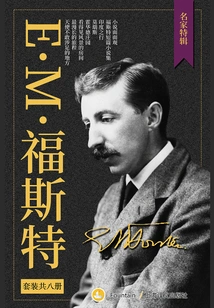
E.M.福斯特文集套装(套装共8册)
(english) E. M. Forster
E. M. Forster's major works include the novels "Where Angels Fear to Go" (1905), "The Longest Journey" (1907), "A Room with a View" (1908), "Howards End" (1910), and "Maurice" (created between 1913 and 1914, published after the author's death in 1971). Editions), A Passage to India (1924); two short story collections, The Omnibus (1911) and Eternal Moments (1928), later combined into Forster's Collected Short Stories (1947); and the acclaimed novel review monograph Aspects of the Novel (1927, originally a series of lectures at Cambridge University). The "Collected Works of E. M. Forster" published by Shanghai Translation Publishing House includes all the above-mentioned important works of this literary giant.
E. M. Forster's major works include the novels "Where Angels Fear to Go" (1905), "The Longest Journey" (1907), "A Room with a View" (1908), "Howards End" (1910), and "Maurice" (created between 1913 and 1914, published after the author's death in 1971). Editions), A Passage to India (1924); two short story collections, The Omnibus (1911) and Eternal Moments (1928), later combined into Forster's Collected Short Stories (1947); and the acclaimed novel review monograph Aspects of the Novel (1927, originally a series of lectures at Cambridge University). The "Collected Works of E. M. Forster" published by Shanghai Translation Publishing House includes all the above-mentioned important works of this literary giant.

Maurice (original Movie of the Same Name)
General Fiction莫瑞斯(同名电影原著)
(english) E. M. Forster
E. M. Forster is one of the greatest British novelists of the twentieth century. "Maurice" was written during the author's heyday, but because it involved same-sex love, it was not published until 1971 after the author's death, making it the last publicly published novel by the master of fiction. This classic work of same-sex love literature has already entered the temple of literary classics. The film of the same name starring James Wilby and Hugh Grant has also become a classic in film history. Maurice and Clive met and fell in love in Cambridge when they were young. However, after three years of knowing each other, Clive chose an official career and married an aristocratic lady, leaving this relationship behind. Maurice, who still persisted, almost suffered a mental breakdown and was on the verge of suicide. In despair, he finally met Alek, the gamekeeper who fell in love with him regardless of everything. True love made the two of them break through the double imprisonment of class differences and social taboos with difficulty, and lived together happily.
E. M. Forster is one of the greatest British novelists of the twentieth century. "Maurice" was written during the author's heyday, but because it involved same-sex love, it was not published until 1971 after the author's death, making it the last publicly published novel by the master of fiction. This classic work of same-sex love literature has already entered the temple of literary classics. The film of the same name starring James Wilby and Hugh Grant has also become a classic in film history. Maurice and Clive met and fell in love in Cambridge when they were young. However, after three years of knowing each other, Clive chose an official career and married an aristocratic lady, leaving this relationship behind. Maurice, who still persisted, almost suffered a mental breakdown and was on the verge of suicide. In despair, he finally met Alek, the gamekeeper who fell in love with him regardless of everything. True love made the two of them break through the double imprisonment of class differences and social taboos with difficulty, and lived together happily.
Howards End
General Fiction霍华德庄园
(english) E. M. Forster
"Howards End" is one of Forster's most important full-length masterpieces. It ranks 38th on the list of "The 100 Best English Novels of the 20th Century" by the famous Random House "Modern Library". The novel revolves around a beautiful old manor - Howards End. By describing the marriage life of two sisters, it presents to people the various social contradictions that British society faced under the impact of industrialization and mechanical civilization in the early 20th century, and explores the political, economic, class, gender, cultural and other issues in the period of British social transformation. Foster's novels have strong social critical significance, are full of humor and irony, have sophisticated plots, are also highly symbolic and even philosophical, and perfectly integrate artistry and readability.
"Howards End" is one of Forster's most important full-length masterpieces. It ranks 38th on the list of "The 100 Best English Novels of the 20th Century" by the famous Random House "Modern Library". The novel revolves around a beautiful old manor - Howards End. By describing the marriage life of two sisters, it presents to people the various social contradictions that British society faced under the impact of industrialization and mechanical civilization in the early 20th century, and explores the political, economic, class, gender, cultural and other issues in the period of British social transformation. Foster's novels have strong social critical significance, are full of humor and irony, have sophisticated plots, are also highly symbolic and even philosophical, and perfectly integrate artistry and readability.
Room with View
General Fiction看得见风景的房间
(english) E. M. Forster
Lucy and her cousin came to Italy for vacation and wanted to have a room with a view, but the result was not satisfactory. The Emersons offered to give them their room, a warm-hearted act that seemed to offend Lucy, who was born in the upper class of England. The cousin kept Lucy under strict supervision for fear that she would do something contrary to her status. But as their understanding deepens, Lucy seems to have developed a liking for the Emersons. Faced with her own feelings, Lucy falls into deep contradictions. The trip to Italy ended unhappy, but it planted seeds in Lucy's heart. Later, Lucy got engaged to Cecil, but she could never forget Emerson. At the last moment, Lucy bravely broke through the many class barriers set by conservative British society and decided to live for herself.
Lucy and her cousin came to Italy for vacation and wanted to have a room with a view, but the result was not satisfactory. The Emersons offered to give them their room, a warm-hearted act that seemed to offend Lucy, who was born in the upper class of England. The cousin kept Lucy under strict supervision for fear that she would do something contrary to her status. But as their understanding deepens, Lucy seems to have developed a liking for the Emersons. Faced with her own feelings, Lucy falls into deep contradictions. The trip to Italy ended unhappy, but it planted seeds in Lucy's heart. Later, Lucy got engaged to Cecil, but she could never forget Emerson. At the last moment, Lucy bravely broke through the many class barriers set by conservative British society and decided to live for herself.