Library
Browse and search books
1 novel found
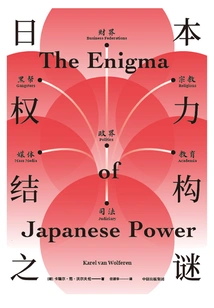
日本权力结构之谜
(dutch) Karel Van Wolflen
Modern Japan seems to have joined the ranks of the world's major powers. Especially after the Second World War, it quickly recovered from the ruins of the defeated country, took the restoration of economic strength as its national goal, moved forward at full speed, and created one economic miracle after another. But Japan confuses the world. In world politics and trade relations, it does not behave like a responsible modern country; in the eyes of Japanese politicians and scholars, they are the "victims" of Western misunderstanding and jealousy. In the case of the Fukushima nuclear accident in 2011, the delay and concealment in responding to the accident and the slow policy in resettling the victims exposed the Japanese government's incompetence and weakness in facing major events to the world. The government is unable to make decisive decisions, social classes are narrow and solidified, and economic reform is struggling. So who is ruling Japan behind the scenes? Governments, parties, plutocrats, the judicial system, the media and organized gangs... Why is it so difficult to find the core of power, an object worthy of accountability? Wolfrun observes Japan from an outsider's perspective, and combines more than 30 years of interviews in Japan and private conversations with business and political figures to comprehensively analyze the operating mechanism of Japanese society, deeply interpret Japan's post-war history and future trends, and present a real Japan that we have never understood. The government, political parties, business plutocrats, police and courts, mass media, and even organized gangs and emerging religions, the powerful people in all aspects of society, have established a dense network of personal relationships covering the country. Power is dispersed in every corner of society, and it has also created a docile citizenry. Male salarymen who devote themselves wholeheartedly to the company, women who are only suitable for staying at home, and students who lack the ability to innovate and are like test-taking machines. He uncovered the huge network maintained by personal connections, exposed the cloak of "Japanese culture" that disguises power oppression as traditional culture, and shattered the dreamy myth about "Japan's Oneness" for more than 30 years.
Modern Japan seems to have joined the ranks of the world's major powers. Especially after the Second World War, it quickly recovered from the ruins of the defeated country, took the restoration of economic strength as its national goal, moved forward at full speed, and created one economic miracle after another. But Japan confuses the world. In world politics and trade relations, it does not behave like a responsible modern country; in the eyes of Japanese politicians and scholars, they are the "victims" of Western misunderstanding and jealousy. In the case of the Fukushima nuclear accident in 2011, the delay and concealment in responding to the accident and the slow policy in resettling the victims exposed the Japanese government's incompetence and weakness in facing major events to the world. The government is unable to make decisive decisions, social classes are narrow and solidified, and economic reform is struggling. So who is ruling Japan behind the scenes? Governments, parties, plutocrats, the judicial system, the media and organized gangs... Why is it so difficult to find the core of power, an object worthy of accountability? Wolfrun observes Japan from an outsider's perspective, and combines more than 30 years of interviews in Japan and private conversations with business and political figures to comprehensively analyze the operating mechanism of Japanese society, deeply interpret Japan's post-war history and future trends, and present a real Japan that we have never understood. The government, political parties, business plutocrats, police and courts, mass media, and even organized gangs and emerging religions, the powerful people in all aspects of society, have established a dense network of personal relationships covering the country. Power is dispersed in every corner of society, and it has also created a docile citizenry. Male salarymen who devote themselves wholeheartedly to the company, women who are only suitable for staying at home, and students who lack the ability to innovate and are like test-taking machines. He uncovered the huge network maintained by personal connections, exposed the cloak of "Japanese culture" that disguises power oppression as traditional culture, and shattered the dreamy myth about "Japan's Oneness" for more than 30 years.