Library
Browse and search books
1 novel found
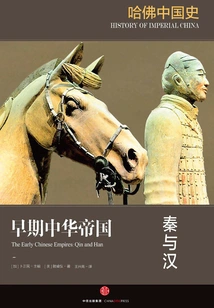
哈佛中国史1·早期中华帝国:秦与汉
(canada) Edited By Bu Zhengmin (u. S.) Written By Lu Weiyi
"Harvard History of China 1: Early Chinese Empire: Qin and Han" is the first volume of the "Harvard History of China" series. Just like ancient Greece and Rome to the West, the two empires of Qin and Han constituted the "classical" era of Chinese civilization. The author Lu Weiyi observes the two early empires of Qin and Han in the overall perspective of global history and Chinese history, and conducts an in-depth discussion on the five main characteristics of this classical era. The book is divided into ten special topics, each of which is ordered by time evolution, comprehensively and systematically showing the overview and evolution of China's Qin and Han dynasties.
"Harvard History of China 1: Early Chinese Empire: Qin and Han" is the first volume of the "Harvard History of China" series. Just like ancient Greece and Rome to the West, the two empires of Qin and Han constituted the "classical" era of Chinese civilization. The author Lu Weiyi observes the two early empires of Qin and Han in the overall perspective of global history and Chinese history, and conducts an in-depth discussion on the five main characteristics of this classical era. The book is divided into ten special topics, each of which is ordered by time evolution, comprehensively and systematically showing the overview and evolution of China's Qin and Han dynasties.