Library
Browse and search books
25 novels found
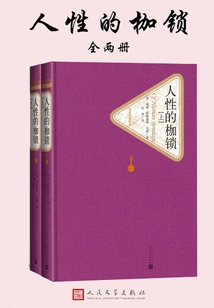
The Shackles of Humanity (2 Volumes in Total)
General Fiction人性的枷锁(全2册)
(british) Maugham
"Human Bonds" is a long semi-autobiographical novel by the famous British writer William Somerset Maugham in the 19th century. It is also his representative work and was published in 1915. This novel is a semi-autobiographical work. By narrating the protagonist Philip's thirty-year life experience since childhood, the novel reflects a young man's pain, confusion, disappointment, frustration and exploration, as well as his process of gradually getting rid of all kinds of shackles, finding the meaning of life, moving toward maturity, and gaining spiritual liberation.
"Human Bonds" is a long semi-autobiographical novel by the famous British writer William Somerset Maugham in the 19th century. It is also his representative work and was published in 1915. This novel is a semi-autobiographical work. By narrating the protagonist Philip's thirty-year life experience since childhood, the novel reflects a young man's pain, confusion, disappointment, frustration and exploration, as well as his process of gradually getting rid of all kinds of shackles, finding the meaning of life, moving toward maturity, and gaining spiritual liberation.
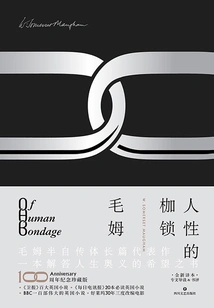
Human Shackles
General Fiction人性的枷锁
(british) Maugham
Philip lost his parents when he was young and was born with a deformed foot. He was fostered in his uncle's house. Born deformed and dependent on others, young Philip was sensitive and had low self-esteem. He was often teased and bullied at school, and even though he prayed diligently, he still could not escape the fate of being disabled. Philip understands that his future must be fought on his own. Soon he decided to leave school and live for himself. However, the trial of his humanity has just begun. Family, love, art, ideals, he went round and round in confusion, fought against the flames again and again in the heavy shackles, but fought with all his strength, and finally found a peaceful harbor after reading all the sails... Maugham had a stuttering problem since he was a child. After his parents passed away one after another at a very young age, he began to live under the shelter of others. His childhood experiences deeply influenced his literary creation. This book is an in-depth portrayal of his troubled childhood. In this way, he tried to release the unhappiness caused by the past and explore the meaning of life using the perspectives of philosophy, art and religion.
Philip lost his parents when he was young and was born with a deformed foot. He was fostered in his uncle's house. Born deformed and dependent on others, young Philip was sensitive and had low self-esteem. He was often teased and bullied at school, and even though he prayed diligently, he still could not escape the fate of being disabled. Philip understands that his future must be fought on his own. Soon he decided to leave school and live for himself. However, the trial of his humanity has just begun. Family, love, art, ideals, he went round and round in confusion, fought against the flames again and again in the heavy shackles, but fought with all his strength, and finally found a peaceful harbor after reading all the sails... Maugham had a stuttering problem since he was a child. After his parents passed away one after another at a very young age, he began to live under the shelter of others. His childhood experiences deeply influenced his literary creation. This book is an in-depth portrayal of his troubled childhood. In this way, he tried to release the unhappiness caused by the past and explore the meaning of life using the perspectives of philosophy, art and religion.
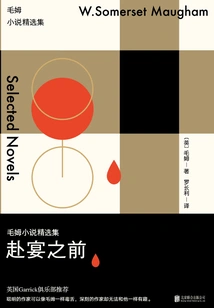
赴宴之前(毛姆小说精选集)
(british) Maugham
Maugham was not good at words and liked to observe people quietly. He can look into a person's eyes and heart and see through your uneasiness, your hypocrisy, your pettiness, and your greed. What's amazing is that when you read these stories that seem to be written about other people, you are often shocked in your heart... "Red Hair", will the moon on the island thirty years later still be as bright as it was thirty years ago? "Before the Dinner", the daughter returns from Borneo, and behind it lies the secret of her husband's depravity, alcoholism, and suicide... "Lunch", a poor writer has lunch with admiring fans, staging a small inner theater of cash-strapped... "The Fall of Edward Barnard", I love life now, full and meaningful, is this a kind of depravity? ... The water in the entire heaven is almost drained. Will faith be stronger or dry up?
Maugham was not good at words and liked to observe people quietly. He can look into a person's eyes and heart and see through your uneasiness, your hypocrisy, your pettiness, and your greed. What's amazing is that when you read these stories that seem to be written about other people, you are often shocked in your heart... "Red Hair", will the moon on the island thirty years later still be as bright as it was thirty years ago? "Before the Dinner", the daughter returns from Borneo, and behind it lies the secret of her husband's depravity, alcoholism, and suicide... "Lunch", a poor writer has lunch with admiring fans, staging a small inner theater of cash-strapped... "The Fall of Edward Barnard", I love life now, full and meaningful, is this a kind of depravity? ... The water in the entire heaven is almost drained. Will faith be stronger or dry up?
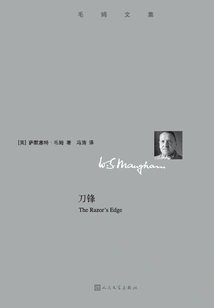
Blade
General Fiction刀锋
(british) Maugham
"The Blade" was published in 1944 and was Maugham's first novel after coming to the United States in 1940. The protagonist Larry is a product of the First World War, and the era he reflects-the era between the two wars-is the twilight era of Eurocentrism. Larry read extensively in Paris and learned several languages, but Paris and France only became his midway islands; what he finally took his family to was neither the Catholicism that Father Ensham wanted to bring him back to the pen as a lost lamb, nor the mysticism he wanted to learn from the Polish miner Costi, but the Vedas philosophy of India.
"The Blade" was published in 1944 and was Maugham's first novel after coming to the United States in 1940. The protagonist Larry is a product of the First World War, and the era he reflects-the era between the two wars-is the twilight era of Eurocentrism. Larry read extensively in Paris and learned several languages, but Paris and France only became his midway islands; what he finally took his family to was neither the Catholicism that Father Ensham wanted to bring him back to the pen as a lost lamb, nor the mysticism he wanted to learn from the Polish miner Costi, but the Vedas philosophy of India.
The Moon and Sixpence
General Fiction月亮与六便士
(british) Maugham
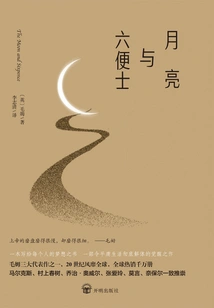
Unabridged full version, Maugham's classic work, Maugham's former residence collection version, a classic masterpiece by the British novelist of the 20th century, a farewell book to mediocre life! One of Maugham's three masterpieces. Maugham's masterpiece that was popular all over the world in the 20th century, Maugham's semi-autobiographical novel, one of the three masterpieces, the book of the same name has a Douban score of 9.2. Marquez, Orwell, Graham Greene, Naipaul, Woolf, Eileen Chang, Haruki Murakami, Wang Anyi, Liu Yu, Mao Jian, Dong Qiao, Feng Tang, Cao Wenxuan and others unanimously recommended. Since its inception, it has been popular in 110 countries including the United Kingdom, the United States, Italy, and Canada in 62 languages, with global sales exceeding 60 million copies.
Unabridged full version, Maugham's classic work, Maugham's former residence collection version, a classic masterpiece by the British novelist of the 20th century, a farewell book to mediocre life! One of Maugham's three masterpieces. Maugham's masterpiece that was popular all over the world in the 20th century, Maugham's semi-autobiographical novel, one of the three masterpieces, the book of the same name has a Douban score of 9.2. Marquez, Orwell, Graham Greene, Naipaul, Woolf, Eileen Chang, Haruki Murakami, Wang Anyi, Liu Yu, Mao Jian, Dong Qiao, Feng Tang, Cao Wenxuan and others unanimously recommended. Since its inception, it has been popular in 110 countries including the United Kingdom, the United States, Italy, and Canada in 62 languages, with global sales exceeding 60 million copies.

Maugham's Writing Notes
Literature毛姆写作笔记
(british) Maugham
When Maugham was 75 years old, he personally selected 15 volumes of his notes and added concise notes to write this book. The book covers Maugham's life experience and inner thinking from the age of 18 to 70, and is full of keen observations. This autobiographical note is the germ of many of Maugham's outstanding works. The writing inspiration for "The Moon and Sixpence" and "The Blade" came from this. This is undoubtedly one of Maugham's most important and true works, and a summary of his life. This book can be regarded as the starting point and end point of Maugham's literary creation, and it is his farewell to his long literary career.
When Maugham was 75 years old, he personally selected 15 volumes of his notes and added concise notes to write this book. The book covers Maugham's life experience and inner thinking from the age of 18 to 70, and is full of keen observations. This autobiographical note is the germ of many of Maugham's outstanding works. The writing inspiration for "The Moon and Sixpence" and "The Blade" came from this. This is undoubtedly one of Maugham's most important and true works, and a summary of his life. This book can be regarded as the starting point and end point of Maugham's literary creation, and it is his farewell to his long literary career.
Portrait of a Gentleman
General Fiction一位绅士的画像
(british) Maugham
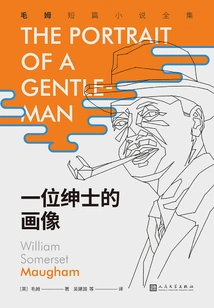
"The Portrait of a Gentleman" is the seventh volume of "The Complete Collection of Maugham's Short Stories", which contains 15 short stories in total. It is interesting, fascinating, philosophical and thought-provoking to read. The ending of the story is especially lingering, full of aesthetic significance and artistic tension, which makes people unable to bear to read. These stories all take place in the South Pacific Islands, China, South Korea and other places. They describe the various adventures and curious experiences of Westerners in the mysterious world of the East, as well as their joys and sorrows in life. They reflect the conflict and integration of interactions and exchanges between Western and Eastern civilizations, and reveal themes such as money and love, marriage and family, good and evil, the excesses of the upper class, the various behaviors of ordinary people, and the nature of human nature.
"The Portrait of a Gentleman" is the seventh volume of "The Complete Collection of Maugham's Short Stories", which contains 15 short stories in total. It is interesting, fascinating, philosophical and thought-provoking to read. The ending of the story is especially lingering, full of aesthetic significance and artistic tension, which makes people unable to bear to read. These stories all take place in the South Pacific Islands, China, South Korea and other places. They describe the various adventures and curious experiences of Westerners in the mysterious world of the East, as well as their joys and sorrows in life. They reflect the conflict and integration of interactions and exchanges between Western and Eastern civilizations, and reveal themes such as money and love, marriage and family, good and evil, the excesses of the upper class, the various behaviors of ordinary people, and the nature of human nature.
Blade (collected Works of Maugham)
General Fiction刀锋(毛姆文集)
(british) Maugham
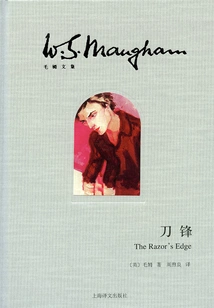
"The Blade" is one of the most important masterpieces of novels by the famous British writer and "story master" Maugham. Larry Darrell, a young American pilot, met an Irish comrade in the army. In a battle, this comrade died trying to rescue Larry. Larry therefore felt confused about life and could not understand why there was evil and misfortune in the world. After demobilization, Larry refused to go to college or get a job, and wanted to find the ultimate goal in life. For this reason, he left his fiancée and came to Paris, then traveled around the world from Paris, and finally arrived in India. Finally he had a profound understanding of life, returned to the United States, became a taxi driver, and lived in seclusion in the city. The protagonist Larry in "The Blade" is based on the famous philosopher Wittgenstein, and vividly and profoundly explores and displays the mental journey of an entire generation of Western intellectuals in their search for the meaning of life.
"The Blade" is one of the most important masterpieces of novels by the famous British writer and "story master" Maugham. Larry Darrell, a young American pilot, met an Irish comrade in the army. In a battle, this comrade died trying to rescue Larry. Larry therefore felt confused about life and could not understand why there was evil and misfortune in the world. After demobilization, Larry refused to go to college or get a job, and wanted to find the ultimate goal in life. For this reason, he left his fiancée and came to Paris, then traveled around the world from Paris, and finally arrived in India. Finally he had a profound understanding of life, returned to the United States, became a taxi driver, and lived in seclusion in the city. The protagonist Larry in "The Blade" is based on the famous philosopher Wittgenstein, and vividly and profoundly explores and displays the mental journey of an entire generation of Western intellectuals in their search for the meaning of life.
Catalina
General Fiction卡塔丽娜
(british) Maugham
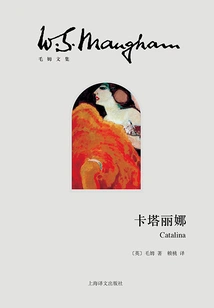
This is a unique Spanish-style story created by Maugham in his later years. The heroine of the story, Catalina, is a beautiful, intelligent but unfortunately disabled Spanish girl in the small town of Fort Rodriguez. One day, she claimed that the Virgin Mary suddenly appeared to her and told her that among the three Valero brothers in the city, the one who served God the most devoutly would heal her lameness. The eldest brother among the three brothers is none other than the Archbishop of Segovia. The Virgin's revelation seemed clear enough, but the development of things was beyond everyone's expectations. Around this innocent girl who claims to be favored by the Virgin, various forces have launched an overt and secret struggle with their own ulterior motives, all trying to take advantage of the "Mother's Appearance" to realize their unspeakable plans. In the end, can the girl resist all attempts to control her life and gain her own freedom, career and love?
This is a unique Spanish-style story created by Maugham in his later years. The heroine of the story, Catalina, is a beautiful, intelligent but unfortunately disabled Spanish girl in the small town of Fort Rodriguez. One day, she claimed that the Virgin Mary suddenly appeared to her and told her that among the three Valero brothers in the city, the one who served God the most devoutly would heal her lameness. The eldest brother among the three brothers is none other than the Archbishop of Segovia. The Virgin's revelation seemed clear enough, but the development of things was beyond everyone's expectations. Around this innocent girl who claims to be favored by the Virgin, various forces have launched an overt and secret struggle with their own ulterior motives, all trying to take advantage of the "Mother's Appearance" to realize their unspeakable plans. In the end, can the girl resist all attempts to control her life and gain her own freedom, career and love?
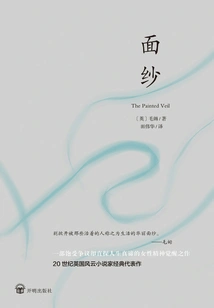
Veil
General Fiction面纱
(british) Maugham
Unabridged version, Maugham's analysis of human nature, Maugham's former residence collection version, high score on Douban, a classic for women's spiritual awakening! Marquez, Haruki Murakami, George Orwell, Eileen Chang, and Naipaul unanimously recommend it. The Maugham House Collection version is highly recommended by Douban!
Unabridged version, Maugham's analysis of human nature, Maugham's former residence collection version, high score on Douban, a classic for women's spiritual awakening! Marquez, Haruki Murakami, George Orwell, Eileen Chang, and Naipaul unanimously recommend it. The Maugham House Collection version is highly recommended by Douban!
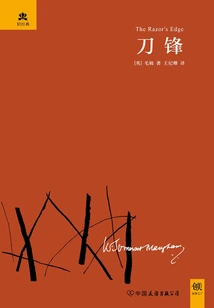
Light Classic: Blade
General Fiction轻经典:刀锋
(british) Maugham
American young man Larry once participated in World War I and witnessed the ruthlessness and cruelty of war, so he was confused about life. After the war, Larry was eager to seek the value and meaning of life. He broke off his engagement with his fiancée, wandered around Paris, and traveled around the world from Paris. Later, he had an epiphany in the mysteries of Indian religion and had a great sense of enlightenment about life. Then he returned to the United States and lived a life of "hermitism in the city". Maugham vividly describes Larry's journey of searching for the meaning of life, revealing the contradiction between spiritual pursuit and materialism. The protagonist Larry is based on the philosopher Wittgenstein, vividly and profoundly showing the mental journey of Western intellectuals searching for the meaning of life.
American young man Larry once participated in World War I and witnessed the ruthlessness and cruelty of war, so he was confused about life. After the war, Larry was eager to seek the value and meaning of life. He broke off his engagement with his fiancée, wandered around Paris, and traveled around the world from Paris. Later, he had an epiphany in the mysteries of Indian religion and had a great sense of enlightenment about life. Then he returned to the United States and lived a life of "hermitism in the city". Maugham vividly describes Larry's journey of searching for the meaning of life, revealing the contradiction between spiritual pursuit and materialism. The protagonist Larry is based on the philosopher Wittgenstein, vividly and profoundly showing the mental journey of Western intellectuals searching for the meaning of life.
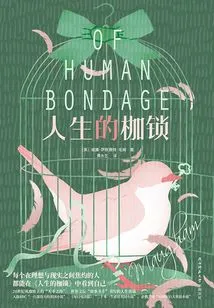
Shackles of Life
General Fiction人生的枷锁
(british) Maugham
"The Shackles of Life" is based on Maugham's real life experiences in his early years. It is Maugham's autobiographical novel. The protagonist Philip was born lame and his parents died, so he was fostered in his uncle's house since he was a child. As a young boy, Philip was often bullied and ridiculed because of his lameness. As he grew up, he decided to leave school and find the meaning of life. But his trial has just begun. Family, love, art, and ideals, he is going around in circles in confusion. He failed in painting and turned to medicine, but almost wasted his life because of people who were false to him. At the critical moment, Philip got rid of the shackles that bound him and found the meaning of life.
"The Shackles of Life" is based on Maugham's real life experiences in his early years. It is Maugham's autobiographical novel. The protagonist Philip was born lame and his parents died, so he was fostered in his uncle's house since he was a child. As a young boy, Philip was often bullied and ridiculed because of his lameness. As he grew up, he decided to leave school and find the meaning of life. But his trial has just begun. Family, love, art, and ideals, he is going around in circles in confusion. He failed in painting and turned to medicine, but almost wasted his life because of people who were false to him. At the critical moment, Philip got rid of the shackles that bound him and found the meaning of life.

Have Fun
General Fiction寻欢作乐
(british) Maugham
She has a truly free soul because she is true to her feelings! Somerset Maugham's own preface describes the original intention of creation, expert reading, and original picture and text interpretation. Reader's Three Circles Classic Library. After the famous writer Edward Driffield died, his second wife asked someone to write his biography. The narrator "I" of the novel, the young writer Ashenton, was invited by the biographer Roy to go to Driffield's country mansion to recall the story of his interaction with the writer. However, in the depths of my memory, what shines more dazzlingly than the writer is his ex-wife Rosie, a charming woman who was not bound by etiquette, was frank, passionate and innocent like a child. This story originates from real gossip in the British literary and art circles. A memory slowly reveals the anecdotes surrounding Rosie: she is charming, innocent and kind, and is willing to give up everything for her lover; she is fun-loving, frank and true, and is never shy to express her true feelings! Therefore, she became the only charming and perfect woman in Maugham's works.
She has a truly free soul because she is true to her feelings! Somerset Maugham's own preface describes the original intention of creation, expert reading, and original picture and text interpretation. Reader's Three Circles Classic Library. After the famous writer Edward Driffield died, his second wife asked someone to write his biography. The narrator "I" of the novel, the young writer Ashenton, was invited by the biographer Roy to go to Driffield's country mansion to recall the story of his interaction with the writer. However, in the depths of my memory, what shines more dazzlingly than the writer is his ex-wife Rosie, a charming woman who was not bound by etiquette, was frank, passionate and innocent like a child. This story originates from real gossip in the British literary and art circles. A memory slowly reveals the anecdotes surrounding Rosie: she is charming, innocent and kind, and is willing to give up everything for her lover; she is fun-loving, frank and true, and is never shy to express her true feelings! Therefore, she became the only charming and perfect woman in Maugham's works.
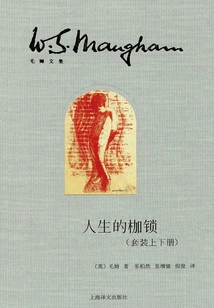
人生的枷锁(插图本)(毛姆文集)
(british) Maugham
"The Shackles of Life" is one of the most important masterpieces of the famous British writer and "story master" Maugham, and also his most famous autobiographical novel. The protagonist of the novel, Philip Carey, lost both his parents when he was young. Unfortunately, he was also born with a disability. He spent his childhood in an indifferent and unfamiliar environment, making his character withdrawn and sensitive. The years he spent in boarding school made him suffer from the unreasonable school system, and when he entered the society, he experienced pain in love. On the bumpy road of life, he had to struggle hard every step he took, but Kaili, who was independent in thought and personality, had been trying to break away from the two shackles that restricted his spirit, religion and petty citizen consciousness, and tried to find the true meaning of life in the chaotic and chaotic life.
"The Shackles of Life" is one of the most important masterpieces of the famous British writer and "story master" Maugham, and also his most famous autobiographical novel. The protagonist of the novel, Philip Carey, lost both his parents when he was young. Unfortunately, he was also born with a disability. He spent his childhood in an indifferent and unfamiliar environment, making his character withdrawn and sensitive. The years he spent in boarding school made him suffer from the unreasonable school system, and when he entered the society, he experienced pain in love. On the bumpy road of life, he had to struggle hard every step he took, but Kaili, who was independent in thought and personality, had been trying to break away from the two shackles that restricted his spirit, religion and petty citizen consciousness, and tried to find the true meaning of life in the chaotic and chaotic life.
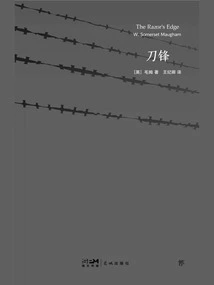
Blade (chuangmei Library)
General Fiction刀锋(创美文库)
(british) Maugham
"The Blade" is Maugham's classic philosophical work. Maugham condensed his thoughts on the world and life into this work. Riley served in the Air Force during World War I and flew high in the vast sky. He wanted "power and honor far beyond the world." The death of his comrade made him realize the helplessness and insurmountability of life. After being discharged from the army, Riley refused to go to college, get married, or find a job. He left his relatives and friends behind and traveled to Europe. Later, he went to India, where he was inspired by a Ganesha master's ashram and suddenly realized the true meaning of life. Riley chose to disappear among all living things.
"The Blade" is Maugham's classic philosophical work. Maugham condensed his thoughts on the world and life into this work. Riley served in the Air Force during World War I and flew high in the vast sky. He wanted "power and honor far beyond the world." The death of his comrade made him realize the helplessness and insurmountability of life. After being discharged from the army, Riley refused to go to college, get married, or find a job. He left his relatives and friends behind and traveled to Europe. Later, he went to India, where he was inspired by a Ganesha master's ashram and suddenly realized the true meaning of life. Riley chose to disappear among all living things.
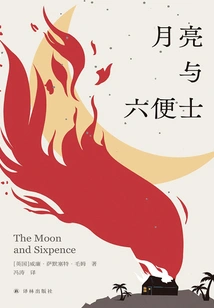
The Moon and Sixpence (somerset Maugham Collection)
General Fiction月亮与六便士(毛姆精选集)
(british) Maugham
A broker from the British Stock Exchange already had a stable career, social status, and a happy family, but he became obsessed with painting. He felt like he was "possessed by the devil." He suddenly abandoned his home and went to Paris to pursue his ideal of painting. No one could understand his behavior. After some bizarre encounters, the protagonist finally leaves the civilized world and escapes to the isolated island of Tahiti. His soul finally found peace. Some people think that the prototype of this novel is the French Impressionist painter Gauguin, which adds to its legendary color.
A broker from the British Stock Exchange already had a stable career, social status, and a happy family, but he became obsessed with painting. He felt like he was "possessed by the devil." He suddenly abandoned his home and went to Paris to pursue his ideal of painting. No one could understand his behavior. After some bizarre encounters, the protagonist finally leaves the civilized world and escapes to the isolated island of Tahiti. His soul finally found peace. Some people think that the prototype of this novel is the French Impressionist painter Gauguin, which adds to its legendary color.
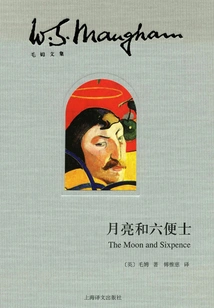
The Moon and Sixpence (collected Works of Somerset Maugham)
General Fiction月亮和六便士(毛姆文集)
(british) Maugham
"The Moon and Sixpence" is one of the most important novel masterpieces by the famous British writer and "story master" Maugham. The British painter in the novel is based on the French post-Impressionist master Paul Gauguin. The protagonist was originally a successful securities broker, but became obsessed with painting after reaching middle age. He suddenly abandoned his home and went to Paris to pursue the ideal of painting. He finally chose to abandon the civilized world and fled to the isolated island of Tahiti in the South Pacific. There he finally found the tranquility of his soul and the atmosphere suitable for his artistic temperament, and created one artistic masterpiece after another that shocked later generations. Through the life experiences of such a geek who devoted himself to the pursuit of art and was ignorant of the world, Maugham deeply explored the origin and essence of art, the relationship between personality and genius, as well as the contradictions and interactions between artists and society, art and life, and other thought-provoking issues.
"The Moon and Sixpence" is one of the most important novel masterpieces by the famous British writer and "story master" Maugham. The British painter in the novel is based on the French post-Impressionist master Paul Gauguin. The protagonist was originally a successful securities broker, but became obsessed with painting after reaching middle age. He suddenly abandoned his home and went to Paris to pursue the ideal of painting. He finally chose to abandon the civilized world and fled to the isolated island of Tahiti in the South Pacific. There he finally found the tranquility of his soul and the atmosphere suitable for his artistic temperament, and created one artistic masterpiece after another that shocked later generations. Through the life experiences of such a geek who devoted himself to the pursuit of art and was ignorant of the world, Maugham deeply explored the origin and essence of art, the relationship between personality and genius, as well as the contradictions and interactions between artists and society, art and life, and other thought-provoking issues.

The Moon and Sixpence
General Fiction月亮与六便士
(british) Maugham
Banker Charles, a middle-aged man with a successful career, suddenly abandoned his wife and children and ran away from home in order to pursue his secret dream of painting. He knows very well that every identity of a person is a kind of self-kidnapping, and only losing it is the way to freedom. In a foreign country, he was poor and sick, but he became more determined and persistent in his dream. He said: I have to paint, just like a drowning person has to struggle. After experiencing various bizarre encounters, he came to an isolated island in the South Pacific, married a local girl and had children, and successfully created a series of stunning masterpieces...
Banker Charles, a middle-aged man with a successful career, suddenly abandoned his wife and children and ran away from home in order to pursue his secret dream of painting. He knows very well that every identity of a person is a kind of self-kidnapping, and only losing it is the way to freedom. In a foreign country, he was poor and sick, but he became more determined and persistent in his dream. He said: I have to paint, just like a drowning person has to struggle. After experiencing various bizarre encounters, he came to an isolated island in the South Pacific, married a local girl and had children, and successfully created a series of stunning masterpieces...
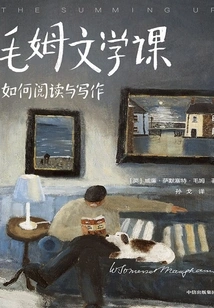
毛姆文学课:如何阅读与写作(作家榜经典名著)
(british) Maugham
Somerset Maugham, author of "The Moon and Sixpence": A Guide to Reading and Writing for Young People. The genius novelist Maugham is known as the "Master of Storytelling" and has won almost all honors in the European literary world. In his later years, Maugham personally talked about his reading experience and writing skills, and published this book to help more readers fully master: How to read a book efficiently? How to improve writing skills? How to enhance sensitivity? How to write good articles that are clear, concise and pleasant to the ears? How to write a drama to quickly win hearts and minds? How to use techniques when writing novels? How to improve comprehension and cognition through reading? Maugham uses humorous language and a sharp and concise style to explain to you the secrets of reading and writing. After reading this book, you will suddenly realize it and gain endless benefits!
Somerset Maugham, author of "The Moon and Sixpence": A Guide to Reading and Writing for Young People. The genius novelist Maugham is known as the "Master of Storytelling" and has won almost all honors in the European literary world. In his later years, Maugham personally talked about his reading experience and writing skills, and published this book to help more readers fully master: How to read a book efficiently? How to improve writing skills? How to enhance sensitivity? How to write good articles that are clear, concise and pleasant to the ears? How to write a drama to quickly win hearts and minds? How to use techniques when writing novels? How to improve comprehension and cognition through reading? Maugham uses humorous language and a sharp and concise style to explain to you the secrets of reading and writing. After reading this book, you will suddenly realize it and gain endless benefits!

人性的枷锁(毛姆精选集)
(british) Maugham
The little boy Philip was born lame, lost his parents at an early age, sensitive and withdrawn, and was raised by his uncle and aunt. During his studies, he was bullied due to his shy nature; young Philip chose to leave his hometown, first to study in Heidelberg, Germany, then to London as an accounting apprentice, then to Paris to study painting, and finally returned to London to study medicine... The genius novelist Somerset Maugham used his unique and vivid writing to vividly express the confusion and frustration in growing up, the desire for the opposite sex, etc. Reality hits us face to face, human nature is subtle and complex, and our moods are secretly ups and downs... We are always asking for the meaning of life, but we will eventually return to ordinary people; the scenery of life that we are diligently searching for may be in truth and freedom.
The little boy Philip was born lame, lost his parents at an early age, sensitive and withdrawn, and was raised by his uncle and aunt. During his studies, he was bullied due to his shy nature; young Philip chose to leave his hometown, first to study in Heidelberg, Germany, then to London as an accounting apprentice, then to Paris to study painting, and finally returned to London to study medicine... The genius novelist Somerset Maugham used his unique and vivid writing to vividly express the confusion and frustration in growing up, the desire for the opposite sex, etc. Reality hits us face to face, human nature is subtle and complex, and our moods are secretly ups and downs... We are always asking for the meaning of life, but we will eventually return to ordinary people; the scenery of life that we are diligently searching for may be in truth and freedom.
Living in a Corner (collected Works of Maugham)
General Fiction偏居一隅(毛姆文集)
(british) Maugham
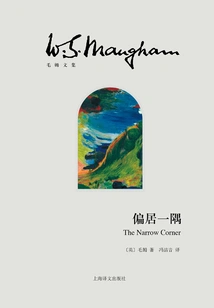
A maritime novel full of passion, adventure and conspiracy, Dr. Sanders in "On the Chinese Screen" and Captain Nichols in "The Moon and Sixpence" meet at sea, creating a tragic comedy of human nature that is full of dangers. "What do you believe?" "You really want to know? I don't believe in anything, except myself and my experience. The world is made up of me, my thoughts, and my feelings; everything else is just fantasy." The characters in the novel are all kinds of strange, they just appear, take root and grow in your heart, and gradually acquire appropriate characteristics and place themselves in specific scenes. You think about them from time to time, and sometimes you become so obsessed with them that you can't think of anything else, and then you just write them out so they don't bother you anymore. --Maugham
A maritime novel full of passion, adventure and conspiracy, Dr. Sanders in "On the Chinese Screen" and Captain Nichols in "The Moon and Sixpence" meet at sea, creating a tragic comedy of human nature that is full of dangers. "What do you believe?" "You really want to know? I don't believe in anything, except myself and my experience. The world is made up of me, my thoughts, and my feelings; everything else is just fantasy." The characters in the novel are all kinds of strange, they just appear, take root and grow in your heart, and gradually acquire appropriate characteristics and place themselves in specific scenes. You think about them from time to time, and sometimes you become so obsessed with them that you can't think of anything else, and then you just write them out so they don't bother you anymore. --Maugham
Veil
General Fiction面纱
(british) Maugham
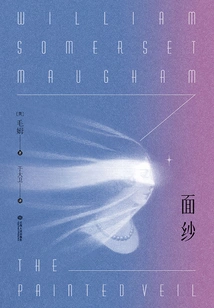
At the age of 50, Maugham wrote this almost perfect love story, because everyone finds themselves in the story. This novel tells about all the bad things in love: betrayal, suspicion, revenge, as well as the separation and self-salvation we will eventually face. Maugham vividly portrayed a woman's degradation and awakening in his calm and almost mean way. Katie couldn't figure out whether her husband had discovered the secret of her cheating - the turning of the doorknob during the affair, the meaningful words at dinner, and the sudden decision to take her to a cholera field, all of which made Katie's nerves tighter and tighter. Finally, she couldn't bear it anymore and planned to show off her cards and join her beloved lover after the divorce. However, when the veil is lifted, her innocence is shattered by the truth of love and the meaning of life. Maugham vividly depicts a woman's degradation and awakening in his calm and almost mean way - in a world of two people, she can only choose to love him or lose him to fill the emptiness in her heart; but it is only after she is in a wider world and witnesses the cruelty of life and the brilliance of human nature that she truly gains peace of mind and self-salvation.
At the age of 50, Maugham wrote this almost perfect love story, because everyone finds themselves in the story. This novel tells about all the bad things in love: betrayal, suspicion, revenge, as well as the separation and self-salvation we will eventually face. Maugham vividly portrayed a woman's degradation and awakening in his calm and almost mean way. Katie couldn't figure out whether her husband had discovered the secret of her cheating - the turning of the doorknob during the affair, the meaningful words at dinner, and the sudden decision to take her to a cholera field, all of which made Katie's nerves tighter and tighter. Finally, she couldn't bear it anymore and planned to show off her cards and join her beloved lover after the divorce. However, when the veil is lifted, her innocence is shattered by the truth of love and the meaning of life. Maugham vividly depicts a woman's degradation and awakening in his calm and almost mean way - in a world of two people, she can only choose to love him or lose him to fill the emptiness in her heart; but it is only after she is in a wider world and witnesses the cruelty of life and the brilliance of human nature that she truly gains peace of mind and self-salvation.
The Moon and Sixpence (english)
General Fiction月亮与六便士=The Moon and Sixpence(英文)
(british) Maugham
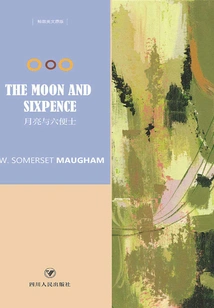
"The Moon and Sixpence" is based on the life of French Impressionist painter Paul Gauguin. It describes the story of Strickland, an originally ordinary London stockbroker, who suddenly became obsessed with art, abandoned his wife and children, gave up what others thought was a prosperous and happy life, and went to Tahiti in the South Pacific, where he wrote his glorious life with a round pen and injected all the value of his life into the gorgeous canvas. The work expresses the contradiction between genius, personality and material civilization, as well as modern marriage and family life. It has a broad perspective on life. It uses a scalpel that smells of disinfectant to sharply dissect the human nature wrapped in skin, mixed with the mocking humor and cruel eyes of the spectators.
"The Moon and Sixpence" is based on the life of French Impressionist painter Paul Gauguin. It describes the story of Strickland, an originally ordinary London stockbroker, who suddenly became obsessed with art, abandoned his wife and children, gave up what others thought was a prosperous and happy life, and went to Tahiti in the South Pacific, where he wrote his glorious life with a round pen and injected all the value of his life into the gorgeous canvas. The work expresses the contradiction between genius, personality and material civilization, as well as modern marriage and family life. It has a broad perspective on life. It uses a scalpel that smells of disinfectant to sharply dissect the human nature wrapped in skin, mixed with the mocking humor and cruel eyes of the spectators.
Human Shackles
General Fiction人性的枷锁
(british) Maugham
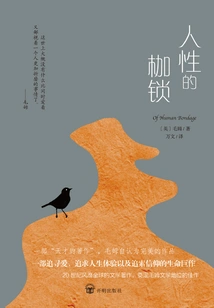
"The Shackles of Humanity" is Maugham's masterpiece and has an obvious autobiographical color. The protagonist of the novel, Philip Carey, lost both his parents when he was young. Unfortunately, he was also born with a disability. He spent his childhood in an indifferent and unfamiliar environment, making his character withdrawn and sensitive. The years he spent in boarding school made him suffer from the unreasonable school system, and when he entered the society, he experienced pain in love. On the bumpy road of life, he had to struggle hard every step he took, but Kaili, who was independent in thought and personality, had been trying to break away from the two shackles that restricted his spirit, religion and petty citizen consciousness, and tried to find the true meaning of life in the chaotic and chaotic life. I have read the whole life of a person in this novel, and no one can describe the desolation and separation deep in the human heart so aptly. I saw myself in Maugham's writings, and saw the fear and pursuit of life in this world.
"The Shackles of Humanity" is Maugham's masterpiece and has an obvious autobiographical color. The protagonist of the novel, Philip Carey, lost both his parents when he was young. Unfortunately, he was also born with a disability. He spent his childhood in an indifferent and unfamiliar environment, making his character withdrawn and sensitive. The years he spent in boarding school made him suffer from the unreasonable school system, and when he entered the society, he experienced pain in love. On the bumpy road of life, he had to struggle hard every step he took, but Kaili, who was independent in thought and personality, had been trying to break away from the two shackles that restricted his spirit, religion and petty citizen consciousness, and tried to find the true meaning of life in the chaotic and chaotic life. I have read the whole life of a person in this novel, and no one can describe the desolation and separation deep in the human heart so aptly. I saw myself in Maugham's writings, and saw the fear and pursuit of life in this world.

The Moon and Sixpence (humanities Classics Library)
General Fiction月亮与六便士(人文经典文库)
(british) Maugham
"The Moon and Sixpence" was written in 1919 and is one of Maugham's masterpieces. The novel narrates the entire story in the first person, and the plot is based on the life of French post-impressionist painter Gauguin. "The moon" is a symbol of lofty ideals, while "sixpence" is a symbol of petty gains. Whether a person looks up at the moon and aims high, or looks down at the ground and pursues small profits, these are two completely different outlooks on life. Through the conflict between a talented artist and the reality he is trying to escape, the author deeply explores the emergence and essence of art, the relationship between personality and genius, as well as the contradictions and interactions between artists and society, art and life, and other thought-provoking issues. The translator of this book is Gu Qinan, a professor in the English Department of Nankai University. He has been engaged in the translation and research of British, American and Canadian literature for many years. He has translated "Mrs. Dalloway" and "Interlude", etc.
"The Moon and Sixpence" was written in 1919 and is one of Maugham's masterpieces. The novel narrates the entire story in the first person, and the plot is based on the life of French post-impressionist painter Gauguin. "The moon" is a symbol of lofty ideals, while "sixpence" is a symbol of petty gains. Whether a person looks up at the moon and aims high, or looks down at the ground and pursues small profits, these are two completely different outlooks on life. Through the conflict between a talented artist and the reality he is trying to escape, the author deeply explores the emergence and essence of art, the relationship between personality and genius, as well as the contradictions and interactions between artists and society, art and life, and other thought-provoking issues. The translator of this book is Gu Qinan, a professor in the English Department of Nankai University. He has been engaged in the translation and research of British, American and Canadian literature for many years. He has translated "Mrs. Dalloway" and "Interlude", etc.