Library
Browse and search books
11 novels found
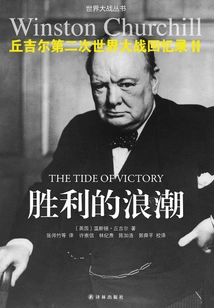
丘吉尔第二次世界大战回忆录11:胜利的浪潮
(british) Churchill
This book mainly describes the entire process from June 6, 1944, when the US and British forces launched the largest amphibious landing in history in Normandy, to the end of 1944, when the Axis forces were retreating steadily and the Allied forces were unstoppable in liberating Europe. The Allied forces advanced from Normandy to Paris, the Soviet Union's victory in the Balkans and the conquest of Italy. The success of these battles ushered in Europe's final victory. In the book, the author also keenly observes the conflict of interests among the major powers Britain, the United States, and the Soviet Union in the process of dividing the world territory after the war. The book has compact language and detailed content. Readers can appreciate the overwhelming "tide of victory" of the Allies at the end of World War II just between the lines.
This book mainly describes the entire process from June 6, 1944, when the US and British forces launched the largest amphibious landing in history in Normandy, to the end of 1944, when the Axis forces were retreating steadily and the Allied forces were unstoppable in liberating Europe. The Allied forces advanced from Normandy to Paris, the Soviet Union's victory in the Balkans and the conquest of Italy. The success of these battles ushered in Europe's final victory. In the book, the author also keenly observes the conflict of interests among the major powers Britain, the United States, and the Soviet Union in the process of dividing the world territory after the war. The book has compact language and detailed content. Readers can appreciate the overwhelming "tide of victory" of the Allies at the end of World War II just between the lines.
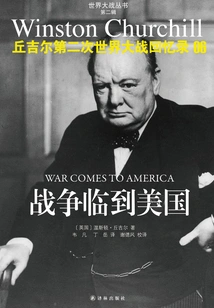
丘吉尔第二次世界大战回忆录06:战争临到美国
(british) Churchill
In this book, the author describes the complex relationship between the United States and the Allies, from secretly providing assistance to the Allies, to gradually changing its attitude towards the war as the situation developed, until the "Pearl Harbor incident" that humiliated the United States. The United States, a military power that tried to stay out of the war in the early days of the war, truly joined the camp of the Allies and participated in the struggle to resist and eliminate fascist Germany and Japan.
In this book, the author describes the complex relationship between the United States and the Allies, from secretly providing assistance to the Allies, to gradually changing its attitude towards the war as the situation developed, until the "Pearl Harbor incident" that humiliated the United States. The United States, a military power that tried to stay out of the war in the early days of the war, truly joined the camp of the Allies and participated in the struggle to resist and eliminate fascist Germany and Japan.
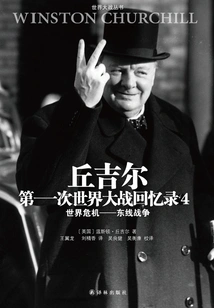
第一次世界大战回忆录4:世界危机:东线战争
(british) Churchill
This book is dedicated to the Eastern Front of World War I. It begins by talking about the historical origins of the quarrel between the two major groups before World War I; then details the assassination of the Austrian crown prince and how this incident became the trigger for the war; details the Austrian declaration of war on Serbia, and the subsequent process of the two major groups declaring war on each other and fighting the war on the Eastern Front. Russia's march into East Prussia reduced the pressure on the German army on the west front against France and Britain, and the Russian army initially achieved victory. However, the situation changed after the German army changed its command, and Hindenburg and Ludendorff took over the command of the eastern front. In addition, the Russian army was surrounded and annihilated by the German army due to leaked telecommunications, and was retreated steadily thereafter. Finally, the October Revolution broke out in Russia and it withdrew from the First World War.
This book is dedicated to the Eastern Front of World War I. It begins by talking about the historical origins of the quarrel between the two major groups before World War I; then details the assassination of the Austrian crown prince and how this incident became the trigger for the war; details the Austrian declaration of war on Serbia, and the subsequent process of the two major groups declaring war on each other and fighting the war on the Eastern Front. Russia's march into East Prussia reduced the pressure on the German army on the west front against France and Britain, and the Russian army initially achieved victory. However, the situation changed after the German army changed its command, and Hindenburg and Ludendorff took over the command of the eastern front. In addition, the Russian army was surrounded and annihilated by the German army due to leaked telecommunications, and was retreated steadily thereafter. Finally, the October Revolution broke out in Russia and it withdrew from the First World War.
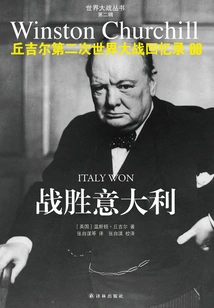
丘吉尔第二次世界大战回忆录09:战胜意大利
(british) Churchill
From June to December 1943, the Allied forces worked together to conquer Sicily and force Mussolini to collapse, thus further tightening the encirclement of Nazi Germany. As the war situation gradually became clearer, the prototype of the post-World War II international order took shape. This book traces and reproduces the entire process of the Allied victory over Italy, touching on the complex and subtle relationships between the United States, Britain, France and other Allied powers.
From June to December 1943, the Allied forces worked together to conquer Sicily and force Mussolini to collapse, thus further tightening the encirclement of Nazi Germany. As the war situation gradually became clearer, the prototype of the post-World War II international order took shape. This book traces and reproduces the entire process of the Allied victory over Italy, touching on the complex and subtle relationships between the United States, Britain, France and other Allied powers.
丘吉尔第二次世界大战回忆录01:从战争到战争
(british) Churchill
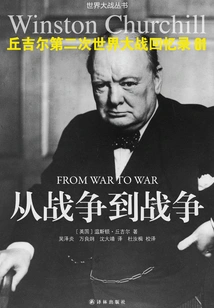
In "World War Series (Volume 2) Churchill's Memoirs of World War II 01: From War to War", the author assesses the situation from a politician's unique perspective, gives a panoramic description of the European situation from 1919 to 1939, analyzes and introduces the huge impact that World War I had on European countries under the rule of different regimes, and the subsequent political and military actions of each country. Readers can thus gain an in-depth understanding of the changes in the European situation under the Treaty of Versailles after World War I and how events such as the appeasement policy pursued by Britain and France, sanctions against Italy, and the civil war in Spain affected World War II. The book fully considers a series of war policies of Germany, the defeated country, and Britain and France, the main victors. On this basis, it details the reasons for the outbreak of World War II: Germany and Russia signed a non-aggression treaty in 1939. Only one week later, on September 1, the German army invaded Poland, and World War II broke out. The author comprehensively presents to readers the turbulent European situation in the two decades from World War I to World War II with a smooth pen, and demonstrates his vision and wisdom as a great statesman and strategist through a large number of precious documents and important historical materials. The Swedish Academy said in its citation for awarding the Nobel Prize for Literature to Churchill: "Churchill's speeches were concise, agile, penetrating, and touching. His speeches seemed to have the power to reshape history. ... At the critical moment when human freedom and dignity were at stake, Churchill inspired people's fighting spirit with his unique eloquence. Perhaps it was these great speeches that established him an immortal monument."
In "World War Series (Volume 2) Churchill's Memoirs of World War II 01: From War to War", the author assesses the situation from a politician's unique perspective, gives a panoramic description of the European situation from 1919 to 1939, analyzes and introduces the huge impact that World War I had on European countries under the rule of different regimes, and the subsequent political and military actions of each country. Readers can thus gain an in-depth understanding of the changes in the European situation under the Treaty of Versailles after World War I and how events such as the appeasement policy pursued by Britain and France, sanctions against Italy, and the civil war in Spain affected World War II. The book fully considers a series of war policies of Germany, the defeated country, and Britain and France, the main victors. On this basis, it details the reasons for the outbreak of World War II: Germany and Russia signed a non-aggression treaty in 1939. Only one week later, on September 1, the German army invaded Poland, and World War II broke out. The author comprehensively presents to readers the turbulent European situation in the two decades from World War I to World War II with a smooth pen, and demonstrates his vision and wisdom as a great statesman and strategist through a large number of precious documents and important historical materials. The Swedish Academy said in its citation for awarding the Nobel Prize for Literature to Churchill: "Churchill's speeches were concise, agile, penetrating, and touching. His speeches seemed to have the power to reshape history. ... At the critical moment when human freedom and dignity were at stake, Churchill inspired people's fighting spirit with his unique eloquence. Perhaps it was these great speeches that established him an immortal monument."
第二次世界大战回忆录11:胜利的浪潮
(british) Churchill
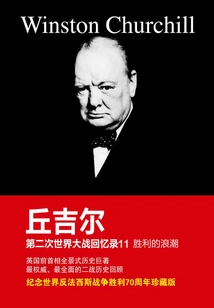
This book mainly describes the entire process from June 6, 1944, when the US and British forces launched the largest amphibious landing in history in Normandy, to the end of 1944, when the Axis forces retreated steadily and the Allied forces liberated Europe with overwhelming force.
This book mainly describes the entire process from June 6, 1944, when the US and British forces launched the largest amphibious landing in history in Normandy, to the end of 1944, when the Axis forces retreated steadily and the Allied forces liberated Europe with overwhelming force.
第二次世界大战回忆录6:战争临到美国
(british) Churchill
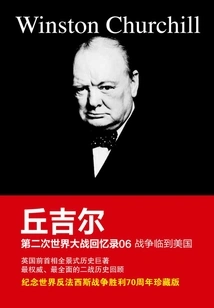
"World War Series (Volume 2): War Is Coming to America" describes the complex relationship between the United States and the Allies, from secretly providing assistance to the Allies, to gradually changing its attitude towards the war as the situation developed, until the "Pearl Harbor incident" that humiliated the United States. The United States, a military power that tried to stay out of the war in the early days, truly joined the camp of the Allies and participated in the struggle to resist and eliminate fascist Germany and Japan.
"World War Series (Volume 2): War Is Coming to America" describes the complex relationship between the United States and the Allies, from secretly providing assistance to the Allies, to gradually changing its attitude towards the war as the situation developed, until the "Pearl Harbor incident" that humiliated the United States. The United States, a military power that tried to stay out of the war in the early days, truly joined the camp of the Allies and participated in the struggle to resist and eliminate fascist Germany and Japan.
第二次世界大战回忆录7:日本的猛攻
(british) Churchill
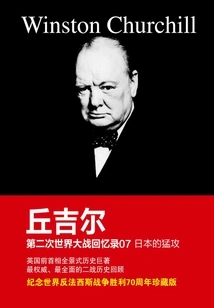
"World War Series (Volume 2): Japan's Onslaught" describes Japan's aggression against relevant countries in Asia and the Pacific Rim in the middle of World War II, as well as the different responses of the United States and Britain to this. After long preparations, Japan launched a comprehensive war of aggression in the Asia-Pacific region, causing the United States to pay a heavy price in the Pacific battlefield and causing Britain to suffer huge losses in Southeast Asia. At that time, the world situation was entering an extremely anxious period. From China to Myanmar, from Malta to Madagascar, everyone was involved in this unpredictable melee. In addition, the book also reflects the key role China played in resisting Japanese aggression.
"World War Series (Volume 2): Japan's Onslaught" describes Japan's aggression against relevant countries in Asia and the Pacific Rim in the middle of World War II, as well as the different responses of the United States and Britain to this. After long preparations, Japan launched a comprehensive war of aggression in the Asia-Pacific region, causing the United States to pay a heavy price in the Pacific battlefield and causing Britain to suffer huge losses in Southeast Asia. At that time, the world situation was entering an extremely anxious period. From China to Myanmar, from Malta to Madagascar, everyone was involved in this unpredictable melee. In addition, the book also reflects the key role China played in resisting Japanese aggression.
英语民族史·新世界
(british) Churchill
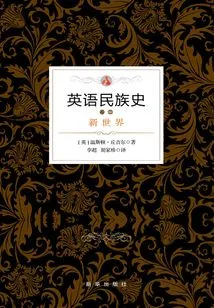
This volume is the second "New World" in the "History of the English-speaking Peoples" series. Between 1485 and 1688, the English-speaking people began to expand around the world and defeated the Spanish Empire. After the sea lanes were opened, American colonies were established one after another. A number of small, vibrant and independent societies arose on the west coast of the Atlantic that would later form the United States of America.
This volume is the second "New World" in the "History of the English-speaking Peoples" series. Between 1485 and 1688, the English-speaking people began to expand around the world and defeated the Spanish Empire. After the sea lanes were opened, American colonies were established one after another. A number of small, vibrant and independent societies arose on the west coast of the Atlantic that would later form the United States of America.
英语民族史·伟大的民主
(british) Churchill
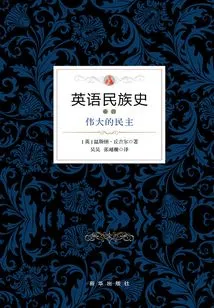
This volume is the fourth volume in the "History of the English-speaking Peoples" series "The Great Democracy". After the fall of Napoleon in 1815, Britain firmly sat on the throne of the world's hegemon. At this time, France and even the entire European continent were exhausted, a unified Germany had not yet been formed, Russian power was shrinking from Western Europe, and the Spanish and Portuguese were busy with their own affairs or competing for overseas properties. Over the next few decades, revolutions and civil strife swept through many of Europe's great powers, and new states were born. Through years of turmoil and chaos, Britain alone has emerged virtually unscathed. At the same time, due to population growth and immigration, the English-speaking nation has become stronger than ever.
This volume is the fourth volume in the "History of the English-speaking Peoples" series "The Great Democracy". After the fall of Napoleon in 1815, Britain firmly sat on the throne of the world's hegemon. At this time, France and even the entire European continent were exhausted, a unified Germany had not yet been formed, Russian power was shrinking from Western Europe, and the Spanish and Portuguese were busy with their own affairs or competing for overseas properties. Over the next few decades, revolutions and civil strife swept through many of Europe's great powers, and new states were born. Through years of turmoil and chaos, Britain alone has emerged virtually unscathed. At the same time, due to population growth and immigration, the English-speaking nation has become stronger than ever.
第二次世界大战回忆录(精选本)
(british) Churchill
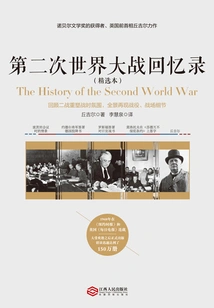
This book was written by former British Prime Minister Churchill between 1948 and 1954. The book begins with the "Contract of Versailles" in 1919 and ends with the "Potsdam Declaration" in 1945 and the end of World War II. It not only describes the causes and course of the war, but also reproduces the details of the war process. It contains both narratives of major international events and discussions of the relationships between countries during the war. It involves politics, economy, military, diplomacy and other aspects. It is an important historical material for the study of World War II.
This book was written by former British Prime Minister Churchill between 1948 and 1954. The book begins with the "Contract of Versailles" in 1919 and ends with the "Potsdam Declaration" in 1945 and the end of World War II. It not only describes the causes and course of the war, but also reproduces the details of the war process. It contains both narratives of major international events and discussions of the relationships between countries during the war. It involves politics, economy, military, diplomacy and other aspects. It is an important historical material for the study of World War II.