Library
Browse and search books
2 novels found

Scolding the Audience (a Collection of Plays by the 2019 Nobel Prize Winner in Literature)
Literature骂观众(2019诺贝尔文学奖得主剧本集)
(austria) Peter Handke
Representative works of Peter Handke, winner of the 2019 Nobel Prize for Literature. This book is a collection of plays, consisting of three plays. "Self-Accusation" has only two self-accusers, two characters standing on an empty stage telling their offending behavior from beginning to end. There is no scene, no dialogue, only the alternation of voices. "Insulting the Audience" is a work that made Handke famous in one fell swoop when he was 24 years old. The whole play has no storyline and scenes of traditional dramas, no dramatic characters, events and dialogues. There are only four nameless speakers who "abuse" the audience almost hysterically on a stage without scenery and curtains, demonstrating the negation of traditional drama from beginning to end. "Casper" is as subversive of traditional theater as "Waiting for Godot" in that it shows how a man named Casper learns to speak. What Handke expresses is how people are tortured by language after they learn to speak, how people become slaves of language, and this "language" often only expresses traditional consciousness or the consciousness of rulers. Now, it is this language that has domesticated people themselves. Due to the limitations of the e-book format, the content of "Casper" cannot present a complete script style, so only two parts of "Self-Recrimination" and "Scolding the Audience" are online. I wish you a happy reading.
Representative works of Peter Handke, winner of the 2019 Nobel Prize for Literature. This book is a collection of plays, consisting of three plays. "Self-Accusation" has only two self-accusers, two characters standing on an empty stage telling their offending behavior from beginning to end. There is no scene, no dialogue, only the alternation of voices. "Insulting the Audience" is a work that made Handke famous in one fell swoop when he was 24 years old. The whole play has no storyline and scenes of traditional dramas, no dramatic characters, events and dialogues. There are only four nameless speakers who "abuse" the audience almost hysterically on a stage without scenery and curtains, demonstrating the negation of traditional drama from beginning to end. "Casper" is as subversive of traditional theater as "Waiting for Godot" in that it shows how a man named Casper learns to speak. What Handke expresses is how people are tortured by language after they learn to speak, how people become slaves of language, and this "language" often only expresses traditional consciousness or the consciousness of rulers. Now, it is this language that has domesticated people themselves. Due to the limitations of the e-book format, the content of "Casper" cannot present a complete script style, so only two parts of "Self-Recrimination" and "Scolding the Audience" are online. I wish you a happy reading.
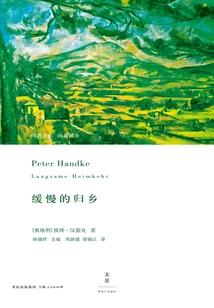
Slow Homecoming (2019 Nobel Prize Winner in Literature)
General Fiction缓慢的归乡(2019诺贝尔文学奖得主作品)
(austria) Peter Handke
Works by Peter Handke, winner of the 2019 Nobel Prize for Literature. "Slow Homecoming" contains Handke's two novellas "Slow Homecoming" and "Apocalypse on the Holy Mountain". The protagonist of the former, Sorger, comes from Central Europe and is a geologist who conducts geological research in Alaska, close to the Arctic Circle. While at work, loneliness enveloped him and he lost himself. He realized that Europe was his spiritual home. The latter continues the theme of the former, describing the first-person "I"'s two pilgrimages to Mount Saint-Victoire in Provence to follow the creative footsteps of the French Impressionist painter Cézanne.
Works by Peter Handke, winner of the 2019 Nobel Prize for Literature. "Slow Homecoming" contains Handke's two novellas "Slow Homecoming" and "Apocalypse on the Holy Mountain". The protagonist of the former, Sorger, comes from Central Europe and is a geologist who conducts geological research in Alaska, close to the Arctic Circle. While at work, loneliness enveloped him and he lost himself. He realized that Europe was his spiritual home. The latter continues the theme of the former, describing the first-person "I"'s two pilgrimages to Mount Saint-Victoire in Provence to follow the creative footsteps of the French Impressionist painter Cézanne.