Library
Browse and search novels
1 novel found
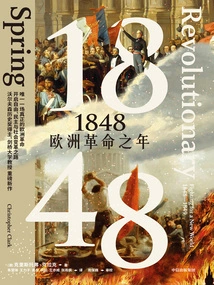
1848:欧洲革命之年
(australia) Christopher Clark
Christopher Clark, the author of this book, evaluates it as: "The only true European revolution in history." This book uses a multi-dimensional perspective and integrates micro narrative and macro analysis to reconstruct the panoramic view of the European Revolution of 1848, placing this turmoil sweeping the European continent within the complex network of social structure, ideology and global change. This book first starts with the underlying social issues and analyzes the deep social crises on the eve of the revolution: class conflicts caused by poverty and famine, and political incompetence caused by the collapse of the old order. The second chapter turns to ideological debates, analyzing the tug-of-war between "order" and "freedom" among various ideological factions, reshaping European political discourse, and providing a spiritual program for subsequent actions. Chapters 3 and 4 restore the process of the outbreak of the revolution and reproduce how the people broke through the shackles of the old system with violence and ideals. However, the joy of victory is fleeting: in chapters five to seven, the revolutionary regime faces paradoxes and challenges, while at the same time, conservative forces have quietly reorganized the power network. Finally, Chapter 8 describes the counter-revolutionary counterattack and the return of the monarchy. But the book does not stop at the "failure" of the revolution. Chapter 9 casts its horizons around the world, revealing how the aftermath of the European Revolution of 1848 continues to reverberate across a wide range. This book is not only a magnificent history of European revolutions, but also a revelation about ideals, power, human nature and historical contingency.
Christopher Clark, the author of this book, evaluates it as: "The only true European revolution in history." This book uses a multi-dimensional perspective and integrates micro narrative and macro analysis to reconstruct the panoramic view of the European Revolution of 1848, placing this turmoil sweeping the European continent within the complex network of social structure, ideology and global change. This book first starts with the underlying social issues and analyzes the deep social crises on the eve of the revolution: class conflicts caused by poverty and famine, and political incompetence caused by the collapse of the old order. The second chapter turns to ideological debates, analyzing the tug-of-war between "order" and "freedom" among various ideological factions, reshaping European political discourse, and providing a spiritual program for subsequent actions. Chapters 3 and 4 restore the process of the outbreak of the revolution and reproduce how the people broke through the shackles of the old system with violence and ideals. However, the joy of victory is fleeting: in chapters five to seven, the revolutionary regime faces paradoxes and challenges, while at the same time, conservative forces have quietly reorganized the power network. Finally, Chapter 8 describes the counter-revolutionary counterattack and the return of the monarchy. But the book does not stop at the "failure" of the revolution. Chapter 9 casts its horizons around the world, revealing how the aftermath of the European Revolution of 1848 continues to reverberate across a wide range. This book is not only a magnificent history of European revolutions, but also a revelation about ideals, power, human nature and historical contingency.