Library
Browse and search books
6 novels found
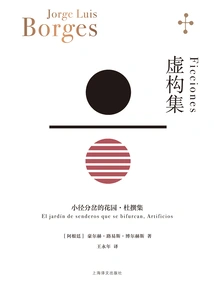
Fictional Collection (complete Works of Borges)
General Fiction虚构集(博尔赫斯全集)
(argentina) Jorge Luis Borges
This book is a representative collection of short stories by Borges, the Argentine poet, novelist, critic, and translator, and a master of Spanish literature. It includes two sixteen novels, "The Garden of Forking Paths" and "The Collection of Fictions." In 1944, Borges officially published these stories under the name "The Collection of Fictions." Borges named his iconic work directly after "fiction", which was also the final form of Borges' version of "The Garden of Forking Paths". "The Garden of Forking Paths", published in 1941, is Borges's most well-known novel. The context of "novel-garden-time-maze" appeared for the first time in Borges' writing and became a keyword in his art. The understanding of different sequences of time that are parallel, divergent, converging, or intertwined is integrated into writing, and endless possibilities arise from this. "Apocryphal Collection" continues the theme of fictional legendary stories. The collection of novels includes the author's "most proud story" "The South", which is regarded as a turning point in Borges's writing.
This book is a representative collection of short stories by Borges, the Argentine poet, novelist, critic, and translator, and a master of Spanish literature. It includes two sixteen novels, "The Garden of Forking Paths" and "The Collection of Fictions." In 1944, Borges officially published these stories under the name "The Collection of Fictions." Borges named his iconic work directly after "fiction", which was also the final form of Borges' version of "The Garden of Forking Paths". "The Garden of Forking Paths", published in 1941, is Borges's most well-known novel. The context of "novel-garden-time-maze" appeared for the first time in Borges' writing and became a keyword in his art. The understanding of different sequences of time that are parallel, divergent, converging, or intertwined is integrated into writing, and endless possibilities arise from this. "Apocryphal Collection" continues the theme of fictional legendary stories. The collection of novels includes the author's "most proud story" "The South", which is regarded as a turning point in Borges's writing.
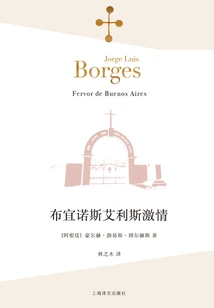
Buenos Aires Passion
Literature布宜诺斯艾利斯激情
(argentina) Jorge Luis Borges
Borges's first collection of poems, published by Borges at his own expense in 1923, was his first attempt to enter the literary world. The collection of poems mainly depicts Buenos Aires, the birthplace of the writer, the city's early mornings and dusk, urban areas and suburbs composed of low-rise buildings, its tranquility and sadness. Underneath the hometown complex is the tracing of family history and historical culture. Various specific things and characters seem to have an eternal appearance under the erosion of time.
Borges's first collection of poems, published by Borges at his own expense in 1923, was his first attempt to enter the literary world. The collection of poems mainly depicts Buenos Aires, the birthplace of the writer, the city's early mornings and dusk, urban areas and suburbs composed of low-rise buildings, its tranquility and sadness. Underneath the hometown complex is the tracing of family history and historical culture. Various specific things and characters seem to have an eternal appearance under the erosion of time.
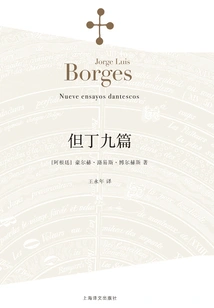
Nine Cantos of Dante
Literature但丁九篇
(argentina) Jorge Luis Borges
A collection of essays, published in 1982. Dante's "Divine Comedy" was judged by Borges as "the pinnacle of literature and all books" and "the highest gift that literature can give us." He wrote nine short essays, starting from a certain character in the "Divine Comedy", starting from a certain detail, or even starting from a certain word, combining perspectives from psychology, philosophy, theology and other fields to interpret the classics.
A collection of essays, published in 1982. Dante's "Divine Comedy" was judged by Borges as "the pinnacle of literature and all books" and "the highest gift that literature can give us." He wrote nine short essays, starting from a certain character in the "Divine Comedy", starting from a certain detail, or even starting from a certain word, combining perspectives from psychology, philosophy, theology and other fields to interpret the classics.
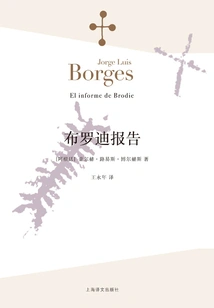
Brody Report
General Fiction布罗迪报告
(argentina) Jorge Luis Borges
A collection of novels, published in 1970, containing eleven short stories. The third party, the informant, the revenge driven by worship, the secret duel... "The stories are all realistic", but they are like a dream. The "Brody Report" was inspired by the British writer Swift's novel "Gulliver's Travels" and presents a report written by missionary Brody on his life in the Yahoo tribe. The detailed description of the report creates a sense of falsehood. Borges defined it clearly: "In the end, literature is nothing more than a guided dream."
A collection of novels, published in 1970, containing eleven short stories. The third party, the informant, the revenge driven by worship, the secret duel... "The stories are all realistic", but they are like a dream. The "Brody Report" was inspired by the British writer Swift's novel "Gulliver's Travels" and presents a report written by missionary Brody on his life in the Yahoo tribe. The detailed description of the report creates a sense of falsehood. Borges defined it clearly: "In the end, literature is nothing more than a guided dream."
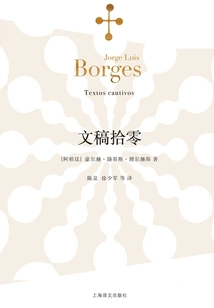
Manuscript Missing
Literature文稿拾零
(argentina) Jorge Luis Borges
A collection of essays, published in 1986, including more than 200 short essays written by Borges when he was the editor-in-chief of the "Foreign Books and Authors" column of the Buenos Aires magazine "Family". The words "Tofu Chunks" range from nightmares, metaphors, and time to the rhetorical intention of "The Divine Comedy" and the narrative rules of detective novels. From Shakespeare and Kafka to Cao Xueqin and Murasaki Shikibu, it is a collection of reading notes and writers' notes. Borges believed that the works of many "second- and third-rate" writers, or even the talk in the streets, might have something comparable to classics.
A collection of essays, published in 1986, including more than 200 short essays written by Borges when he was the editor-in-chief of the "Foreign Books and Authors" column of the Buenos Aires magazine "Family". The words "Tofu Chunks" range from nightmares, metaphors, and time to the rhetorical intention of "The Divine Comedy" and the narrative rules of detective novels. From Shakespeare and Kafka to Cao Xueqin and Murasaki Shikibu, it is a collection of reading notes and writers' notes. Borges believed that the works of many "second- and third-rate" writers, or even the talk in the streets, might have something comparable to classics.
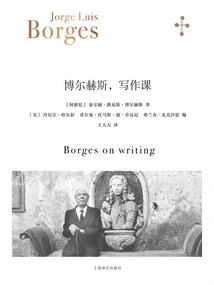
博尔赫斯,写作课(博尔赫斯全集)
(argentina) Jorge Luis Borges
"Writer's Writer" Borges, transcript of a Columbia University writing class. Talk about novels, poetry, and translation, break the rules of writing, and teach the secrets of becoming a master. Jorge Luis Borges was a world-class writer who knew the rules of writing and knew how and when to break them. He is a magician of language, like all the best jugglers and poets. Once the trick is revealed and the poem comes out, he will make us feel that this has always been there, somewhere in our hearts, but we have not been able to express it. In the spring of 1971, Borges was invited to lecture at a writing class at Columbia University. He analyzed his own work and used examples to help others improve theirs. Each lecture focuses on a theme: talking about writing novels, talking about writing poetry, and talking about translation. Everyone present was given Borges's short story "The Duel (Part Two)" and six of his poems, as well as examples of different translations of Borges's works. Borges commented line by line and explained the creative process in detail. "Borges, Writing Lesson" is based on the audio transcript of the lecture, and has not been edited in order to preserve the originality. The original Spanish text and English translation of the examples given in the class are also attached for comparative reading.
"Writer's Writer" Borges, transcript of a Columbia University writing class. Talk about novels, poetry, and translation, break the rules of writing, and teach the secrets of becoming a master. Jorge Luis Borges was a world-class writer who knew the rules of writing and knew how and when to break them. He is a magician of language, like all the best jugglers and poets. Once the trick is revealed and the poem comes out, he will make us feel that this has always been there, somewhere in our hearts, but we have not been able to express it. In the spring of 1971, Borges was invited to lecture at a writing class at Columbia University. He analyzed his own work and used examples to help others improve theirs. Each lecture focuses on a theme: talking about writing novels, talking about writing poetry, and talking about translation. Everyone present was given Borges's short story "The Duel (Part Two)" and six of his poems, as well as examples of different translations of Borges's works. Borges commented line by line and explained the creative process in detail. "Borges, Writing Lesson" is based on the audio transcript of the lecture, and has not been edited in order to preserve the originality. The original Spanish text and English translation of the examples given in the class are also attached for comparative reading.