Library
Browse and search books
2 novels found
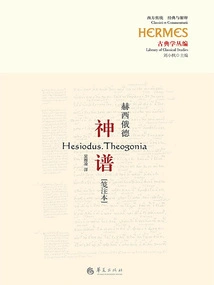
神谱(西方传统:经典与解释)
(ancient Greece) Hesiod
Hesiod's "Theogony" describes the birth of the universe and the gods, telling the history from the birth of the earth god Gaia until the Olympian gods ruled the world. "Theogony" is the only complete Theogony poem that remains so far. It is the first to systematically describe the order of the gods in ancient Greece, and is more systematic than Homer's poems. Although the title of "Theogony" is not original, the poem mainly talks about the family history of the Zeus Gods. Even if it involves the formation of the universe, it is also attached to the theme of the birth of the Zeus Gods. Although Theogony is only about the length of one volume of The Iliad, it is nevertheless a great poem. The content of "Theogony" is complex, with jumping themes and constant changes. The internal connections are obscure and mysterious. Many passages have ambiguous meanings. Many verses are full of ambiguity, which is incomparable with the clarity of Homer's poems. For classics such as "Theogony" that have important classic status but seem to be "broken" in terms of meaning, only a Chinese translation will inevitably make it difficult for readers to understand, so it is necessary to read with the help of commentaries. This "Theogony [Annotated Edition]" is such a reading book. "Theogony [Annotated Edition]" is divided into three parts. First, it introduces the life experience of the poet Hesiod and the main ideological content and version circulation of "Theogony"; secondly, it is a complete translation of the original poem, only accompanied by word explanatory notes in the form of footnotes; finally, it is as detailed as possible annotations and paraphrases.
Hesiod's "Theogony" describes the birth of the universe and the gods, telling the history from the birth of the earth god Gaia until the Olympian gods ruled the world. "Theogony" is the only complete Theogony poem that remains so far. It is the first to systematically describe the order of the gods in ancient Greece, and is more systematic than Homer's poems. Although the title of "Theogony" is not original, the poem mainly talks about the family history of the Zeus Gods. Even if it involves the formation of the universe, it is also attached to the theme of the birth of the Zeus Gods. Although Theogony is only about the length of one volume of The Iliad, it is nevertheless a great poem. The content of "Theogony" is complex, with jumping themes and constant changes. The internal connections are obscure and mysterious. Many passages have ambiguous meanings. Many verses are full of ambiguity, which is incomparable with the clarity of Homer's poems. For classics such as "Theogony" that have important classic status but seem to be "broken" in terms of meaning, only a Chinese translation will inevitably make it difficult for readers to understand, so it is necessary to read with the help of commentaries. This "Theogony [Annotated Edition]" is such a reading book. "Theogony [Annotated Edition]" is divided into three parts. First, it introduces the life experience of the poet Hesiod and the main ideological content and version circulation of "Theogony"; secondly, it is a complete translation of the original poem, only accompanied by word explanatory notes in the form of footnotes; finally, it is as detailed as possible annotations and paraphrases.
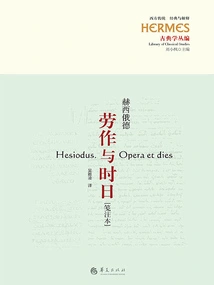
劳作与时日:笺注本(西方传统:经典与解释)
(ancient Greece) Hesiod
"Labour and Time" is a long poem by the ancient Greek poet Hesiod, with a total of 828 lines. "Work and Time" talks about work and time, but it talks most about justice. Hesiod was a master storyteller, and he told a series of righteous stories in his poems. The story of Dicke, the goddess of justice, the story of Prometheus and Pandora, the myth of the human race, the story of the kite and the warbler, the story of the God of Discord and the God of Rumor, as well as the past events of his father and the family property dispute between him and his younger brother. Meditations on justice weave in and out of all these narratives. "Labour and Days" is defined as a didactic poem in which he spoke publicly in front of the whole nation to advise his brothers. The problem he needs to solve is not only the lost youth, but also the corruption of the city-state. The difficulties Hesiod encountered in the 8th century BC are ultimately the eternal dilemmas faced by lovers of wisdom in all ages. This book is an annotated version of "Labor and Time". The whole book is divided into three parts: translation, annotations and explanatory notes.
"Labour and Time" is a long poem by the ancient Greek poet Hesiod, with a total of 828 lines. "Work and Time" talks about work and time, but it talks most about justice. Hesiod was a master storyteller, and he told a series of righteous stories in his poems. The story of Dicke, the goddess of justice, the story of Prometheus and Pandora, the myth of the human race, the story of the kite and the warbler, the story of the God of Discord and the God of Rumor, as well as the past events of his father and the family property dispute between him and his younger brother. Meditations on justice weave in and out of all these narratives. "Labour and Days" is defined as a didactic poem in which he spoke publicly in front of the whole nation to advise his brothers. The problem he needs to solve is not only the lost youth, but also the corruption of the city-state. The difficulties Hesiod encountered in the 8th century BC are ultimately the eternal dilemmas faced by lovers of wisdom in all ages. This book is an annotated version of "Labor and Time". The whole book is divided into three parts: translation, annotations and explanatory notes.