Library
Browse and search books
3 novels found
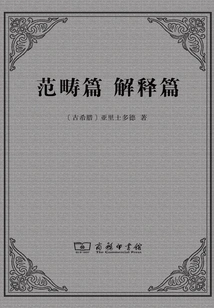
Category Chapter Explanation Chapter
Literature范畴篇 解释篇
(ancient Greece) Aristotle
"Categories and Interpretation" includes "Categories" and "Explanation", which are the shorter two chapters in Aristotle's "Reference Book" of logic. "Categories" describes the theory of logic and formulates the doctrine of categories; "Explanation" expounds the general principles of argumentation and discusses the problem of syllogism. We must study this work with a correct analytical attitude, absorb the essence that is useful to me, and eliminate the outdated dross.
"Categories and Interpretation" includes "Categories" and "Explanation", which are the shorter two chapters in Aristotle's "Reference Book" of logic. "Categories" describes the theory of logic and formulates the doctrine of categories; "Explanation" expounds the general principles of argumentation and discusses the problem of syllogism. We must study this work with a correct analytical attitude, absorb the essence that is useful to me, and eliminate the outdated dross.
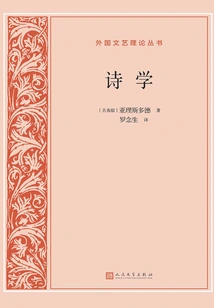
Poetics
Literature诗学
(ancient Greece) Aristotle
"Poetics" is an important aesthetic treatise by Aristotle (now commonly translated as Aristotle). Its original name is literally translated as "On Poetry", which means "discussing the art of poetry". Aristotle divided science into three categories based on the differences in human activities. Among them, creative science, where poetry is located, is the third category. The author believes that it is a course that his disciples should learn at the end of their studies. It can make people become poets and orators. There are twenty-six chapters in this book, which mainly discuss the origin, writing style, and evaluation of tragedy and epic. In the book, Aristotle answered questions about poetry raised by his teacher Plato, from which we can see the author's materialist aesthetic views, which deeply influenced later generations of writers and literary researchers starting from the seventeenth century.
"Poetics" is an important aesthetic treatise by Aristotle (now commonly translated as Aristotle). Its original name is literally translated as "On Poetry", which means "discussing the art of poetry". Aristotle divided science into three categories based on the differences in human activities. Among them, creative science, where poetry is located, is the third category. The author believes that it is a course that his disciples should learn at the end of their studies. It can make people become poets and orators. There are twenty-six chapters in this book, which mainly discuss the origin, writing style, and evaluation of tragedy and epic. In the book, Aristotle answered questions about poetry raised by his teacher Plato, from which we can see the author's materialist aesthetic views, which deeply influenced later generations of writers and literary researchers starting from the seventeenth century.
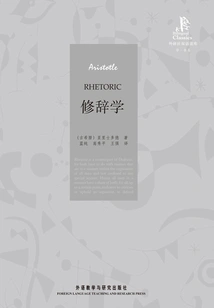
Rhetoric (english-chinese)
Literature修辞学(英汉对照)
(ancient Greece) Aristotle
"Rhetoric" is one of Aristotle's most important extant literary and artistic theoretical works, and it is also the first systematic rhetorical theoretical work in the history of European literary and artistic theory. In this book, Aristotle defined the nature, definition, and significance of rhetoric, summarized the development history and research results of rhetoric in the past, analyzed the emotions that can be used in speeches, rhetorical themes, and methods of persuasion, and discussed the form (style and arrangement) of speeches. This book pioneered a scientific rhetoric system and has important theoretical significance and academic value for future generations to study and study Western rhetoric.
"Rhetoric" is one of Aristotle's most important extant literary and artistic theoretical works, and it is also the first systematic rhetorical theoretical work in the history of European literary and artistic theory. In this book, Aristotle defined the nature, definition, and significance of rhetoric, summarized the development history and research results of rhetoric in the past, analyzed the emotions that can be used in speeches, rhetorical themes, and methods of persuasion, and discussed the form (style and arrangement) of speeches. This book pioneered a scientific rhetoric system and has important theoretical significance and academic value for future generations to study and study Western rhetoric.