Library
Browse and search books
1 novel found
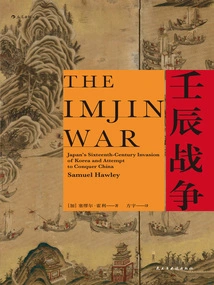
Imjin War
Military壬辰战争
(add)samuel Hawley
The book "The Imjin War" comprehensively uses historical materials from China, Japan, and Korea to comprehensively and objectively describe the Japanese invasion of Korea that took place at the end of the 16th century. In 1592, Toyotomi Hideyoshi, who had just unified Japan, was driven by ambition and mobilized an expeditionary force of 158,800 troops to invade the Korean Peninsula. His ultimate goal is to create a vast empire encompassing the entire world he knows. In the early days of the war, the Japanese army marched straight in. In just over a month, they captured the three North Korean capitals of Seoul, Kaesong, and Pyongyang, and reached the China-North Korea border. At the critical moment, Emperor Wanli of the Ming Dynasty made a decisive decision and decided to send a large army to support North Korea. The Ming army defeated the Japanese army Konishi Yukinacho's troops in Pyongyang, and then recaptured the three capitals in one fell swoop. At the same time, the famous North Korean general Yi Sun-shin repeatedly defeated the Japanese navy in the southern waters of the peninsula; volunteers from all over North Korea began to attack Japanese supply lines everywhere. The Japanese army was unfavorable in the war, with insufficient troops and poor logistics. It fell into an isolated and helpless situation and could only retreat to the southeastern corner of the peninsula. Finally, with the death of Toyotomi Hideyoshi, Japanese troops completely withdrew from the Korean Peninsula, and the Imjin War ended. This war not only brought disaster to the people of East Asia, but also had a profound impact on history. After this war, the old forces declined one after another, while new forces gradually emerged. The geopolitical landscape of East Asia has undergone tremendous changes.
The book "The Imjin War" comprehensively uses historical materials from China, Japan, and Korea to comprehensively and objectively describe the Japanese invasion of Korea that took place at the end of the 16th century. In 1592, Toyotomi Hideyoshi, who had just unified Japan, was driven by ambition and mobilized an expeditionary force of 158,800 troops to invade the Korean Peninsula. His ultimate goal is to create a vast empire encompassing the entire world he knows. In the early days of the war, the Japanese army marched straight in. In just over a month, they captured the three North Korean capitals of Seoul, Kaesong, and Pyongyang, and reached the China-North Korea border. At the critical moment, Emperor Wanli of the Ming Dynasty made a decisive decision and decided to send a large army to support North Korea. The Ming army defeated the Japanese army Konishi Yukinacho's troops in Pyongyang, and then recaptured the three capitals in one fell swoop. At the same time, the famous North Korean general Yi Sun-shin repeatedly defeated the Japanese navy in the southern waters of the peninsula; volunteers from all over North Korea began to attack Japanese supply lines everywhere. The Japanese army was unfavorable in the war, with insufficient troops and poor logistics. It fell into an isolated and helpless situation and could only retreat to the southeastern corner of the peninsula. Finally, with the death of Toyotomi Hideyoshi, Japanese troops completely withdrew from the Korean Peninsula, and the Imjin War ended. This war not only brought disaster to the people of East Asia, but also had a profound impact on history. After this war, the old forces declined one after another, while new forces gradually emerged. The geopolitical landscape of East Asia has undergone tremendous changes.