Library
Browse and search books
6 novels found
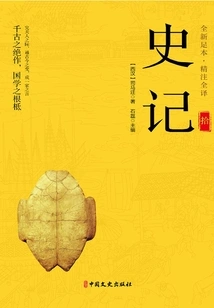
Historical Records (volume 10)
Literature史记(第十册)
(western Han Dynasty) Sima Qian
"Historical Records", one of the Twenty-Four Histories, was originally called "Tai Shi Gong Shu" or "Tai Shi Gong Ji" or "Tai Shi Ji". It is a biographical history book written by Sima Qian, a historian of the Western Han Dynasty. It is the first biographical general history in Chinese history. It records a history of more than 3,000 years from the legendary Yellow Emperor era to the fourth year of Emperor Taichu of Han Dynasty. In the first year of Taichu (104 BC), Sima Qian began the creation of "Tai Shi Gong Shu", which was later called "Historical Records". This work took 14 years to complete. The "Historical Records" has a total of 130 chapters, including twelve chronicles (recording the achievements of the emperors of the past dynasties), thirty families (recording the rise and fall of the vassal states and Han Dynasty princes, nobles), seventy biographies (recording the words and deeds of important figures, mainly describing people and ministers, the last chapter of which is a self-preface), ten tables (chronology of major events), and eight books (recording various laws and regulations, etiquette, music, music, calendar, astronomy, Zen, water conservancy, and finance). It is all-encompassing and comprehensive, with a clear context and a detailed record of the development of politics, economy, military, culture and other aspects in ancient times. "Historical Records" is an excellent literary work and plays an important role in the history of Chinese literature. From the perspective of historical value, it has preserved historical materials for thousands of years and has extraordinary historical value. It is listed as the "First of the Twenty-Four Histories". It pioneered the biographical recording method and was highly praised by historians and scholars of all ages. From the perspective of literary value, its descriptive language is vivid, the image is clear, the narrative is thorough, and the narrative is flexible. Liu Xiang and others believe that this book is "good at explaining things, argumentative but not flashy, and quality but not slang". This edition has 131 chapters. In addition to the original 130 chapters, Sima Qian's "Book of Reporting to Ren An" is also included, so that readers can understand Sima Qian's ideas and ideas more comprehensively and accurately.
"Historical Records", one of the Twenty-Four Histories, was originally called "Tai Shi Gong Shu" or "Tai Shi Gong Ji" or "Tai Shi Ji". It is a biographical history book written by Sima Qian, a historian of the Western Han Dynasty. It is the first biographical general history in Chinese history. It records a history of more than 3,000 years from the legendary Yellow Emperor era to the fourth year of Emperor Taichu of Han Dynasty. In the first year of Taichu (104 BC), Sima Qian began the creation of "Tai Shi Gong Shu", which was later called "Historical Records". This work took 14 years to complete. The "Historical Records" has a total of 130 chapters, including twelve chronicles (recording the achievements of the emperors of the past dynasties), thirty families (recording the rise and fall of the vassal states and Han Dynasty princes, nobles), seventy biographies (recording the words and deeds of important figures, mainly describing people and ministers, the last chapter of which is a self-preface), ten tables (chronology of major events), and eight books (recording various laws and regulations, etiquette, music, music, calendar, astronomy, Zen, water conservancy, and finance). It is all-encompassing and comprehensive, with a clear context and a detailed record of the development of politics, economy, military, culture and other aspects in ancient times. "Historical Records" is an excellent literary work and plays an important role in the history of Chinese literature. From the perspective of historical value, it has preserved historical materials for thousands of years and has extraordinary historical value. It is listed as the "First of the Twenty-Four Histories". It pioneered the biographical recording method and was highly praised by historians and scholars of all ages. From the perspective of literary value, its descriptive language is vivid, the image is clear, the narrative is thorough, and the narrative is flexible. Liu Xiang and others believe that this book is "good at explaining things, argumentative but not flashy, and quality but not slang". This edition has 131 chapters. In addition to the original 130 chapters, Sima Qian's "Book of Reporting to Ren An" is also included, so that readers can understand Sima Qian's ideas and ideas more comprehensively and accurately.
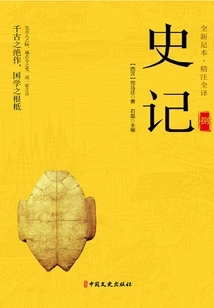
Historical Records (volume 8)
Literature史记(第八册)
(western Han Dynasty) Sima Qian
"Historical Records", one of the Twenty-Four Histories, was originally called "Tai Shi Gong Shu" or "Tai Shi Gong Ji" or "Tai Shi Ji". It is a biographical history book written by Sima Qian, a historian of the Western Han Dynasty. It is the first biographical general history in Chinese history. It records a history of more than 3,000 years from the legendary Yellow Emperor era to the fourth year of Emperor Taichu of Han Dynasty. In the first year of Taichu (104 BC), Sima Qian began the creation of "Tai Shi Gong Shu", which was later called "Historical Records". This work took 14 years to complete. The "Historical Records" has a total of 130 chapters, including twelve chronicles (recording the achievements of the emperors of the past dynasties), thirty families (recording the rise and fall of the vassal states and Han Dynasty princes, nobles), seventy biographies (recording the words and deeds of important figures, mainly describing people and ministers, the last chapter of which is a self-preface), ten tables (chronology of major events), and eight books (recording various laws and regulations, etiquette, music, music, calendar, astronomy, Zen, water conservancy, and finance). It is all-encompassing and comprehensive, with a clear context and a detailed record of the development of politics, economy, military, culture and other aspects in ancient times. "Historical Records" is an excellent literary work and plays an important role in the history of Chinese literature. From the perspective of historical value, it has preserved historical materials for thousands of years and has extraordinary historical value. It is listed as the "First of the Twenty-Four Histories". It pioneered the biographical recording method and was highly praised by historians and scholars of all ages. From the perspective of literary value, its descriptive language is vivid, the image is clear, the narrative is thorough, and the narrative is flexible. Liu Xiang and others believe that this book is "good at explaining things, argumentative but not flashy, and quality but not slang". This edition has 131 chapters. In addition to the original 130 chapters, Sima Qian's "Book of Reporting to Ren An" is also included, so that readers can understand Sima Qian's ideas and ideas more comprehensively and accurately.
"Historical Records", one of the Twenty-Four Histories, was originally called "Tai Shi Gong Shu" or "Tai Shi Gong Ji" or "Tai Shi Ji". It is a biographical history book written by Sima Qian, a historian of the Western Han Dynasty. It is the first biographical general history in Chinese history. It records a history of more than 3,000 years from the legendary Yellow Emperor era to the fourth year of Emperor Taichu of Han Dynasty. In the first year of Taichu (104 BC), Sima Qian began the creation of "Tai Shi Gong Shu", which was later called "Historical Records". This work took 14 years to complete. The "Historical Records" has a total of 130 chapters, including twelve chronicles (recording the achievements of the emperors of the past dynasties), thirty families (recording the rise and fall of the vassal states and Han Dynasty princes, nobles), seventy biographies (recording the words and deeds of important figures, mainly describing people and ministers, the last chapter of which is a self-preface), ten tables (chronology of major events), and eight books (recording various laws and regulations, etiquette, music, music, calendar, astronomy, Zen, water conservancy, and finance). It is all-encompassing and comprehensive, with a clear context and a detailed record of the development of politics, economy, military, culture and other aspects in ancient times. "Historical Records" is an excellent literary work and plays an important role in the history of Chinese literature. From the perspective of historical value, it has preserved historical materials for thousands of years and has extraordinary historical value. It is listed as the "First of the Twenty-Four Histories". It pioneered the biographical recording method and was highly praised by historians and scholars of all ages. From the perspective of literary value, its descriptive language is vivid, the image is clear, the narrative is thorough, and the narrative is flexible. Liu Xiang and others believe that this book is "good at explaining things, argumentative but not flashy, and quality but not slang". This edition has 131 chapters. In addition to the original 130 chapters, Sima Qian's "Book of Reporting to Ren An" is also included, so that readers can understand Sima Qian's ideas and ideas more comprehensively and accurately.
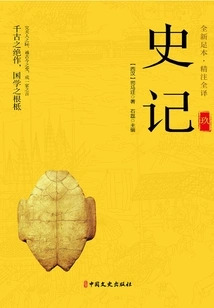
Historical Records (volume 9)
Literature史记(第九册)
(western Han Dynasty) Sima Qian
"Historical Records", one of the Twenty-Four Histories, was originally called "Tai Shi Gong Shu" or "Tai Shi Gong Ji" or "Tai Shi Ji". It is a biographical history book written by Sima Qian, a historian of the Western Han Dynasty. It is the first biographical general history in Chinese history. It records a history of more than 3,000 years from the legendary Yellow Emperor era to the fourth year of Emperor Taichu of Han Dynasty. In the first year of Taichu (104 BC), Sima Qian began the creation of "Tai Shi Gong Shu", which was later called "Historical Records". This work took 14 years to complete. The "Historical Records" has a total of 130 chapters, including twelve chronicles (recording the achievements of the emperors of the past dynasties), thirty families (recording the rise and fall of the vassal states and Han Dynasty princes, nobles), seventy biographies (recording the words and deeds of important figures, mainly describing people and ministers, the last chapter of which is a self-preface), ten tables (chronology of major events), and eight books (recording various laws and regulations, etiquette, music, music, calendar, astronomy, Zen, water conservancy, and finance). It is all-encompassing and comprehensive, with a clear context and a detailed record of the development of politics, economy, military, culture and other aspects in ancient times. "Historical Records" is an excellent literary work and plays an important role in the history of Chinese literature. From the perspective of historical value, it has preserved historical materials for thousands of years and has extraordinary historical value. It is listed as the "First of the Twenty-Four Histories". It pioneered the biographical recording method and was highly praised by historians and scholars of all ages. From the perspective of literary value, its descriptive language is vivid, the image is clear, the narrative is thorough, and the narrative is flexible. Liu Xiang and others believe that this book is "good at explaining things, argumentative but not flashy, and qualitative but not slangy". This edition has 131 chapters. In addition to the original 130 chapters, Sima Qian's "Book of Reporting to Ren An" is also included, so that readers can understand Sima Qian's ideas and ideas more comprehensively and accurately.
"Historical Records", one of the Twenty-Four Histories, was originally called "Tai Shi Gong Shu" or "Tai Shi Gong Ji" or "Tai Shi Ji". It is a biographical history book written by Sima Qian, a historian of the Western Han Dynasty. It is the first biographical general history in Chinese history. It records a history of more than 3,000 years from the legendary Yellow Emperor era to the fourth year of Emperor Taichu of Han Dynasty. In the first year of Taichu (104 BC), Sima Qian began the creation of "Tai Shi Gong Shu", which was later called "Historical Records". This work took 14 years to complete. The "Historical Records" has a total of 130 chapters, including twelve chronicles (recording the achievements of the emperors of the past dynasties), thirty families (recording the rise and fall of the vassal states and Han Dynasty princes, nobles), seventy biographies (recording the words and deeds of important figures, mainly describing people and ministers, the last chapter of which is a self-preface), ten tables (chronology of major events), and eight books (recording various laws and regulations, etiquette, music, music, calendar, astronomy, Zen, water conservancy, and finance). It is all-encompassing and comprehensive, with a clear context and a detailed record of the development of politics, economy, military, culture and other aspects in ancient times. "Historical Records" is an excellent literary work and plays an important role in the history of Chinese literature. From the perspective of historical value, it has preserved historical materials for thousands of years and has extraordinary historical value. It is listed as the "First of the Twenty-Four Histories". It pioneered the biographical recording method and was highly praised by historians and scholars of all ages. From the perspective of literary value, its descriptive language is vivid, the image is clear, the narrative is thorough, and the narrative is flexible. Liu Xiang and others believe that this book is "good at explaining things, argumentative but not flashy, and qualitative but not slangy". This edition has 131 chapters. In addition to the original 130 chapters, Sima Qian's "Book of Reporting to Ren An" is also included, so that readers can understand Sima Qian's ideas and ideas more comprehensively and accurately.
Historical Records
History史记
(western Han Dynasty) Sima Qian
"Historical Records" is a biographical history book written by Sima Qian, a historian of the Western Han Dynasty. It is the first biographical general history in Chinese history. It records a history of more than 3,000 years from the legendary Huangdi era to the fourth year of Emperor Wu of the Han Dynasty. "Historical Records" is listed as the first of the "Twenty-Four Histories", and together with the later "Hanshu", "Later Hanshu" and "Three Kingdoms", they are collectively known as the "First Four Histories". It has had a profound impact on the development of later historiography and literature. His pioneering method of chronicling historiography was passed down by the "official histories" of subsequent dynasties. "Historical Records" is also considered an excellent literary work, playing an important role in the history of Chinese literature. It was praised by Lu Xun as "the swan song of historians, the unrhymed "Li Sao"" and has high literary value. Liu Xiang and others believe that this book is "good at explaining things, argumentative but not flashy, and qualitative but not slangy".
"Historical Records" is a biographical history book written by Sima Qian, a historian of the Western Han Dynasty. It is the first biographical general history in Chinese history. It records a history of more than 3,000 years from the legendary Huangdi era to the fourth year of Emperor Wu of the Han Dynasty. "Historical Records" is listed as the first of the "Twenty-Four Histories", and together with the later "Hanshu", "Later Hanshu" and "Three Kingdoms", they are collectively known as the "First Four Histories". It has had a profound impact on the development of later historiography and literature. His pioneering method of chronicling historiography was passed down by the "official histories" of subsequent dynasties. "Historical Records" is also considered an excellent literary work, playing an important role in the history of Chinese literature. It was praised by Lu Xun as "the swan song of historians, the unrhymed "Li Sao"" and has high literary value. Liu Xiang and others believe that this book is "good at explaining things, argumentative but not flashy, and qualitative but not slangy".
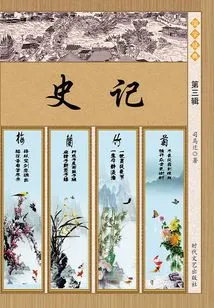
史记(第三辑)
(western Han Dynasty) Sima Qian
The ancestor of Chu came from Emperor Zhuanxu Gaoyang. Gaoyang is the grandson of Huangdi and the son of Changyi. Gao Yang gave birth to a title, a title gave birth to Juanzhang, and Juanzhang gave birth to Chongli. Chongli served as Emperor Ku, and Gaoxin lived in Huozheng. He was very meritorious and could bring light to the world. Emperor Ku ordered him to be Zhurong. The Gonggong family rebelled, and the emperor's envoy Chongli continued to punish them. The emperor executed Chongli on Gengyin day, and after his younger brother Wu Hui became Chongli, he returned to Huozheng and became Zhurong.
The ancestor of Chu came from Emperor Zhuanxu Gaoyang. Gaoyang is the grandson of Huangdi and the son of Changyi. Gao Yang gave birth to a title, a title gave birth to Juanzhang, and Juanzhang gave birth to Chongli. Chongli served as Emperor Ku, and Gaoxin lived in Huozheng. He was very meritorious and could bring light to the world. Emperor Ku ordered him to be Zhurong. The Gonggong family rebelled, and the emperor's envoy Chongli continued to punish them. The emperor executed Chongli on Gengyin day, and after his younger brother Wu Hui became Chongli, he returned to Huozheng and became Zhurong.
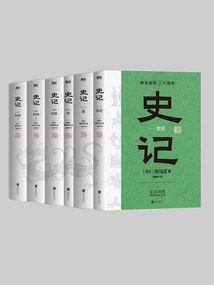
史记:简体全译版(全六册)
(western Han Dynasty) Sima Qian
This book was translated in full by Mr. Yu Zhanghua, an authoritative scholar and vice-president of the Historical Records Research Association. The original text is based on the palace version, while absorbing the strengths of the Baiyin version and the bookstore version. The vernacular translation also refers to the research results of "Historical Records" by previous and present people. On the premise of ensuring the accuracy of knowledge points, this book is created to be a popular text suitable for zero-level public readers and young students.
This book was translated in full by Mr. Yu Zhanghua, an authoritative scholar and vice-president of the Historical Records Research Association. The original text is based on the palace version, while absorbing the strengths of the Baiyin version and the bookstore version. The vernacular translation also refers to the research results of "Historical Records" by previous and present people. On the premise of ensuring the accuracy of knowledge points, this book is created to be a popular text suitable for zero-level public readers and young students.