Library
Browse and search books
2 novels found
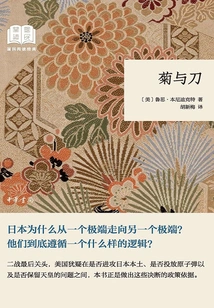
菊与刀(国民阅读经典)
(us) Benedict
This book is a stunning work that provides an overview of Japanese culture and interprets its contradictory character. It is a must-read classic for us to understand Japan. "Chrysanthemum" is originally the emblem of the Japanese royal family, and "sword" is the symbol of Bushido culture. Benedict uses "chrysanthemum" and "sword" to symbolize the contradictory character of the Japanese people, and uses a calm perspective of a Westerner to gain an overview of Japan's unique cultural traditions and national character. It not only captures the details of Japanese culture, but also places it within the anthropological perspective of Eastern culture and Pacific island culture. This book has been evaluated by all walks of life, and its great influence continues to this day.
This book is a stunning work that provides an overview of Japanese culture and interprets its contradictory character. It is a must-read classic for us to understand Japan. "Chrysanthemum" is originally the emblem of the Japanese royal family, and "sword" is the symbol of Bushido culture. Benedict uses "chrysanthemum" and "sword" to symbolize the contradictory character of the Japanese people, and uses a calm perspective of a Westerner to gain an overview of Japan's unique cultural traditions and national character. It not only captures the details of Japanese culture, but also places it within the anthropological perspective of Eastern culture and Pacific island culture. This book has been evaluated by all walks of life, and its great influence continues to this day.
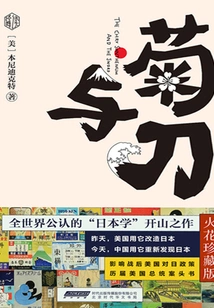
Chrysanthemum and Knife (sparks Collector's Edition)
General Fiction菊与刀(火花珍藏版)
(us) Benedict
"Chrysanthemum and Sword (Sparks Collector's Edition)": A tasteful visual feast, with a free Sparkle Collection, containing more than 600 exquisite sparkles, covering everything secular in modern Japan, and has collection value. It also selects dozens of master illustrations such as "Thirty-six Views of Mount Fuji" and "One Hundred Aspects of the Moon", painted by Katsushika Hokusai, Tsukioka Yoshitomo, etc.
"Chrysanthemum and Sword (Sparks Collector's Edition)": A tasteful visual feast, with a free Sparkle Collection, containing more than 600 exquisite sparkles, covering everything secular in modern Japan, and has collection value. It also selects dozens of master illustrations such as "Thirty-six Views of Mount Fuji" and "One Hundred Aspects of the Moon", painted by Katsushika Hokusai, Tsukioka Yoshitomo, etc.