Library

Browse and search novels

5 novels found

Xu Yuanchong's Translation of the Peony Pavilion

(ming Dynasty) Tang Xianzu

73K0

China is a country of poetry. Ancient poetry and drama are treasures in our country's literary treasure house and the cultural essence of our nation. The aesthetic trends and valuable wealth created by Chinese traditional culture over thousands of years of civilization development have great charm that transcends times and crosses national boundaries. Translation master Xu Yuanchong has spent decades selecting traditional literary classics that have had a profound influence on Chinese history from the vast sea of ​​ancient Chinese cultural books, and using superb translation techniques to translate them into English, so that readers at home and abroad can appreciate the beauty and charm of Chinese classical literature even in an English context. The book is published in Chinese-English format. The English part is personally reviewed by native English experts, and rare words in the Chinese part are notated and explained, making it easier to refer to and study. This book is divided into two volumes, the upper and lower volumes, and contains 300 well-known Tang poems. The English parts are all translated by Xu Yuanchong. I hope that through this form of bilingual reading, readers can appreciate the various phenomena of Chinese poetry at its peak.

The Purple Xiao (complete Collection of Tang Xianzu Operas)

(ming Dynasty) Tang Xianzu

280K0

This book is based on the legendary novel "The Biography of Huo Xiaoyu" by Jiang Fang in the Tang Dynasty, but the plot in the novel that caused Huo Xiaoyu's death due to Li Yi's betrayal was omitted. It narrates that after Li Yi and Huo Xiaoyu got married, Li Yi went on an expedition with the army, and Huo Xiaoyu missed him at home until Li Yi returned to Beijing on Chinese Valentine's Day and the two reunited. This is only half of the plot predicted in the "Opening" at the beginning of the volume.

The Peony Pavilion (classical Library)

(ming Dynasty) Tang Xianzu

97K0

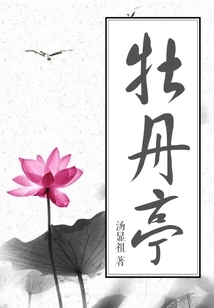
This book is also called "The Return of the Soul", and its full name is "The Return of the Soul in the Peony Pavilion". It is the masterpiece of Tang Xianzu, an outstanding dramatist in the Ming Dynasty. The script is based on the Ming Dynasty story-telling novel "Du Liniang Returns to Soul", and is creatively adapted. Through the love story of the aristocratic girl Du Liniang and the young scholar Liu Mengmei, it reflects the youthful awakening of young men and women of that era, especially young women, their persistent pursuit of a free and happy love life, and their fighting spirit for individual liberation and resistance to feudal ethics.

Peony Pavilion

Peony Pavilion

Literature

(ming Dynasty) Tang Xianzu

89K0

The story takes place in the Southern Song Dynasty. Du Bao, the governor of Nan'an, had a daughter, Du Liniang. One spring day when she was 16 years old, Du Liniang visited the garden for the first time. When she was sleepy, she dreamed of a scholar who broke willow trees. When I woke up from a spring dream, the scholar was gone. Du Liniang never became ill. Before she died, she asked her family to hide her self-portrait under the Taihu stone in the Peony Pavilion. At this time, the Jin soldiers named Li Quan King of Liujin and attacked the Huaiyang area. Du Bao buried Du Liniang in Meihua Temple, and was quickly transferred to Huaiyang to guard it. The scholar in the dream is Liu Mengmei from Lingnan. His family was in decline and he decided to leave his hometown and go north to seek fame. When passing by Nan'an, I picked up Du Liniang's self-portrait by chance. At night, he saw the woman in the painting - it turned out that Du Liniang, with the permission of the King of Hell, left the city of Fusi. Her soul came to Plum Blossom Temple and had a tryst with Liu Mengmei at night. Liu Mengmei was not afraid after learning that Du Liniang was a ghost. He managed to obtain the elixir, dug up the grave, and brought Liniang back to life. However, the play in ancient times did not end until the first prize was won. Liu Mengmei and Du Liniang went to Lin'an to take the exam together. When the list was unveiled, Li Quan's rebellion happened again, and Du Bao was besieged. In troubled times, can Du Liniang, who has broken through the two realms of yin and yang, be reunited with her parents and finally get married to Liu Mengmei... There is a bold emotion in Du Liniang. In Liu Mengmei, there are intellectual ideals and grievances. Tang Xianzu, who left officialdom at the age of 49, wrote about his understanding of life in "The Peony Pavilion".

Peony Pavilion

Peony Pavilion

Literature

(ming Dynasty) Tang Xianzu

89K9.3477

If you think that ancient people's love was pedantic, then read "The Peony Pavilion". There is a life of ancient people that you have never known here. Writer Bai Xianyong once joked: The back gardens of the ancients were the most dangerous. "It turns out that the colorful flowers are blooming everywhere, but they are all abandoned by the ruined wells and ruined buildings. Where can the beautiful scenery be in the sky? Whose family can enjoy it?" "The Peony Pavilion" interprets such a story: a lady from a famous family in ancient times entered the back garden and saw the pleasant scenery. , I started to yearn for spring, and then I met a life-and-death love... The song "The Peony Pavilion" wrote all the lingering thoughts of crazy men and women all over the world. Even Lin Daiyu in "A Dream of Red Mansions" also felt "heartache, madness, and tears in her eyes" after reading it.