The background is in line with historical facts. The development is based on historical materials + (in line with historical facts) characters + personal opinions on possible development directions. It is for reference only.
When I first read this author's first book many years ago, I complained about it to many people, thinking, "Oh my god, how could anyone love descriptions of appearance so much?"
By the time of this third book, we can find that the author has made great progress in this aspect.
The overall writing style is in a light-hearted direction, and the storyline does not seem to contain too many intrigues and political struggles, but more towards an upright struggle for hegemony.
In a sense, it can be regarded as replacing Cao Wei.
In fact, I think it is very difficult to write about the Three Kingdoms in a light-hearted way. The character of the protagonist plays a large part. What is even more rare is that the author has controlled the overall proportion and put the article in the right position in all senses. It does not make the overall story too superficial, but it actually writes the Three Kingdoms.
Few people have written stories about the early Ming Dynasty, and this book fills some gaps in this regard. It's a semi-film, but the overall story line is very incomplete... Well, how should I put it, it's more reasonable to read it as an interesting historical material than a novel.
I haven't finished it yet. I only saw Chapter 66 but I can't help but comment and add book lists (will update again after reading it)
How can it be so beautiful!
How can it be so beautiful!
God, I love the character of the male protagonist so much. He is young and energetic, devoted to the country and the people, ambitious and willing to sacrifice everything for it, without fear of fame or sacrifice.
I really like him very much [poor] [poor]
And the fact that he was originally from Turks is also very attractive (Jinjiang has never seen a main drama mixed with Turkic blood first. In short, it is delicious and I like to eat more. The plot is also very thoughtful, and the author has made great efforts to research historical materials (often attached with references... I like it!)
I'm done.
The male protagonist is so divine... It really feels like a god descending from heaven to earth to love the world. I have been thinking about his golden eyes. Chinese people's eyes are brown and darker, but there are not a few people who are more golden... And the god's eyes are piercing, and his eyes contain mountains and rivers and everyone in the world (nonsense)
It feels like a book that truly depicts the cruelty of power. The undercurrent in the court is like a whirlpool, enveloping everyone in the room, and he is the arrow and knife that breaks the situation.
,! I will follow you!
This book is my top one in the history derivatives category in recent years. Anyone who knows a little bit about Ming history knows that this article is actually a revamped Shitong of the Jiajing era.
In my case, this article has many and dense plots, and the overall plot is very smooth in terms of laughter and logic. The most points that give it points are the concept and the protagonist.
The protagonist is an idealist, a conservative idealist - the kind of conservative (bushi) who thinks radicals are too conservative. He can make all the preparations when there is no hope, and when the opportunity comes, he will seize this trend without delay, thereby fulfilling his own wish.
He is actually the transformative figure we need most, one who will stop at nothing and be steadfast in his goals.
Returning to the topic of this article, what such a protagonist spares no effort to promote changes in the Ming Dynasty and pave the way for red to sweep the world in the future - even if the final success may be too idealistic, so what, he has done his best.
Oh, by the way, I feel that the political ideas in this article are very suitable for those taking public postgraduate entrance examinations to deepen their memory of politics.
After reading this book, I had the urge to read Selected Works of Mao all night long.
The second part of the Voice Diary, there is a huge difference between human stars and human-like stars.
The cooperation between Mu Qi and Boss Liu in this book can be described as dry wood meeting fire - an explosion if you are not careful.
Mu Qi in this book is more inclined to guide and persuade than the crazy mastermind in the previous book - after all, Emperor Wu cannot be misled as easily as Jiajing (speaking of Jiajing, after all, he is also the IQ ceiling of humanoid stars, and he is not so easy to fool). He can easily detect some of the protagonist's small actions, but after all, Mu Qi advocates a future that must be done in the future, so the battle of wits was stopped for a while, and both sides took a step back.
(Another very funny thing is when Emperor Wu watched the Prime Minister break the defense. I won't say where the defense was broken, but all kinds of defenses were broken (fun)
If I give a five-star rating, if I write a four, Jinjiang won't give me a rating.
The historical official battle is written very realistically, quite a drama, and the logic is clear.
Maybe the only thing that is not enough is the description of Concubine Wan Gui, but this book has been finished for a long time, and I understand all the reviews of Concubine Wan Gui at that time.
If I give a five-star rating, if I write a four, Jinjiang won't give me a rating.
If you want to engage in historical research, you must not miss this book.
From the portrayal of Qin Shihuang to the male protagonist's abilities to the overall story logic, everything is impeccable.
I, the Qin Dynasty, will live forever!
If I give a five-star rating, if I write a four, Jinjiang won't give me a rating.
I watched it recently and was quite impressed.
The logic is reasonable and more consistent with historical records. The most important thing is that it feels so good to kill disgusting people.
Compared with the previous book by the same author, this book contains more drama, but it only writes about Cao Cao's dominance and does not make any more changes to the overall history of the Three Kingdoms (
Maybe it's because Soochow has so many different ideas that I'm very biased against this book.
The advantage is that it is written in a very historical direction, in a serious drama style, the characters' personalities are not OOC, and the plot logic is reasonable.
The disadvantage is that when a person becomes a good friend or relative of Sun Ce and Zhou Yu from Soochow, he also studies medicine. Is it reasonable for you not to save Sun Ce and Zhou Yu? ? ? ?
Ah? ? ? ?
Protagonist: Do not change historical facts.
No, you already write historical novels!
If you don't save Sun Ce, you can still say that you really can't save him. Zhou Yu just didn't come back to Soochow at all, and he didn't plan to go back.
You, me and him.
If you just want to watch a historical drama, you can watch it, but if you want to change history, you can't watch it at all.
 [Three Kingdoms] Mingjun Development Plan
48kFavorites60.1kClicks/ch80.5kNutrition
[Three Kingdoms] Mingjun Development Plan
48kFavorites60.1kClicks/ch80.5kNutrition
 [Ming] the Years of Being the Adopted Son of Zhu Yuanzhang
10kFavorites24.3kClicks/ch5.1kNutrition
[Ming] the Years of Being the Adopted Son of Zhu Yuanzhang
10kFavorites24.3kClicks/ch5.1kNutrition
 Tang Dynasty Coup Survival Guide
4.4kFavorites1.7kClicks/ch5.6kNutrition
Tang Dynasty Coup Survival Guide
4.4kFavorites1.7kClicks/ch5.6kNutrition
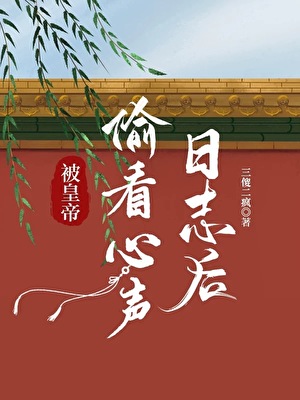 After Being Peeked into the Heartfelt Diary by the Emperor
71.9kFavorites133.1kClicks/ch192.4kNutrition
After Being Peeked into the Heartfelt Diary by the Emperor
71.9kFavorites133.1kClicks/ch192.4kNutrition
 Underworld Emperor Transformation Guide
27.6kFavorites34.5kClicks/ch105.8kNutrition
Underworld Emperor Transformation Guide
27.6kFavorites34.5kClicks/ch105.8kNutrition
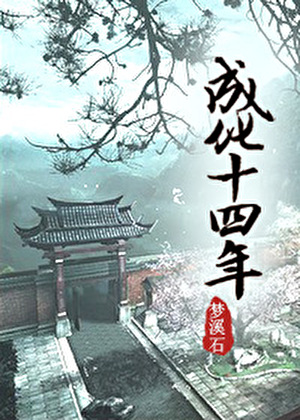 Chenghua Fourteenth Year
157.3kFavorites245.5kClicks/ch130.3kNutrition
Chenghua Fourteenth Year
157.3kFavorites245.5kClicks/ch130.3kNutrition
Emperor Qin 150.1kFavorites324.9kClicks/ch265.1kNutrition
 A Foolish King Requires an Offline Monarchy
78.6kFavorites149.9kClicks/ch100.2kNutrition
A Foolish King Requires an Offline Monarchy
78.6kFavorites149.9kClicks/ch100.2kNutrition
 [Three Kingdoms] Burning Incense and Offering Wine
71kFavorites177.6kClicks/ch51kNutrition
[Three Kingdoms] Burning Incense and Offering Wine
71kFavorites177.6kClicks/ch51kNutrition
 [Three Kingdoms] After Offending Everyone in the Wei Kingdom, I Reached the Pinnacle of My Life
50.9kFavorites132.9kClicks/ch26.2kNutrition
[Three Kingdoms] After Offending Everyone in the Wei Kingdom, I Reached the Pinnacle of My Life
50.9kFavorites132.9kClicks/ch26.2kNutrition
 Practice Medicine in the Three Kingdoms
18kFavorites54kClicks/ch5.8kNutrition
Practice Medicine in the Three Kingdoms
18kFavorites54kClicks/ch5.8kNutrition