Most of them are history-oriented infrastructure articles or live broadcast inventory categories, and I will not give high marks to OOC ones. One star basically makes it impossible to read even three chapters.
. . . . When I read the second chapter, I discovered a bunch of brainwashing kits. The history is learned only through the Internet, and the characters are learned through marketing accounts.
There is also a bit of unofficial history, but not much. The writing is still quite white, but since it is the Zhenguan Dynasty, I can give it one more star. The connection is rather sudden, and there are many errors in the article that have not been corrected. Not only the words, but also the characters are written wrong in some cases.
Warning: I only watched Erfeng's solo part. It's well written, not cliché. At the end, I was still looking forward to whether the author would give him a golden finger. When you see the ending, you feel sad but relieved. For any novel that can engage in infrastructure construction, in the case of Erfeng, I want him to look beyond Zhenguan and personally take care of those chess games that later got out of control. I think with his skill and vision, if he could suppress the rising diseases with his own hands, wouldn't the endings of many stories be rewritten? After seeing the author's words at the end, I let it go. He spent his whole life calibrating the most correct course for this dynasty, but in the end he could not stop it. When the helmsman was replaced by another person, this giant ship would still follow the inertia of history and drift in the direction it was supposed to go.
It felt good at first, but then I saw that the protagonist wanted to convey the concept of equality in feudal society, me? ? ? ,
I feel that the time-travelers using modern thinking to promote freedom and equality in ancient times are essentially condescending and arrogant. "Rights" are never the product of ideas, but the result of the game of "power". From the Magna Carta to the Declaration of Human Rights, from the dawn of dawn to the founding of New China, every concept of "equality" that seems ordinary today has piles of bones and blood behind it. It was squeezed out bit by bit from the cracks of the stone with the lives of countless people fighting against the old forces. And when the modern protagonist returns to ancient times and wants to implement all of this with just his smooth tongue, it is tantamount to trying to bypass the "gravity work" of the entire historical process. But why does this "Arabian Nights" style setting become the traffic password of Internet articles? In an age of material abundance, it is hard to imagine that the "common sense" we take for granted was such a shocking "luxury" in history that we had to pay for it with our lives. The reason why those time-travelers were able to succeed easily is because the author quietly stripped the cost of "bloody sacrifice" from the protagonist and transferred it to those silent historical background boards. An excellent book, it should make the protagonist discover that when he tries to bring equality to the slaves, the slaves will be afraid of losing their attachment; when he tries to promote freedom, the vested interests will use the most primitive sword to tell him what "freedom" is. Great works will let us see that even a person with a modern soul will be alienated and distorted when he is thrown into that torrent. He will find that in order to protect a beautiful goal, he has to temporarily use bad means.
This kind of struggle is the greatest tribute to "bloodshed and sacrifice". Because it allows us to understand that historical progress has never been achieved by "cheating" through one time travel, but rather the groping, encountering obstacles, sacrifices in the darkness, generation after generation, and the persistence of those who still move forward even if they cannot see the light.
That's awesome. Analyzing historical development trends from different aspects is not a cliché, but a deeper and more thorough analysis. I didn't order all of them because I didn't buy anything from Wu Zhou Dynasty.
It makes up for many regrets in history. My feelings about Li Chengqian are actually a bit complicated. This book can be regarded as a small regret. "Young and smart, handsome, benevolent, filial and pure", the Erfeng in this book made the right choice. Overall, it's very relaxing. The young prince gets along well with everyone. Although the author still has a little selfishness in some places, it's not much. It's quite enjoyable.
God! The author's research is very detailed, and each character fits the records in the history books. The analysis is very detailed, and basically there is no selfishness, it is all objective evaluation. Moreover, the original text is also released in the article. It's so awesome and beautiful!
In fact, I have always thought the modern part is more cute (?), And based on modern life, it is quite fun to put these three people together.
The most unexpected thing is that the author puts Ying Zheng in the position of King Qin. I think it is brilliant because there is a big difference between "king" and "emperor"
It can be seen that the author's writing skills are very solid, because I read every reform article a little confused.
But overall it's still pretty good-looking, and you can watch it to pass the time.
Highly recommended! The historical text of the Western Han Dynasty that has the most Han Dynasty flavor, the feeling of a single man and a thief. In fact, even if he travels back to the Western Han Dynasty, he still carries the idea that all sacrifices are necessary and all suffering is a price. A born politician who can compete with a modern man like Shi Zi, this is the real Emperor Wu of the Han Dynasty! The author writes his contradictory and cruel character very well!
A particularly wonderful book that combines literary works with social background, allowing the ancients to understand the changes in dynasties and people's livelihood. It also made up for the regret that I had some vague understanding of the Chinese language class. These works are like slices of civilization, a
A token of the times. Works and writers illuminate each other.
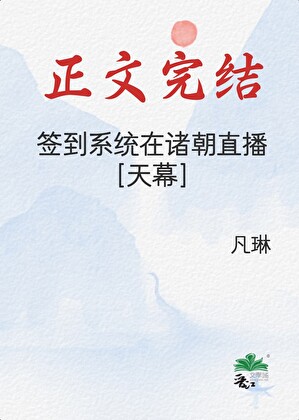 The Sign-In System Is Broadcast Live in Zhuchao [Tianmu]
10kFavorites21kClicks/ch2.7kNutrition
The Sign-In System Is Broadcast Live in Zhuchao [Tianmu]
10kFavorites21kClicks/ch2.7kNutrition
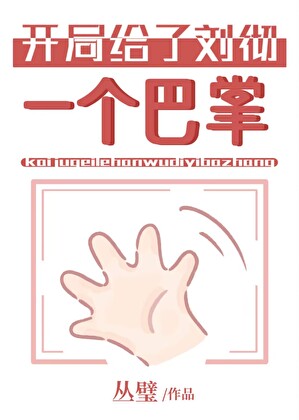 Those Years When I Was the Ancestor of Wu of Han Dynasty
27.4kFavorites35.6kClicks/ch71.9kNutrition
Those Years When I Was the Ancestor of Wu of Han Dynasty
27.4kFavorites35.6kClicks/ch71.9kNutrition
 Tell Emperor Wu of the Han Dynasty About My Male God Huo Qubing
57.8kFavorites187.2kClicks/ch102kNutrition
Tell Emperor Wu of the Han Dynasty About My Male God Huo Qubing
57.8kFavorites187.2kClicks/ch102kNutrition
Spoilers of History for Emperor Qin and Emperor Hanwu [Live Broadcast] 19.3kFavorites56.1kClicks/ch16.2kNutrition
Tianmu Broadcast Live Broadcast to Li Shimin: "I Rebelled in Zhenguan" 10.4kFavorites20.1kClicks/ch5.1kNutrition
 When Li Shimin Transformed into the Crown Prince of Emperor Wu of the Han Dynasty
2.2kFavorites2.7kClicks/ch494Nutrition
When Li Shimin Transformed into the Crown Prince of Emperor Wu of the Han Dynasty
2.2kFavorites2.7kClicks/ch494Nutrition
 Historical Celebrities Are All in the Jiansan Lottery Group
7.9kFavorites8.3kClicks/ch13.6kNutrition
Historical Celebrities Are All in the Jiansan Lottery Group
7.9kFavorites8.3kClicks/ch13.6kNutrition
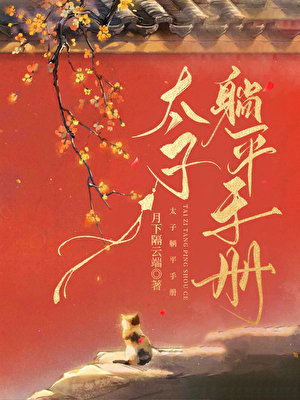 [Tang Dynasty] Prince's Manual for Lying Down
4.2kFavorites6.3kClicks/ch3.4kNutrition
[Tang Dynasty] Prince's Manual for Lying Down
4.2kFavorites6.3kClicks/ch3.4kNutrition
The Beginning Is Li Shimin's Spoiler for Xuanwumen [History Live] 67.7kFavorites179.2kClicks/ch81.3kNutrition
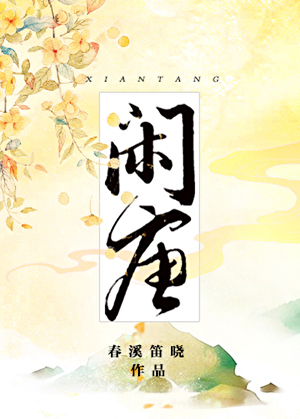 Xian Tang
131.3kFavorites369.8kClicks/ch861.9kNutrition
Xian Tang
131.3kFavorites369.8kClicks/ch861.9kNutrition
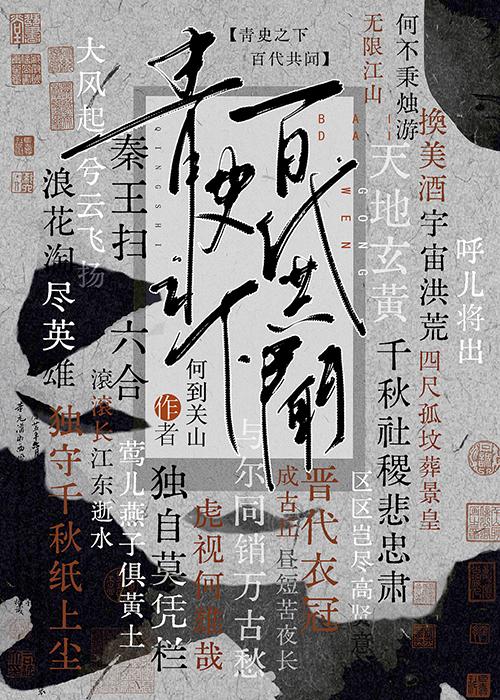 [History Live] Under the Ancient History, Generations Have Heard About It
59.7kFavorites113.9kClicks/ch100.1kNutrition
[History Live] Under the Ancient History, Generations Have Heard About It
59.7kFavorites113.9kClicks/ch100.1kNutrition
 Daily Life of Modern Students Studying Abroad in Qin, Han, Wu and Tang Dynasties
13kFavorites23.3kClicks/ch14.2kNutrition
Daily Life of Modern Students Studying Abroad in Qin, Han, Wu and Tang Dynasties
13kFavorites23.3kClicks/ch14.2kNutrition
 Underworld Emperor Transformation Guide
27.6kFavorites34.5kClicks/ch105.8kNutrition
Underworld Emperor Transformation Guide
27.6kFavorites34.5kClicks/ch105.8kNutrition
 When the Dynasties Began to Watch My Chinese Class [History Live Broadcast]
101.6kFavorites226kClicks/ch262.9kNutrition
When the Dynasties Began to Watch My Chinese Class [History Live Broadcast]
101.6kFavorites226kClicks/ch262.9kNutrition