One of the top 3 ancient movies in my mind. I still remember the first time I watched it, staying up two nights to finish it. Recently, the first season of the radio drama ended and I picked it up again to review it. It's still so good! The background of the story is like that of the Jingkang period of the Song Dynasty. A foreign prince fell into trouble and became a slave, but was rescued by a dandy young master. From then on, the two became masters and servants, brothers, and lovers. They were enemies of the country and the family, but the love between their children was long. They were kings in troubled times.
This article brings together various elements, such as farming, imperial examinations, political intrigue, and war... I like the second volume the most when the two of them spent time in Shen Garden. Every day was filled with trivial matters but full of fireworks. After that, the country was destroyed, the family was destroyed, and the brothers were separated, which made me feel very sad. I really like the fans that Brother Nie dedicated to the four people respectively, which perfectly symbolizes the ending of each person. A good story is one that still makes people's hearts swell when read many years later, like a sad song in troubled times. There are "one general's success and ten thousand bones withered", "the brave man wins when we meet on a narrow road", and "it will never be like a boy's journey in the end".
To turn the tide before it falls, a heroic hymn of the "late Ming Dynasty".
I remember that the original book was called Wang Sicong. The main character was King Lu Li Fengshu. After the death of the late emperor, the king of Lu acted as regent, brought Green Cong and Wang Xiu to the capital to assist the young emperor (a bit like Apocalypse and Chongzhen in the late Ming Dynasty, except that Apocalypse had a son in this time and space). The emperor was only a few years old, and he still peed his pants when he went to court. However, the regent had monopolized the power and tried his best to save this apocalyptic dynasty. He had the entire capital to kill King Chuang and banned the sale of tobacco and inoculated with cowpox. This journey was thrilling. Fortunately, there were many like-minded people who had the same intention. A side clan that studies fire guns, an ambitious young general, a young military doctor who goes to the battlefield to dissect corpses, a great pirate who is both good and evil, a young Taoist priest from the Qintian Prison who insists on growing potatoes, and an old doctor who dares to inoculate the whole family with pox... Of course, there are also With Wang Xiu, I really like the relationship between the two people in this article. If Li Fengshu is fire, Wang Xiu is water. Without Wang Xiu, the regent would have burned out long ago. He understands him, supports him, and accompanies him. "I am not alone in my path."——
I read this article three years ago. Now that I think about it, there are a few scenes that have left the deepest impression on me. One scene is when the city was closed due to plague and no women dared to go out. The county magistrate's daughter placed cloths at the door of each house. The next morning, sewn masks were placed outside every house. The scene was when smallpox broke out in the capital and the ministers tried to admonish the young emperor. Don't get variola, the regent looked at his little nephew and suddenly felt soft and touched his face; and the ending, my favorite supporting character, Xu Yang and his brother, he didn't know the identity of his brother until the end, he died incognito from generation to generation, just in exchange for the peace and tranquility of his family and country, and the peace of the sea, the river, and the river.
An excellent group portrait story. When I read it, I can't help but think of the late Ming Dynasty. The author seems to have no intention of hiding it. Of course, it doesn't matter if you don't know much about history. In the final analysis, this is a good story that I can read in one sitting. I recommend it to readers who like ancient dramas.
The story begins with a time-travel boy and a foreign prince. As soon as Li Zishi opened his eyes, he saw that his father was about to burn his son to death (a very typical beginning of a time-travel novel). He finally escaped with a pair of younger brothers and sisters.
As the ancient novel that I have reread the most, "Tenderness" is like an article customized for me. I like the author's beautiful and magnificent writing style, the overall structure of the three volumes, the dual perspective of the second volume, the "love that goes deeper and deeper" between the two protagonists, the brothers and sisters running for the people of the country and the country, and every flesh-and-blood supporting character in it... Of course I know that this article has a major point in universal values, and I understand that some people can't accept it. I just hope that everyone will not veto it. After all, imperfect people are alive, and with the blessing of the author's writing, I can understand the choices made by the protagonist.
Some people say that it is difficult for a talented person to keep a low profile. Putting aside the filter of the times, I can also feel the author's bad taste of spewing blood and torturing small children. But when I saw the two of them reunited in the midst of thousands of troops, I was still filled with excitement and admiration. I really just like this Shura field, haha?
Speaking of which, in recent years, I feel that there are fewer and fewer good-looking ancient novels. Some of the words and sentences in some of them are too vernacular. After reading some of them, I don't even know how the two fell in love, let alone constructing a complete world view against an imaginary historical background. "Tenderness" is the same series as "Arty Feng Ya Lu" and "The World Is Fortunately to Know Painting". It is set in the latest era. Seeing a dynasty come to an end, I can't help but feel sad in my heart. This may be a good story, which can make me believe that this period of history really exists, and the people in the story are eternal in spring and immortal in autumn.
 Providence Is Romantic
198.6kFavorites190.4kClicks/ch207.7kNutrition
Providence Is Romantic
198.6kFavorites190.4kClicks/ch207.7kNutrition
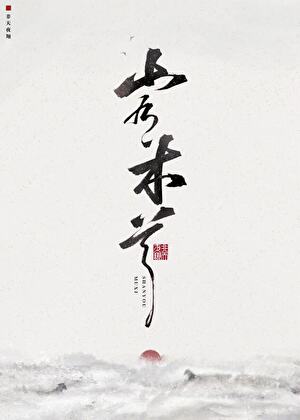 There Are Trees in the Mountains
196.8kFavorites173.6kClicks/ch318.4kNutrition
There Are Trees in the Mountains
196.8kFavorites173.6kClicks/ch318.4kNutrition
Become a Celebrity in Ancient Times 101.3kFavorites232.5kClicks/ch192.6kNutrition
Chang'an Youth Tour 86kFavorites56.9kClicks/ch40.7kNutrition
King in Troubled Times 69.8kFavorites52.2kClicks/ch12.6kNutrition
 Regent
46.9kFavorites32.4kClicks/ch38.7kNutrition
Regent
46.9kFavorites32.4kClicks/ch38.7kNutrition
A Lifetime Devoted to Tenderness 21.7kFavorites65kClicks/ch2.3kNutrition