This is a book that I stayed up all night, but I chose not to continue reading. Those who cause trouble are bound to commit crimes. If the heroine can carve out a way to survive independently from the feudal society, then she will not easily agree to get married.
I like the female protagonist's unreasonable and wooden character, and the male protagonist's single-arrow setting in the early stage. I also like the setting of the heroine working hard to become an official.
But I don't like it when the male protagonist pairs up with the female protagonist and takes the initiative to touch and touch the female protagonist, causing psychological trauma to the female protagonist. Either the heroine accepts this behavior calmly, or the heroine categorically rejects this behavior. The former is in line with the heroine's wooden character who seeks profit for herself and does not care about love, and the latter is also in line with the heroine's thinking model that grew up in the old era. However, there will always be situations where the heroine sheds tears and endures the compromise, while the hero suddenly wakes up and stops taking action - the highlight of the heroine becomes the highlight of the hero, and highlights the indecentness of the hero.
The female protagonist endures the male protagonist's manipulations to benefit herself, but at the same time she feels forced. I really can't accept this and it's very OOC. It's not being physically forced that hurts. I don't think any woman would fall in love with such a guy.
The author can write about the male protagonist secretly having fun and secretly kissing her face, but why should he write that the male protagonist ignores the female protagonist's wishes and tries to engage in pre-marital rebellious behavior. Obviously everyone thought this was an important matter at that time.
This makes the male protagonist very OOC. He is obviously someone who respects the female protagonist in his career choices.
All in all, both the female lead and the male lead are OOC.
In the later period, the author loved Lalang Pei. It is very unreasonable for a male partner who truly treats the heroine as his daughter and eventually falls in love with the heroine!
I'm sad that the characters fell apart a bit later on. Each character should reach his or her own ending, rather than "should" have a status of "matching virtues and abilities".
In addition, in the Songwen world, since there is no problem for women to be the head of the family, why do they keep emphasizing that the end of female cultivators is marriage? Gu decided to fight and stay away from love since he was a child, but in the end he found a partner, gave birth to 7 children and died because of it?
I booked the whole movie because of the heroine's character. Later I found out that the heroine was forced to get pregnant by everyone, and I regretted it very much.
When she was just born, my mother found out that it was a girl, and she thought, "My child will also suffer this kind of pain. As I got older, became sexually aware, and had my period, I began to prepare for my future pain, thinking about what level 10 pain would be like. As I got older, I understood that this kind of pain is not necessary for my perfect life."
The ending of this article is very sad. The heroine, the little angel of justice, has been helping others and taking care of others, but in the end she was forced to do something she had clearly stated that she did not want to do in the name of love. Is having children really necessary for the author?
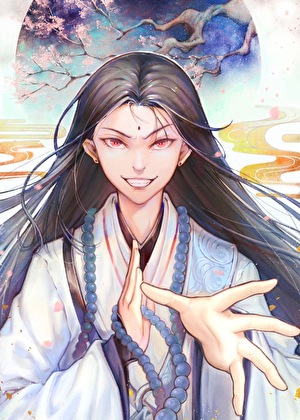 My Buddha Will Not Survive the Poverty [Cultivation of Immortality]
86.9kFavorites177kClicks/ch141kNutrition
My Buddha Will Not Survive the Poverty [Cultivation of Immortality]
86.9kFavorites177kClicks/ch141kNutrition
 Flirting with Chaos to Chase Spring Students
9kFavorites9.6kClicks/ch8.5kNutrition
Flirting with Chaos to Chase Spring Students
9kFavorites9.6kClicks/ch8.5kNutrition
 The Heir Is Emotionally Stable
15.8kFavorites10.9kClicks/ch25kNutrition
The Heir Is Emotionally Stable
15.8kFavorites10.9kClicks/ch25kNutrition
 The Villain Ex-Girlfriend of the Male Protagonist of the Campus Novel
24.6kFavorites53kClicks/ch7.9kNutrition
The Villain Ex-Girlfriend of the Male Protagonist of the Campus Novel
24.6kFavorites53kClicks/ch7.9kNutrition