The bright road is broken, the sound of harp and harp is muted, and the preface of ZTE is finally over.
This is the age of Lan Gui and Qi Fang, a month when the body cannot help itself, a day of helplessness, the insignificance of human beings, a breath in the end of the ancient world, a drop of grain in the nine states, watching people and events, singing and sighing.
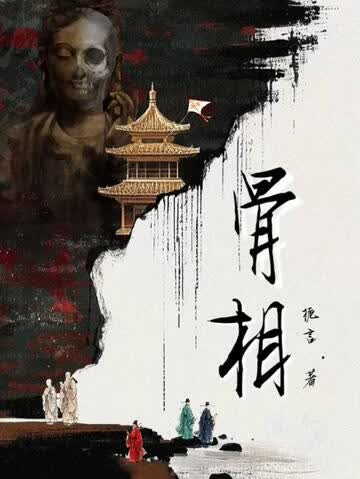
During the Yuanhe period, in the year of Dingyou, the emperor was determined to pay homage to the Buddha and wanted to build a temple to show his piety and support the army to quell the chaos in Huaixi. The princes, princes, and common people were running around to worship him, and when someone came up to him, his head was burning and he was biting his finger. At that time, the sky showed something strange, the sun appeared in the sky, and the comet came to the northwest. However, no one dared to say anything when he raised his head to the court.
There is a scribe who is an official and admonisher. He writes alone and writes about the nonsense of building construction. He said: "Buddhism is only about the state of mind, which exists in a small space. It has nothing to do with the beauty of earth and wood or the noise of bells and drums. Your Majesty is doing this, and I think it is too much."
After Shu Shang, the emperor was furious, threw his book, and moved to the left to the miasma. His wife was a daughter of a wealthy family, and she sold all her hairpins to pay for the journey. However, the officials rushed her business and failed to take care of her clothes, so she traveled to the south in rags. His daughter went to Ye Ting at the age of eleven, and she was practicing dancing with the palace masters. Three years later, the emperor watched her dance at a banquet and asked about it. Suddenly he recalled admonishing the ministers of the Buddha and asked around him: "Where is his wife?" He said to him: "His wife followed him to the south and died of illness. His son went into exile and did not know where he was, and his daughter stayed in Ye Ting." The emperor was silent for a long time and did not ask again. The queen followed the princess and surrendered to the Uighurs, but disappeared in Hu Chen.
In the 14th year of Yuanhe, the emperor's worship of the Buddha became more and more intense, and he was determined to worship the Buddha's bones. A minister of the Ministry of punishment in Hanmen wrote a letter to persuade him to be demoted to Chaozhou. On the way, I was sending food to a wild temple. I saw a man with unkempt hair and a shawl. He had not yet been shaved. However, he stayed with the ancient Buddha with a broken lamp day and night. He rang the bell in the morning and dusk and called himself "Zhong Fannu". When the man heard him reciting the sentence "A Letter to the Nine Heavens", his voice was choked with sobs. When asked, he covered his eyes with tears and did not answer.
Alas! Is it called fate? Those who are not in a group will wear their clothes and go to court, those who die will be chased away by their souls, those who flatter will be honored and enshrined, those who seek the truth will be hard to escape from the world of mortals, those who deviate from the Tao will enjoy their lives, and those who are upright and stay chaste will spend the night in Buddhism. There are those who are infatuated and drift away, and those who are heartless are promoted.
Alas! Those who embrace the wall will tear their articles; those who embrace the beauty will cut off their strings. There is no place to stand in life, and there is no temple for the soul to return to. The scholars wake up and lament their misfortune, and the people are in a coma and do not know how to fight. Which one is lucky? If you are an official, you will be straight and honest, and if you are a citizen, you will be pure and honest, but you will not be stupid. However, there are still people who are outspoken and courageous in admonishing, and people who are upright and wise.
Alas, why do you call it "Buddha Bones"? It should be said that it is "character"!
[Warning: Multiple perspective changes, interlaced timelines]
[This book is dedicated to my Chinese teacher and was inspired by a Chinese class]
Intention: Please look back and focus on your own destiny