[Remember 2026-05-09 - 2:15 a. M., V is dealing with the current situation due to the death of the only mother due to illness, and apologizes to the little cuties who are waiting for updates.
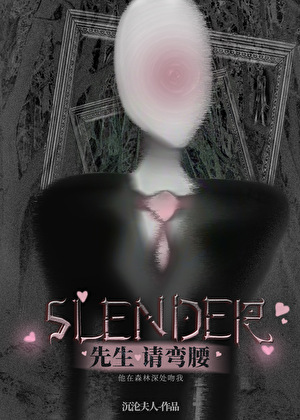
After this book is finished, the next one will be Slender Slender Ghost💦
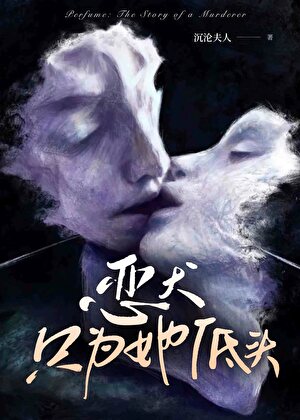
Indifferent, intelligent and manipulative beauty
She comes from the 22nd century, the empire's top scientist, and the perfect product of human gene editing.
After an unexpected success in an experiment, Emilia Walker traveled to the end of the 18th century and came to the dirtiest and smelliest Paris, France.
The same appearance, future soul, and such a unique aura immediately attracted the attention of a smell monster.
Jean-Baptiste Grenot is a genius perfumer who can know everything just by relying on his nose. His obsession with pursuing the "perfect scent" makes him use any means.
He wanted to follow the hunt as usual, but accidentally broke into her "crime scene".
"Only living people can emit such a smell."
He whispered, his fingers gently touching her blood-stained hair as if he were a precious specimen.
So, she started and he finished.
Under the morbid pursuit of this madman, Emilia successfully broke into Paris's upper class with the most perfect perfume in the world.
However, the whirlpool of power is deeper and dirtier than she imagined. The bloody prelude to the French Revolution has begun, and she has to deal with multiple forces.
And the witness who once witnessed her crime has now become her most convenient weapon.
... Many years later, Emilia stood at the pinnacle of power, and behind her——
It is Greno, the loyal and vicious dog, who is always ready to rebel against the whole world for her.
————————————————————————
"I don't know what love is because I've never had it.
But from your body, I smell a scent that can make the soul tremble. For the freak Graynor, this is his love. "
[Please note before reading:
The male protagonist's design is inspired by the movie "Perfume", Shuang Jie. *Although the heroine has a history of failed relationships, the truth will be revealed later, so please feel free to eat~*
The background is set on the eve of the French Revolution at the end of the 18th century. It respects historical development but some private settings will be added. Those who mind are advised to proceed with caution.
It will contain many historical figures. If written directly without explanation, they are relatively famous.
There are a thousand Hamlets in the eyes of a thousand people. If you participate in the historical derivative competition, you will try your best to restore a real revolution.
Both the male and female protagonists are not pure good people, which was mentioned at the beginning of the text, so if you find that the reversal at the end of the text is not as good as expected, the Marist Party should block it in advance.
Of course, if the male protagonist is more aggressive in the early stage, he will be more embarrassed towards the female protagonist in the later stage; and vice versa...
The professional knowledge contained in it will be annotated in the composition in this chapter using APA format.
This is the first signed book, just as it came, thank you to every little cutie for your love and support!
Love you! Madam will work hard to present the best work to everyone!
Next book:
"Mr. Slender, please bend down"
Slenderman, the lanky ghost shadow x the stunning porcelain doll queen
Announcement of Bishui's extraordinary height difference CP
Small theater 💦—
Anna: Huh? It shouldn't be broken, right? !
Slender didn't speak, just touched his head, bent down, and pointed...
"Zi——" Supernatural interference burst out, and then the screen became mosaic.
Intention: Although the torrent of history is irreversible, sincere love can surpass everything
Reader comments
In this chapter, I would like to talk about the issues that have been mentioned before but have not been discussed in detail, but are particularly obvious in this chapter.
——Character creation
First of all, why create characters?
Characters are emotional anchors. Readers see the world through the characters' eyes and feel their joys, sorrows, struggles, and growth...
Only when the characters are "established" will readers care about their fate and become emotionally involved. This is the continuous driving force for long-form reading.
At the same time, the choices and actions a character makes based on his personality and motivations when facing difficulties are the driving force for plot development. The actions of characters who stand up are consistent with internal logic, and the plot is therefore believable.
Therefore, the author must pay attention and be vigilant:
▼
Creating a character is not just about throwing out a character setting and then it's done.
▲
If its core characteristics are not clear and its internal logic is chaotic, this character will not stand up.
Distinctive character (brave, cowardly, cunning, kind, etc.)
Unique motivations (What do you want? What are you afraid of? What are you pursuing?)
The values and beliefs that drive their behavior.
The above characteristics and logic must be consistent throughout. Even if the characters grow and change, there must be traces to follow.
★
Now take Amina as an example for analysis.
Character background setting:
Amina is the daughter of a North African tribal chief. She experienced defeat and capture, and suffered inhuman treatment in a slave fortress. She was later traded as livestock, traveled to many places, and ended up in the cruel black market.
She did not give in, cursed the slave traders in multiple languages, and retained the spirit of resistance in the black market.
Its tenacity and defiance are core qualities. This experience must have brought with it deep trauma, deep distrust, wariness, and hatred of white people, as well as a deep desire for freedom.
◆
And how does she behave in this chapter:
First, excessive trust and flattery.
She showed trust, initiative, and ingratiation to the white woman Emilia (slave owner and manager) whom she met for the first time.
"Holding the hat like a baby"
"Hold your chest proudly"
"He looked obviously very happy"
"Pretending to be steady" competes for favor
It is seriously inconsistent with his cruel experience of being enslaved and tortured by white people.
The mentality of "happy" and "competing for favor" seems extremely naive and unreal.
◆
Secondly, the language style of speaking is innocent, relaxed and colloquial.
"Amina was scared to death", "Amina has very good ears", "leaved away with a jump", etc. These expressions have a clear sense of coquettishness and are completely inconsistent with the expected state of a person who has experienced such hell and has just escaped from danger. They are more like an ordinary heartless girl in modern times.
The description in one chapter is also inconsistent. One second he was a mature adult, and the next second he was jumping around like a child no more than ten years old:
Original text:
As expected of the daughter of a tribal chief, a black girl is not afraid of the stage and behaves like a mature adult.
Original text:
But soon, she suppressed her excitement, glanced warily at the white girl who was sticking behind her sister, pretended to be steady and said "ok" before jumping away.
◆
Characters are really crucial.
Characters must be shaped by plot, and the character's inner qualities must be prominent and the logic must be stable.
A memory point must be created for the character.
After I read and analyzed this work so carefully, looking back now, I find that I cannot recall the names of most of the characters the author has portrayed at the first time, nor can I recall their motivations and goals. It takes a while to think back and get a general impression.
◆
Creating a character is not about what he said or what slogans he shouted, but about his behavior. Does his behavior conform to the character setting and is it logical?
As the most important protagonist, Emilia.
His words and deeds are inconsistent, and there is especially a major logical confusion in his behavior.
This is particularly evident in this chapter:
Emilia sounds like a liberator in her declared goal of unity and the first shot at racial equality.
However, her specific behavior is:
Threaten black people with guns
See if the legs run faster or the bullets run faster
Emphasis on "management" and "security"
[Iron railings, locks, nail boards... The author here only thinks that this is very safe from the perspective of Emilia, but does not consider a problem. For these black people who have just been bought, isn't it like living in another cage? It seems that for the author, as long as Emilia issued the Emancipation Proclamation, black people would believe it unconditionally, regardless of his actual actions.
Establish a hierarchy
Only trust and empower Amina
There is a huge gulf between her Emancipation Proclamation and the methods of control and intimidation she implemented.
(I can understand that initial control is a necessary means, but the author cannot not explain this)
The author needs to clearly explain why she takes this contradictory approach
For example: Is it a temporary measure? Is it disguise? Or does she have limitations in her own cognition?
Otherwise, it is easy for people to think that her emancipation declaration and handling methods are very hypocritical.
Seeing that the author still insists on updating daily even though there are so few collection comments, I applaud your persistence. Persistence is far more important to a writer than anything else, and I hope that the author's results will get better and better.
Here, I would like to take the liberty to mention some areas for improvement that I found during reading.
1. Improper use of dashes.
Example:
Chapter 2:
① As she wrote these entries, however, another thought emerged: before she could build a time machine, she had to solve a more pressing problem—she needed a decent bathtub.
② She picked up the bottles and cleaned them, thinking about how to use them as containers for cleaning agents. She already had a rough plan in mind - she was going to put some herbal mixed liquid in it to make a simple cleaning agent that could be used to clean those wooden boards and linen.
③Since you are knowledgeable, you must also know that the herbs here are carefully selected. In addition to these, I also have other items - such as lavender, thyme, and even special herbal packets that can be placed in the home to repel pests or improve sleep.
Chapter 3:
① Immediately afterwards, she started to work on the more troublesome and important thing - making a bathtub.
Chapter 7:
① As night fell, the hustle and bustle of Paris gradually quieted down. In a dimly lit inner room, Emilia Walker and Theodore Dube sat at both ends of a long table. A piece of parchment was spread out on the long wooden table, and the preliminary terms were written on it in neat French. However, the core issue-the share ratio has not been finalized for a long time.
The dash here may not be grammatically wrong, but is it really necessary to use a dash?
Solve a more pressing problem: She needs a decent bathtub.
I already have a rough plan in mind, and I want to put some herbal mixed liquid in it...
I also have some other things, such as lavender, thyme...
However, the core issue of shareholding ratio has not been finalized for a long time.
Using dashes to force explanations is not a good writing habit (it doesn't mean you can't use it, it just means don't use it where it's not necessary, and don't use it frequently)
2. The protagonist's personality is not uniform
In other words, the characters' reactions on some occasions do not conform to the settings given by the author.
About the characters mentioned in the article:
Chapter 4: Emilia felt unusually calm after committing the murder.
Chapter 5: Emilia confronts Graynor, who looks a little dangerous, and is not afraid of him at all.
Chapter 6: Emilia has murderous intentions towards Graynor
Quote: However, after analyzing the difference in physical strength between the two, her murderous intention was suppressed by her rationality.
It shows that the heroine is not actually afraid of this person and even wants to kill him. She is just suppressing it due to rational consideration of strength.
But essentially, Chapters 5 and 6 emphasize one thing: the heroine is not afraid of Graynor.
In addition, in this chapter, the heroine chats with Theodore, she is humorous, and she is obviously a social butterfly. (Although this is her performance, being able to communicate so smoothly shows that she has full social skills.)
Quote:
① "You are always so energetic." Emilia smiled back, with a hint of teasing in her tone, "Let me guess, the 'baby' in your belly is almost three months old now, right?" As she said that, she covered her mouth and chuckled, her eyes falling on Theodore's slightly bulging belly.
② Emilia raised her eyebrows slightly, with her usual calm smile on her lips, "Really? Then it seems that I chose the right clothes today."
③After finishing speaking, she paused slightly, her eyes fell in the direction of the back room of the spice stall, her tone was casual and a little expectant: "How about it, can you invite me in for a cup of coffee?"
[Chapter 9, the protagonist hates interpersonal relationships, but does not lack social skills. And the purpose of her actions so far is to use a time machine to return to the future.
Quote as follows:
①
She is intolerant of all "boring" things, and those impetuous and lack of depth of interpersonal relationships make her feel tired and bored.
But she is smart and knows what society needs.
So she always had a kind and warm smile every time she met people, and people around her liked her very much. However, only Emilia herself knew that she always maintained an insurmountable distance from other people in her heart.
②
If you want to rebuild the time machine and go back to the future, theory alone is not enough.
Emilia requires a range of tools and materials.
The wealth required to prepare these tools and materials is valuable.
Money is her biggest problem now.
In the days that followed, how to expand her business, how to bring her perfume and unique fragrance-making skills to the market... These questions were swirling in her mind.
[In Chapters 20-22, the characters begin to have conflicts.
In the previous article, a person who doesn't like to socialize but has social skills suddenly doesn't even know how to make a comforting expression.
Quote:
How should a normal person react at this time?
Emilia didn't know how to comfort people, because with her status in the institute at the time, she didn't need these boring interactions. But according to her knowledge and experience, an apology should be necessary in this case.
So, she put on a smile that Americans thought was warm, trying to ease the awkward atmosphere.
Greno happened to be looking at her from the corner of his eye. The curve of his mouth became subtle, but his words were not humane at all: "Shouldn't you have a look of self-blame and sadness on your face?"
"Oh, really? Thank you."
Emilia learned the lesson sincerely and humbly. Next time she will apply what she has learned and perform even more perfectly.
At the end of Chapter 20, the heroine shows a dangerous side of her character, a bit like a queen.
Quote:
"I know it well." Thinking of someone, Amelia's expression suddenly cooled down, and then her facial muscles relaxed again, and a bright smile appeared at the corner of her mouth:
"When the bait is spread, the person behind it will always close the net. Wait and see who will take the bait."
In Chapter 22, the heroine showed her strong side. She was not afraid of Graynor, and even felt calm even after killing someone with her own hands. At this time, she was determined to give the opponent a fatal blow when he crossed the line. However, her voice trembled and her fingertips tightened.
This is strange.
People who truly have murderous intentions will respond more relaxedly to threats because they have already committed murder.
Quote ①
Emilia, who should have been scared or angry, suddenly had several ridiculous thoughts flash through her mind.
"Greno, what are you crazy about?" Her voice trembled slightly, and her fingertips tightened unconsciously.
If there was any change in the man in front of her, she would never hesitate and give him a fatal blow first.
After a few more natural moments, the heroine's reaction turned into evasion:
Quote ②
His voice was slightly hoarse, as slow as a bass, almost sliding into her consciousness close to her ear.
Emilia subconsciously wanted to move backwards to avoid it, but the back of the chair was close to her back, leaving her with nowhere to escape in the tight space.
But Graynor leaned forward a little, and his arms fell casually on her side. Although he didn't really touch her, he seemed to silently build an inescapable prison around her.
When someone interrupted, the heroine's reaction was to run away:
Quote ③
Emilia breathed a sigh of relief and quickly stood up from the gap between the two of them and evacuated quickly.
According to the author's previous article, wouldn't it be normal to just give the male partner a fatal blow, wait until he falls to the ground and moan, then give him a harsh warning from a high position, and then walk away?
Why does the heroine's personality change and the logic of her actions change when she meets the hero?
Chapter 25, at the end, the logic is completely contradictory. Why did you suddenly become ambitious?
Normally speaking, if you are worried about the disregard of human life by the powerful, shouldn't your inner thought be to quickly build a time machine and leave this cesspit? Why are you ambitious? It is written as if he really wants to stay and engage in political fighting, but in the previous article, the setting is clearly that of a person who likes research, hates interpersonal communication, and cannot stand "boring" things.
But the woman in front of her is the supreme being of the country after all. Even if she has different ideas, she can't change anything.
In other words, if the "Queen" wants her to drink poison at this time, Emilia will have to accept it now.
Realizing this cruel reality, she felt inexplicably depressed.
In the autumn garden, the dead leaves were falling gently in the breeze, the air was cool, the maids were waiting quietly, and the knights were patrolling in the distance with stern eyes.
Emilia lowered her head. She heard her tone of voice was frightening, but she said "Okay" with joy and gratitude.
At this moment, a seed called "ambition" took root in her heart and grew quietly.
Normally, she is forced to grovel, and in the future she has a high status in the institute, so shouldn't the logic be to go back to the future as soon as possible and stay away from this backward and ignorant timeline? At the same time, she also thought that if the other party dared to ask her to drink poison, she would definitely fight to the death to make the other party's blood splash for five steps...
In the future, she will have social status, wealth and freedom. Will she really remember this backward timeline?
3. Describe logical inconsistencies
Chapter 10: Describes the gap between rich and poor in Paris. The heroine is very uncomfortable with this. The tone of the description here is slightly ironic.
Quote:
The sun shines on the gray streets, and the air is filled with the smell of moisture and earth, occasionally mixed with the smell of faint perfume and food. On both sides of the street, the stone pavement has been uneven due to frequent wheels. The carriage moved slowly in this narrow alley, raising dust for a while.
Wealthy aristocratic women wear gorgeous silk dresses and high buns. Their smiles are hidden under the dazzling decorations but cannot hide their indifference.
In front of the street stalls, poor beggars and vendors were busy, their clothes were ragged, their faces were haggard, but their eyes revealed a kind of tenacious vitality.
At the same time, bursts of noisy laughter and quarrels came from the tavern on the corner.
Several well-dressed men were sitting around a wooden table, which was filled with wine glasses, sausages, foie gras and delicious barbecue. The air in the tavern was filled with the smell of alcohol. The men talked loudly and occasionally burst into laughter.
This is the epitome of Paris in the 18th century: upper class and lower class, wealth and poverty coexisting, leisure and rush intertwined. And everything, whether it is the gorgeous appearance or the dirty corners, is bustling and integrated into a complex and unique social picture in this city.
Emilia frowned slightly. She was used to the order of modern society and the fresh air. Her experience in Paris these past few days did not alleviate her discomfort with the chaos in this city.
Chapter 17: Describing the gorgeous Palace of Versailles
It is worthy of being the famous Palace of Versailles in later generations. The Polignac family is really proud to hold the Consecration Day dinner here.
Even if this place in the future has dedicated staff to clean it every day, the history of the times will still leave indelible traces of time on the originally exquisite walls.
At this time, Emilia, who was following Christian, happened to be lucky enough to experience with her own eyes its original splendor and grandeur while the palace still maintained its practicality and beauty.
Inside the palace, the Hall of Mirrors is still the most commendable place. The radiant mirrors and the reflections of the window panes are intertwined, extending the space infinitely and creating a sense of boundless vastness.
Although it is night now, the dim candlelight shrouds this glorious space. If it were daytime, under the sunlight, the brilliance reflected by the mirror would be even more dazzling and amazing.
The marble floor echoes with every step, and the echo echoes in the empty corridor.
Emilia gently stroked another finely carved relief in the corridor, and what she felt on her fingertips was the delicate texture carved by those years.
The tone here is satirical at the beginning, and the luxury of the aristocrats is described without criticism at the end. So why is there a description of the gap between the rich and the poor at the beginning?
The tone before and after is discontinuous and the logic is fragmented.
Chapter 22 ends with people grabbing food. The tone here is obviously slightly ironic.
Quote ①
As the plates of food were poured into the rusty iron buckets with oil stains on the edges, and when the maid returned pushing the dining cart with only the CDs left, the side door made a loud "pop" sound, followed by it being slammed shut, and the air fell silent for a moment. However, the silence in the air did not last long.
In an instant, several muddy, gray-black arms stretched out from the corner like a tide, and quickly rushed towards the iron bucket.
At the beginning of Chapter 23, the heroine felt some physical discomfort. According to the previous article, she may have a relatively cold personality, and may even have a slightly anti-social personality. Seeing this situation at this time also made her feel uncomfortable.
Quote ①
In the restaurant, soothing music rises and falls with the melodious playing of the violin. Amelia sat in the corner closest to the window and the door, smelling the aroma of rice wafting from other tables, feeling her forgotten and empty stomach, and the fluid secreting uncontrollably in her tongue.
The feeling of hunger that was realized later made people even more tormented, and Emilia suddenly understood the pain of those poor people at the bottom who were reduced to snatching food.
She recalled that the waiter just now saw her eyes resting on the hungry figures fighting for the leftovers, and praised him with pride: "I am grateful to our Mr. Laurent for his generosity and kindness, and he came up with such a great feat of how to deal with food scraps to prevent the poor from starving."
There was nothing blameworthy about this behavior in itself, but seeing the group of hungry and almost irrational people fighting for food like livestock, Emilia couldn't help but feel a physical discomfort, and she could only force herself to show a polite smile.
Up to this point, I still felt that the tone was slightly ironic, but in Chapter 24, everything changed quickly.
Quote ①
Emilia walked to the door of the palace. The neatly dressed knights must have received the news in advance and silently nodded to her.
The armor collided with slight movements and made a crisp sound, shining silver in the sunlight. The exquisite patterns carved on the shoulder armor and breastplate showed the supreme glory and majesty of the French guardians.
Quote ②
The gardens of the Tuileries Palace are still beautiful during this season, but the colors of the flowers become deeper and warmer.
Golden chrysanthemums and orange marigolds bloom quietly in the flower beds, replacing most of the green plants that have not yet reached their flowering stage, adding a solemn atmosphere to the palace.
From these green plants, Emilia saw the recognizable thorny roses and roses that also had barbs but were smaller like small hooks, as well as many low vines and plants that she could not name.
Among the only flowers in bloom, there was also a plant that was clustered in the center by surrounding plants, but its leaves were turning yellow due to the approaching cold winter, which caught Emilia's attention.
They carry a self-evident nobility and mystery, and appear particularly tough in the cold air.
Occasionally, you can see some remaining golden petals on the slightly curved branches. As the autumn wind blows, they sway gently, like the last afterglow that is about to disappear.
"What kind of flower is that in the middle? The brass-colored petals are as beautiful as gold! But it's a pity that it is about to wither."
Quote ③
She looked up, but Irene's figure had disappeared without a trace. Instead, she happened to see Queen Marie Antoinette looking this way from a distance.
The queen wore a complex golden gauze skirt, with the skirt falling gracefully like golden waves, like Venus falling into the mortal world.
She leaned elegantly on the white rattan chair, her eyes fell on Amelia tenderly, with a faint smile on her lips.
In the corner, the golden iris is still growing quietly, seeming to be silently accumulating strength, waiting for the moment it will bloom again next spring.
The description of the queen is completely praising. If the purpose is to write praise, then why does the previous article have to foreshadow the description of civilians grabbing food. Since we have written about the common people snatching food, why not write about the wealth of the rich and powerful later with a touch of irony? What is the purpose of using the image of flowers to illustrate the queen's perseverance? The self-evident nobility and mystery appear particularly tough in the cold air...
The Queen is really a flower of wealth. The descriptions of her in this chapter are almost all positive and praising emotions, which makes people wonder why there is a story about grabbing food in the front, making the tone of the previous and later chapters completely contradictory.
Normally speaking, the previous chapter was still satirical, but the description in the next chapter will at least be biased, right? However, the heroine in this chapter spends most of the time like a camera, simply watching the prosperity of the palace without any psychological activity. The whole text feels like positive praise.
4. The concluding sentence is too deliberate, causing it to read like a middle school composition.
Chapter 3:
Emilia held the dagger tightly, the sharp edge reflecting a faint light. She took a deep breath and looked firmly. Although fear was always with her, she understood that she could only rely on herself at this moment.
Chapter 4:
However, Amelia's heart was surprisingly calm at the moment.
It's not fear or regret, but a kind of happiness that survives the disaster.
She has never been so clearly aware of her desire for life - she wants to live, no matter what the cost.
Chapter 9: (There are a large number of overly deliberate concluding sentences, which are okay if you read them individually, but if they are too long, they will only make people feel too formal and artificial. Just like the excessive tone of primary school students when reciting.)
①
That is the perfume she prepared, with the technology and artistic sense of the future world. Every drop of fragrance tells her where she really comes from.
She always feels a wonderful sense of satisfaction when making perfume, and those chemical and physical formulas resonate with her through the fragrance.
But even so, Emilia knew that this was not what she really wanted.
②
Even in the future era full of efficient machines and digital technology, Emilia still believes that the most precious thing is not to rely on those flawless systems, but to complete and create with her own hands.
The feeling of dialogue with the physical world cannot be replaced by any advanced technology.
Chapter 26:
①
Hearing the faint sound coming from above again, from near to far, until finally disappearing, a smile of victory appeared at the corner of her mouth:
After all, her trump card has been laid out for a long time, and everything has been planned from the beginning.
……
It's not a big problem, inflation will happen later anyway.
It feels like Emilia is so innocent and has no vigilance at all.
I have forgotten who this is [laughing and crying] If I want to write a rescue plot here, then there should be more interaction with Anna at the beginning. It is best to write Anna's character traits more clearly.
The description is average, not bad. [Spread flowers]
The rich and the poor will die laughing in an instant
Like! Come on, Mrs. Hee Hee!
I see new signs every day [Let me be healthy][Let me be healthy][Eat melon][Eat melon][Star eyes]
Ahhhhhh! ! ! Why are you so angry?
He smiled and didn't answer the question first, but emphasized that he knew how expensive this handkerchief was.
Come and cheer for the author [Let me be healthy] [Let me be healthy] [Let me be healthy] I will always keep an eye on your updates [][][][ eat melon ] [ eat melon ] [ eat melon ]
Will the author turn v [Let me be healthy] [Let me be well] [Let me be well] I want to save up and read it again [][][]
This is considered a blood transfusion from a close relative~
Praise Madam! I really like this style of writing, it saved my literary drought, very interesting story! [Please][Like]
Knight Reader is really awesome. The author will definitely grow up quickly. The author's writing of causes and consequences feels like reading a script
Why do you keep describing the appearance of the second male lead repeatedly... It's really...
There are a lot of ellipses used in this chapter [cheek support], which kind of affects the perception.
In this chapter, I would like to talk about the issues that have been mentioned before but have not been discussed in detail, but are particularly obvious in this chapter. ——Character creation First of all, why create characters? Characters are emotional anchors. Readers see the world through the characters' eyes and feel their joys, sorrows, struggles, and growth... Only when the characters are "established" will readers care about their fate and become emotionally involved. This is the continuous driving force for long-form reading. At the same time, the choices and actions a character makes based on his personality and motivations when facing difficulties are the driving force for plot development. The actions of characters who stand up are consistent with internal logic, and the plot is therefore believable. Therefore, the author must pay attention and be vigilant: ▼ Creating a character is not just about throwing out a character setting and then it's done. ▲ If its core characteristics are not clear and its internal logic is chaotic, this character will not stand up. Distinctive character (brave, cowardly, cunning, kind, etc.) Unique motivations (What do you want? What are you afraid of? What are you pursuing?) The values and beliefs that drive their behavior. The above characteristics and logic must be consistent throughout. Even if the characters grow and change, there must be traces to follow. ★ Now take Amina as an example for analysis. Character background setting: Amina is the daughter of a North African tribal chief. She experienced defeat and capture, and suffered inhuman treatment in a slave fortress. She was later traded as livestock, traveled to many places, and ended up in the cruel black market. She did not give in, cursed the slave traders in multiple languages, and retained the spirit of resistance in the black market. Its tenacity and defiance are core qualities. This experience must have brought with it deep trauma, deep distrust, wariness, and hatred of white people, as well as a deep desire for freedom. ◆ And how does she behave in this chapter: First, excessive trust and flattery. She showed trust, initiative, and ingratiation to the white woman Emilia (slave owner and manager) whom she met for the first time. "Holding the hat like a baby" "Hold your chest proudly" "He looked obviously very happy" "Pretending to be steady" competes for favor It is seriously inconsistent with his cruel experience of being enslaved and tortured by white people. The mentality of "happy" and "competing for favor" seems extremely naive and unreal. ◆ Secondly, the language style of speaking is innocent, relaxed and colloquial. "Amina was scared to death", "Amina has very good ears", "leaved away with a jump", etc. These expressions have a clear sense of coquettishness and are completely inconsistent with the expected state of a person who has experienced such hell and has just escaped from danger. They are more like an ordinary heartless girl in modern times. The description in one chapter is also inconsistent. One second he was a mature adult, and the next second he was jumping around like a child no more than ten years old: Original text: As expected of the daughter of a tribal chief, a black girl is not afraid of the stage and behaves like a mature adult. Original text: But soon, she suppressed her excitement, glanced warily at the white girl who was sticking behind her sister, pretended to be steady and said "ok" before jumping away. ◆ Characters are really crucial. Characters must be shaped by plot, and the character's inner qualities must be prominent and the logic must be stable. A memory point must be created for the character. After I read and analyzed this work so carefully, looking back now, I find that I cannot recall the names of most of the characters the author has portrayed at the first time, nor can I recall their motivations and goals. It takes a while to think back and get a general impression. ◆ Creating a character is not about what he said or what slogans he shouted, but about his behavior. Does his behavior conform to the character setting and is it logical? As the most important protagonist, Emilia. His words and deeds are inconsistent, and there is especially a major logical confusion in his behavior. This is particularly evident in this chapter: Emilia sounds like a liberator in her declared goal of unity and the first shot at racial equality. However, her specific behavior is: Threaten black people with guns See if the legs run faster or the bullets run faster Emphasis on "management" and "security" [Iron railings, locks, nail boards... The author here only thinks that this is very safe from the perspective of Emilia, but does not consider a problem. For these black people who have just been bought, isn't it like living in another cage? It seems that for the author, as long as Emilia issued the Emancipation Proclamation, black people would believe it unconditionally, regardless of his actual actions. Establish a hierarchy Only trust and empower Amina There is a huge gulf between her Emancipation Proclamation and the methods of control and intimidation she implemented. (I can understand that initial control is a necessary means, but the author cannot not explain this) The author needs to clearly explain why she takes this contradictory approach For example: Is it a temporary measure? Is it disguise? Or does she have limitations in her own cognition? Otherwise, it is easy for people to think that her emancipation declaration and handling methods are very hypocritical.
Seeing that the author still insists on updating daily even though there are so few collection comments, I applaud your persistence. Persistence is far more important to a writer than anything else, and I hope that the author's results will get better and better. Here, I would like to take the liberty to mention some areas for improvement that I found during reading. 1. Improper use of dashes. Example: Chapter 2: ① As she wrote these entries, however, another thought emerged: before she could build a time machine, she had to solve a more pressing problem—she needed a decent bathtub. ② She picked up the bottles and cleaned them, thinking about how to use them as containers for cleaning agents. She already had a rough plan in mind - she was going to put some herbal mixed liquid in it to make a simple cleaning agent that could be used to clean those wooden boards and linen. ③Since you are knowledgeable, you must also know that the herbs here are carefully selected. In addition to these, I also have other items - such as lavender, thyme, and even special herbal packets that can be placed in the home to repel pests or improve sleep. Chapter 3: ① Immediately afterwards, she started to work on the more troublesome and important thing - making a bathtub. Chapter 7: ① As night fell, the hustle and bustle of Paris gradually quieted down. In a dimly lit inner room, Emilia Walker and Theodore Dube sat at both ends of a long table. A piece of parchment was spread out on the long wooden table, and the preliminary terms were written on it in neat French. However, the core issue-the share ratio has not been finalized for a long time. The dash here may not be grammatically wrong, but is it really necessary to use a dash? Solve a more pressing problem: She needs a decent bathtub. I already have a rough plan in mind, and I want to put some herbal mixed liquid in it... I also have some other things, such as lavender, thyme... However, the core issue of shareholding ratio has not been finalized for a long time. Using dashes to force explanations is not a good writing habit (it doesn't mean you can't use it, it just means don't use it where it's not necessary, and don't use it frequently) 2. The protagonist's personality is not uniform In other words, the characters' reactions on some occasions do not conform to the settings given by the author. About the characters mentioned in the article: Chapter 4: Emilia felt unusually calm after committing the murder. Chapter 5: Emilia confronts Graynor, who looks a little dangerous, and is not afraid of him at all. Chapter 6: Emilia has murderous intentions towards Graynor Quote: However, after analyzing the difference in physical strength between the two, her murderous intention was suppressed by her rationality. It shows that the heroine is not actually afraid of this person and even wants to kill him. She is just suppressing it due to rational consideration of strength. But essentially, Chapters 5 and 6 emphasize one thing: the heroine is not afraid of Graynor. In addition, in this chapter, the heroine chats with Theodore, she is humorous, and she is obviously a social butterfly. (Although this is her performance, being able to communicate so smoothly shows that she has full social skills.) Quote: ① "You are always so energetic." Emilia smiled back, with a hint of teasing in her tone, "Let me guess, the 'baby' in your belly is almost three months old now, right?" As she said that, she covered her mouth and chuckled, her eyes falling on Theodore's slightly bulging belly. ② Emilia raised her eyebrows slightly, with her usual calm smile on her lips, "Really? Then it seems that I chose the right clothes today." ③After finishing speaking, she paused slightly, her eyes fell in the direction of the back room of the spice stall, her tone was casual and a little expectant: "How about it, can you invite me in for a cup of coffee?" [Chapter 9, the protagonist hates interpersonal relationships, but does not lack social skills. And the purpose of her actions so far is to use a time machine to return to the future. Quote as follows: ① She is intolerant of all "boring" things, and those impetuous and lack of depth of interpersonal relationships make her feel tired and bored. But she is smart and knows what society needs. So she always had a kind and warm smile every time she met people, and people around her liked her very much. However, only Emilia herself knew that she always maintained an insurmountable distance from other people in her heart. ② If you want to rebuild the time machine and go back to the future, theory alone is not enough. Emilia requires a range of tools and materials. The wealth required to prepare these tools and materials is valuable. Money is her biggest problem now. In the days that followed, how to expand her business, how to bring her perfume and unique fragrance-making skills to the market... These questions were swirling in her mind. [In Chapters 20-22, the characters begin to have conflicts. In the previous article, a person who doesn't like to socialize but has social skills suddenly doesn't even know how to make a comforting expression. Quote: How should a normal person react at this time? Emilia didn't know how to comfort people, because with her status in the institute at the time, she didn't need these boring interactions. But according to her knowledge and experience, an apology should be necessary in this case. So, she put on a smile that Americans thought was warm, trying to ease the awkward atmosphere. Greno happened to be looking at her from the corner of his eye. The curve of his mouth became subtle, but his words were not humane at all: "Shouldn't you have a look of self-blame and sadness on your face?" "Oh, really? Thank you." Emilia learned the lesson sincerely and humbly. Next time she will apply what she has learned and perform even more perfectly. At the end of Chapter 20, the heroine shows a dangerous side of her character, a bit like a queen. Quote: "I know it well." Thinking of someone, Amelia's expression suddenly cooled down, and then her facial muscles relaxed again, and a bright smile appeared at the corner of her mouth: "When the bait is spread, the person behind it will always close the net. Wait and see who will take the bait." In Chapter 22, the heroine showed her strong side. She was not afraid of Graynor, and even felt calm even after killing someone with her own hands. At this time, she was determined to give the opponent a fatal blow when he crossed the line. However, her voice trembled and her fingertips tightened. This is strange. People who truly have murderous intentions will respond more relaxedly to threats because they have already committed murder. Quote ① Emilia, who should have been scared or angry, suddenly had several ridiculous thoughts flash through her mind. "Greno, what are you crazy about?" Her voice trembled slightly, and her fingertips tightened unconsciously. If there was any change in the man in front of her, she would never hesitate and give him a fatal blow first. After a few more natural moments, the heroine's reaction turned into evasion: Quote ② His voice was slightly hoarse, as slow as a bass, almost sliding into her consciousness close to her ear. Emilia subconsciously wanted to move backwards to avoid it, but the back of the chair was close to her back, leaving her with nowhere to escape in the tight space. But Graynor leaned forward a little, and his arms fell casually on her side. Although he didn't really touch her, he seemed to silently build an inescapable prison around her. When someone interrupted, the heroine's reaction was to run away: Quote ③ Emilia breathed a sigh of relief and quickly stood up from the gap between the two of them and evacuated quickly. According to the author's previous article, wouldn't it be normal to just give the male partner a fatal blow, wait until he falls to the ground and moan, then give him a harsh warning from a high position, and then walk away? Why does the heroine's personality change and the logic of her actions change when she meets the hero? Chapter 25, at the end, the logic is completely contradictory. Why did you suddenly become ambitious? Normally speaking, if you are worried about the disregard of human life by the powerful, shouldn't your inner thought be to quickly build a time machine and leave this cesspit? Why are you ambitious? It is written as if he really wants to stay and engage in political fighting, but in the previous article, the setting is clearly that of a person who likes research, hates interpersonal communication, and cannot stand "boring" things. But the woman in front of her is the supreme being of the country after all. Even if she has different ideas, she can't change anything. In other words, if the "Queen" wants her to drink poison at this time, Emilia will have to accept it now. Realizing this cruel reality, she felt inexplicably depressed. In the autumn garden, the dead leaves were falling gently in the breeze, the air was cool, the maids were waiting quietly, and the knights were patrolling in the distance with stern eyes. Emilia lowered her head. She heard her tone of voice was frightening, but she said "Okay" with joy and gratitude. At this moment, a seed called "ambition" took root in her heart and grew quietly. Normally, she is forced to grovel, and in the future she has a high status in the institute, so shouldn't the logic be to go back to the future as soon as possible and stay away from this backward and ignorant timeline? At the same time, she also thought that if the other party dared to ask her to drink poison, she would definitely fight to the death to make the other party's blood splash for five steps... In the future, she will have social status, wealth and freedom. Will she really remember this backward timeline? 3. Describe logical inconsistencies Chapter 10: Describes the gap between rich and poor in Paris. The heroine is very uncomfortable with this. The tone of the description here is slightly ironic. Quote: The sun shines on the gray streets, and the air is filled with the smell of moisture and earth, occasionally mixed with the smell of faint perfume and food. On both sides of the street, the stone pavement has been uneven due to frequent wheels. The carriage moved slowly in this narrow alley, raising dust for a while. Wealthy aristocratic women wear gorgeous silk dresses and high buns. Their smiles are hidden under the dazzling decorations but cannot hide their indifference. In front of the street stalls, poor beggars and vendors were busy, their clothes were ragged, their faces were haggard, but their eyes revealed a kind of tenacious vitality. At the same time, bursts of noisy laughter and quarrels came from the tavern on the corner. Several well-dressed men were sitting around a wooden table, which was filled with wine glasses, sausages, foie gras and delicious barbecue. The air in the tavern was filled with the smell of alcohol. The men talked loudly and occasionally burst into laughter. This is the epitome of Paris in the 18th century: upper class and lower class, wealth and poverty coexisting, leisure and rush intertwined. And everything, whether it is the gorgeous appearance or the dirty corners, is bustling and integrated into a complex and unique social picture in this city. Emilia frowned slightly. She was used to the order of modern society and the fresh air. Her experience in Paris these past few days did not alleviate her discomfort with the chaos in this city. Chapter 17: Describing the gorgeous Palace of Versailles It is worthy of being the famous Palace of Versailles in later generations. The Polignac family is really proud to hold the Consecration Day dinner here. Even if this place in the future has dedicated staff to clean it every day, the history of the times will still leave indelible traces of time on the originally exquisite walls. At this time, Emilia, who was following Christian, happened to be lucky enough to experience with her own eyes its original splendor and grandeur while the palace still maintained its practicality and beauty. Inside the palace, the Hall of Mirrors is still the most commendable place. The radiant mirrors and the reflections of the window panes are intertwined, extending the space infinitely and creating a sense of boundless vastness. Although it is night now, the dim candlelight shrouds this glorious space. If it were daytime, under the sunlight, the brilliance reflected by the mirror would be even more dazzling and amazing. The marble floor echoes with every step, and the echo echoes in the empty corridor. Emilia gently stroked another finely carved relief in the corridor, and what she felt on her fingertips was the delicate texture carved by those years. The tone here is satirical at the beginning, and the luxury of the aristocrats is described without criticism at the end. So why is there a description of the gap between the rich and the poor at the beginning? The tone before and after is discontinuous and the logic is fragmented. Chapter 22 ends with people grabbing food. The tone here is obviously slightly ironic. Quote ① As the plates of food were poured into the rusty iron buckets with oil stains on the edges, and when the maid returned pushing the dining cart with only the CDs left, the side door made a loud "pop" sound, followed by it being slammed shut, and the air fell silent for a moment. However, the silence in the air did not last long. In an instant, several muddy, gray-black arms stretched out from the corner like a tide, and quickly rushed towards the iron bucket. At the beginning of Chapter 23, the heroine felt some physical discomfort. According to the previous article, she may have a relatively cold personality, and may even have a slightly anti-social personality. Seeing this situation at this time also made her feel uncomfortable. Quote ① In the restaurant, soothing music rises and falls with the melodious playing of the violin. Amelia sat in the corner closest to the window and the door, smelling the aroma of rice wafting from other tables, feeling her forgotten and empty stomach, and the fluid secreting uncontrollably in her tongue. The feeling of hunger that was realized later made people even more tormented, and Emilia suddenly understood the pain of those poor people at the bottom who were reduced to snatching food. She recalled that the waiter just now saw her eyes resting on the hungry figures fighting for the leftovers, and praised him with pride: "I am grateful to our Mr. Laurent for his generosity and kindness, and he came up with such a great feat of how to deal with food scraps to prevent the poor from starving." There was nothing blameworthy about this behavior in itself, but seeing the group of hungry and almost irrational people fighting for food like livestock, Emilia couldn't help but feel a physical discomfort, and she could only force herself to show a polite smile. Up to this point, I still felt that the tone was slightly ironic, but in Chapter 24, everything changed quickly. Quote ① Emilia walked to the door of the palace. The neatly dressed knights must have received the news in advance and silently nodded to her. The armor collided with slight movements and made a crisp sound, shining silver in the sunlight. The exquisite patterns carved on the shoulder armor and breastplate showed the supreme glory and majesty of the French guardians. Quote ② The gardens of the Tuileries Palace are still beautiful during this season, but the colors of the flowers become deeper and warmer. Golden chrysanthemums and orange marigolds bloom quietly in the flower beds, replacing most of the green plants that have not yet reached their flowering stage, adding a solemn atmosphere to the palace. From these green plants, Emilia saw the recognizable thorny roses and roses that also had barbs but were smaller like small hooks, as well as many low vines and plants that she could not name. Among the only flowers in bloom, there was also a plant that was clustered in the center by surrounding plants, but its leaves were turning yellow due to the approaching cold winter, which caught Emilia's attention. They carry a self-evident nobility and mystery, and appear particularly tough in the cold air. Occasionally, you can see some remaining golden petals on the slightly curved branches. As the autumn wind blows, they sway gently, like the last afterglow that is about to disappear. "What kind of flower is that in the middle? The brass-colored petals are as beautiful as gold! But it's a pity that it is about to wither." Quote ③ She looked up, but Irene's figure had disappeared without a trace. Instead, she happened to see Queen Marie Antoinette looking this way from a distance. The queen wore a complex golden gauze skirt, with the skirt falling gracefully like golden waves, like Venus falling into the mortal world. She leaned elegantly on the white rattan chair, her eyes fell on Amelia tenderly, with a faint smile on her lips. In the corner, the golden iris is still growing quietly, seeming to be silently accumulating strength, waiting for the moment it will bloom again next spring. The description of the queen is completely praising. If the purpose is to write praise, then why does the previous article have to foreshadow the description of civilians grabbing food. Since we have written about the common people snatching food, why not write about the wealth of the rich and powerful later with a touch of irony? What is the purpose of using the image of flowers to illustrate the queen's perseverance? The self-evident nobility and mystery appear particularly tough in the cold air... The Queen is really a flower of wealth. The descriptions of her in this chapter are almost all positive and praising emotions, which makes people wonder why there is a story about grabbing food in the front, making the tone of the previous and later chapters completely contradictory. Normally speaking, the previous chapter was still satirical, but the description in the next chapter will at least be biased, right? However, the heroine in this chapter spends most of the time like a camera, simply watching the prosperity of the palace without any psychological activity. The whole text feels like positive praise. 4. The concluding sentence is too deliberate, causing it to read like a middle school composition. Chapter 3: Emilia held the dagger tightly, the sharp edge reflecting a faint light. She took a deep breath and looked firmly. Although fear was always with her, she understood that she could only rely on herself at this moment. Chapter 4: However, Amelia's heart was surprisingly calm at the moment. It's not fear or regret, but a kind of happiness that survives the disaster. She has never been so clearly aware of her desire for life - she wants to live, no matter what the cost. Chapter 9: (There are a large number of overly deliberate concluding sentences, which are okay if you read them individually, but if they are too long, they will only make people feel too formal and artificial. Just like the excessive tone of primary school students when reciting.) ① That is the perfume she prepared, with the technology and artistic sense of the future world. Every drop of fragrance tells her where she really comes from. She always feels a wonderful sense of satisfaction when making perfume, and those chemical and physical formulas resonate with her through the fragrance. But even so, Emilia knew that this was not what she really wanted. ② Even in the future era full of efficient machines and digital technology, Emilia still believes that the most precious thing is not to rely on those flawless systems, but to complete and create with her own hands. The feeling of dialogue with the physical world cannot be replaced by any advanced technology. Chapter 26: ① Hearing the faint sound coming from above again, from near to far, until finally disappearing, a smile of victory appeared at the corner of her mouth: After all, her trump card has been laid out for a long time, and everything has been planned from the beginning. ……
It's not a big problem, inflation will happen later anyway.
It feels like Emilia is so innocent and has no vigilance at all.
I have forgotten who this is [laughing and crying] If I want to write a rescue plot here, then there should be more interaction with Anna at the beginning. It is best to write Anna's character traits more clearly.
The description is average, not bad. [Spread flowers]
The rich and the poor will die laughing in an instant
Like! Come on, Mrs. Hee Hee!
I see new signs every day [Let me be healthy][Let me be healthy][Eat melon][Eat melon][Star eyes]
Ahhhhhh! ! ! Why are you so angry?
He smiled and didn't answer the question first, but emphasized that he knew how expensive this handkerchief was.
Come and cheer for the author [Let me be healthy] [Let me be healthy] [Let me be healthy] I will always keep an eye on your updates [][][][ eat melon ] [ eat melon ] [ eat melon ]
Will the author turn v [Let me be healthy] [Let me be well] [Let me be well] I want to save up and read it again [][][]
This is considered a blood transfusion from a close relative~
Praise Madam! I really like this style of writing, it saved my literary drought, very interesting story! [Please][Like]
Knight Reader is really awesome. The author will definitely grow up quickly. The author's writing of causes and consequences feels like reading a script
Why do you keep describing the appearance of the second male lead repeatedly... It's really...
There are a lot of ellipses used in this chapter [cheek support], which kind of affects the perception.