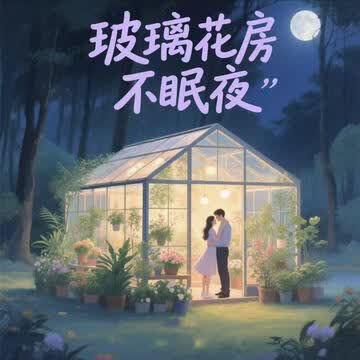
"Sleepless Night in the Glass House"
《玻璃花房不眠夜》
by Senyu Luming (森屿鹿鸣)
- Status
- Ongoing
- Length
- 33k Words
- Genre
- Romance
- Era
- Modern Era
- Updated
- 1y ago
- Source
- JJWXC
Stats
Tags
Synopsis
[Under the moonlight, the glass greenhouse hides the gentlest taboo] Plant science writer Wen Yan discovered a mysterious glass flower house deep in the forest park, which cultivated rare plants that are theoretically impossible to survive. The owner of the flower house, Lin Qi, is cold and distant, but he has a pair of hands that can understand the language of plants. When he accidentally knocked down the endangered Blue Star Water Fern, Wen Yan didn't know that what he caught was not only a plant, but also a piece of the past that had been deliberately buried. [Some flowers bloom in the middle of the night, some love is born in silence] On a rainy night, the two of them were trapped in a greenhouse to rescue seedlings. He stroked the wilted leaves with his fingertips, and she blurted out a treatment method that was not even recorded in the literature. When the moonlight epiphyllum bloomed at zero o'clock, and the moment their eyes met, Lin Qi finally revealed the truth: "These plants are all left by my father - just like the specimens he anonymously sent to you eighteen years ago." [When an academic rival reveals the secret of the flower house, who is lying? The Forestry Bureau suddenly accused Lin Qi of illegally cultivating protected plants, and the evidence came from Professor Xu, an old friend of Wen Yan's father. During the hearing, Wen Yan discovered that the "evidence" data had been tampered with. Hidden in the missing key page number was a line written by Lin Qi's father before his death: "Wen Yan, please protect my son, just like your mother protected us." [Glass is fragile, but love will make the light stay] Before the ultimatum that the greenhouse must be demolished, Lin Qi hid the spores of Moonlight Epiphyllum in the title page of Wen Yan's new book. When she opened the book at the press conference, fluorescent spore powder formed a line of words: "You asked me why I always work late at night - because before I met you, All the light in my life, All come from plants that glow. " A healing fairy tale for adults, restrained and affectionate. When the botanist's rigor meets the gardener's poetry, every leaf says "I love you" for them. Concept: "Some lives are destined to find light in darkness, just like love always grows in silence." The reconciliation of scientific rationality and natural spirituality. Through the collision of botanist (Wen Yan) and horticulturist (Lin Qi), we explore two ways of human beings understanding nature: data measurement and intuitive induction, ultimately presenting the beauty of the symbiosis of science and metaphysics. Plant therapy for traumatic memories uses rare plants as a medium to show how two adults who have been burdened with family trauma repair the cracks in their souls by nurturing life——? Wen Yan uses academic research to escape the truth of his mother's death? Lin Qi uses a flower house to imprison his guilt for his father. The Confession Grammar of the Silent Constructs a unique "plant language system": - Blue star water fern = secrets that cannot be spoken - Moonlight epiphyllum = fleeting moments of honesty - Moss specimens = unfinished words buried by the years The glass dilemma of modern people The glass greenhouse as a core metaphor: ? Transparent but intangible intimacy ? The conflict between artificial environment and wild nature ? Contemporary society's discipline on "normal emotional expression" The ultimate redemption proposition "What is truly endangered is not plants, but human beings' ability to love honestly" - through the main line of saving rare plants, it contrasts the sincerity and courage of those who also need to be "artificially cultivated" in the urban emotional desert. Differentiated market positioning In a market where sweet pet stories are prevalent, professional botanical elements are used to construct an "adult fairy tale" to satisfy readers' dual desire for "sapiosexuality and natural healing." It is similar to the literary and artistic texture of "Normal People" meeting the ecological aesthetics of "Little Forest".