(The full text has been refined, and there are huge discrepancies between piracy and piracy. Please support the genuine version, thank you!)
Introduction:
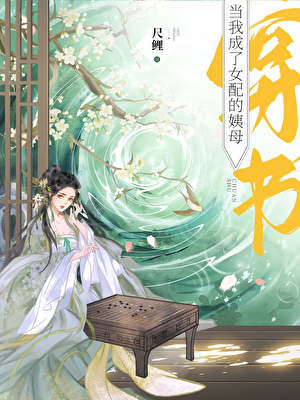
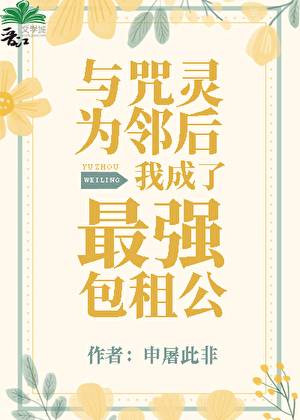
The bones are as white as a mountain and the surname has been forgotten. It is nothing more than the young master and Hongzhuang.
When the bamboo horse born into a family becomes the overlord in troubled times, what should Xiao Qingmei, whose family is in trouble, do?
In the first year of Yuankang, the Anding Zhang family had to seek refuge with Pei 𬱟 (wĬ), Duke of Julu County, in order to avoid the "Sanyang" rebellion. It was at this time that Zhang Mao met Pei Yan - at that time, she was a noblewoman from an aristocratic family, and he was a border general, and she used her family to protect him.
Time passed, and once the world was reversed, her family was implicated by Empress Jia and was almost wiped out. However, he became a prince with the help of Liangzhou horses and dominated the situation.
So this former Qing guest became her biggest support. The kindness that falls unintentionally blooms the most beautiful flowers in troubled times!
During the Eight Kings Rebellion, the mountains and rivers were shattered; in the city of Luoyang, the love was deep and unyielding - let's take a look at the small fortune of Zhang Mao of the Qianliang Kingdom and Yuanniang of the Pei family!
Shuangjie, slow-burning, partial to textual research, and partly privately designed. No golden fingers, no time travel, no rebirth.
The prototype of the male protagonist is the former Liang Cheng King, who progresses from a retainer to a general and finally to a prince.
The heroine is the niece of the famous minister Pei 𬱟. She is naive and sweet in the early stage, but grows up in the middle stage. In her old age, she is able to deal with Shi Le on her own (extra story).
Both the male and female protagonists have growth lines, but it is not a big heroine or a cool novel. It is more about using their eyes to understand the chaotic world, with both sweetness and helplessness.
A historical drama wrapped in a sweet story. There are not only the celebrity affairs of the Yuanyasu period, but also the climax of the Eight Kings Rebellion. The description of the group portraits is particularly exciting - before the Five Husties in China, the game and self-rescue of several aristocratic families was also a vivid life of a group of people.
Find candy in historical novels!
Determination: Throw me a papaya and repay me with a jade tree
Reader comments
This chapter is actually from Han Zhi's point of view. She was once a life-stricken person who pursued extreme pleasures. She experienced the destruction of her family and the displacement of her family, and witnessed the tragic scene of starving people and empty houses. But fortunately, she finally survived and found another world.
I read it in one breath and was so sad.
The author's writing has a distinct color of historical materialism. Yuanniang is actually a camera that helps us peek into that troubled world. Through her eyes, the battles in the palace, the fireworks in the streets, and the panic of the people all become tangible and tangible.
After reading it, I completely forgot to ask about the fate of the hero and heroine. In my heart, I can only hold the weight of the four words "Li Shu is so difficult". Those people whose names have not been recorded in history books are like dust in the flames of war and hunger; and those princes and generals whose names have been recorded in history are ultimately just a few handfuls of loess among the "countless barren hills in Beimang". The most ruthless part of the author's writing is that it is easy to lift things lightly - the fall of important officials such as Pei Yu and Zhang Hua could have been exaggerated with ink and written in tears, but it was brushed aside in one stroke. This understatement actually makes the situation of life and death even more chilling: a true tragedy never requires shouting out hoarse condolences; when the wheel of history rolls over, even the most prominent name is just a shallow mark in the rut, wiped away by the wind and sand in the blink of an eye.
This reminds me of the Pei Zhi family that I saw in the Luoyang Ancient Tomb Museum: his mother, the wife, was buried in the main room, Pei Zhi and his wife were buried in the side room, and their daughter Huizhuang was buried in the ear room. All three generations of the family died in the third year of Yuankang in the early days of the Eight Kings Rebellion. They are not just vague words on epitaphs, but like you and me, they have lived with flesh and blood. There are countless families like Pei Zhi - they are just "dew on the grass". After their death, they only occupy a corner of the museum, and visitors can walk by in a few minutes.
After reading it, I felt a deep sense of powerlessness that would not go away for a long time.
I give you a five-star review. I have a solid foundation in history and elegant diction. It's really rare for a debut novel to be so well-written. In addition, I would like to politely make a few suggestions about titles. I hope you don't mind. But I am not a professional. If there are any problems with the suggestions, I hope to be corrected.
1. "Brother" and "Sister" are not native Chinese words. "Brother" comes from the Xianbei language "Aqian", which means elder brother. In the Tang Dynasty, "brother" could be called brother or father; it was also used as a nickname between husband and wife. By the Song Dynasty, "gege" as the title of elder brother was basically fixed. The appearance of "sister" corresponding to "brother" can be traced back to the Tang Dynasty.
2. "Empress" was first seen in the "Dunhuang Bianwen" of the Tang Dynasty. By the Song Dynasty, the court began to use it to address queens, concubines, etc., And later it was also used to address goddesses.
3. The title "Bengong" is often used in operas and novels. In real history, concubines in the harem did not often use this title to refer to themselves. [Let me be healthy]
After reading it, I felt really sad. The author wrote about the last ten years of the Western Jin Dynasty, which were the last ten years of peace in the chaos of the next three hundred years. This is destined to have many regrets in this novel. Let's briefly talk about your feelings.
The weight of history is overwhelming.
In the troubled times, friends and relatives are scattered everywhere, and acquaintances are half scattered. I asked you when you will return here... That is because they parted several times outside Luoyang City, and how many of them have never seen each other again in this life.
When the building collapsed, many powerful people plotted and intrigued. In the end, the princes, generals and ministers were reduced to a pile of loess, and those who were wise and wise in protecting their bodies and minds were able to save themselves.
Time is fleeting and youth is gone, but what is more memorable than those young years is that the children who played under the protection of their elders gradually became independent, but the carefree laughter left in that once prosperous homeland can no longer be heard.
When Pei Wei went south to Jiangzuo, and when Pei Yan went to Liangzhou, their homeland, the Central Plains, which had been eroded by war, was the hometown they could not return to in this life. And the sisters who once slept with their hands full can only silently bear the regret of not being able to see each other again in this life and the grief of countless deaths and injuries to their loved ones.
After reading the whole article, I couldn't calm down for a long time, as if I had gone through that turbulent era with the male and female protagonists.
When the setting sun of the Western Jin Dynasty cast a bloody afterglow on the city of Luoyang, and the haze of Empress Jia's chaotic government shrouded the court, the author poured a warm and bright color between the pages of the book into this period of broken mountains and rivers. This masterpiece of ancient Chinese proverbs is based on true history and has deep love as its soul. It does not indulge in the cruel writing of troubled times. Instead, it interprets what "a deep and unfailing love" means and what "mutual support" means through the emotional bond between Pei Yan and Zhang Mao that spans identities and times.
The most exquisite writing style of the novel lies in the delicate depiction of the characters' growth arc and emotional progression. The identity gap when they first met formed the starting point of the relationship: Pei Yan was the Yuan Niang of the Pei family with "skin as white as snow and eyebrows as green as feathers". She was born in the Zhongming Dingshi family. Even though her family was weak, she still had the calmness of being protected by her family; Zhang Mao was a young man from a poor family who avoided trouble and sought refuge with his relatives. Although he had the magnanimity of "eyes as bright as the moon and cold stars", he had to be careful to find a foothold in the county government. This encounter was originally an unintentional care for a down-and-out talent from a noble daughter of an aristocratic family. Just like when they first met in the miracle doctor's office, Pei Yan didn't know that she was not only opening the car curtain, but also the prelude to the intertwining fate of the two. The author does not rush to exaggerate the feelings, but allows the friendship to grow naturally in daily interactions - perhaps it is the shelter that Pei Yan provides Zhang Mao in the name of the family, or perhaps it is Zhang Mao's sincere treatment of his silly cousin Pei Jing. These small kindnesses are like seeds, quietly taking root in the soil of troubled times.
The torrent of history has become a touchstone for testing the quality of emotions. When the "Eight Kings Rebellion" broke out, the Pei family suffered a disaster, and the noble daughter of the former family was reduced to an orphan overnight; while Zhang Mao grew up in the flames of war, transforming from a humble guest living under the fence to a powerful prince. This kind of "reversal of the universe" identity replacement just creates the most touching emotional turning point. The former protector became a protector. Zhang Mao's rise did not bring any arrogance. Instead, he regarded Pei Yan as the most precious salvation in troubled times. The author's narrative here is restrained and powerful: there are no bloody scenes of chasing his wife, only firm protection in times of crisis; there are no exaggerated sweet words, only the silent responsibility of "you are my biggest reliance". This kind of emotion is not a sudden outburst, but an inevitable one that has accumulated over the years. As the novel's intention indicates, it is "the kindness that falls unintentionally and blooms the most beautiful flowers in troubled times."
Creations based on real history should avoid falling into the quagmire of "joking". This novel achieves a perfect balance between historical reality and artistic fiction. The author embeds the fate of the protagonist into major historical nodes in the late Western Jin Dynasty: from the "Sanyang" Rebellion to Empress Jia's dictatorship, from the disputes among the Eight Kings to the turmoil on the frontier, the rise of Shi Le's heroes, and the westward migration of the Zhang family. These real historical elements provide a solid skeleton for the story. Traces of Pei Yu's image as a powerful minister, the background of the Guo family's relatives, and even the setting of the descendants of the imperial physician Huang Fumi can all be found in the history books. However, the novel has not been reduced to a footnote in history. Instead, it makes the cold history palpable through fictional plots such as Pei Yan's eldest house's survival dilemma and Zhang Mao's brother's career struggles. What readers see is not only the history of Zhang Mao's fortune in Qianliang Kingdom, but also the picture of everyone's survival in troubled times - Xiao Guo's forbearance and planning for his children, Pei Jing's innocent heart under his silly appearance. The vivid portrayal of these supporting characters makes the group portrait more three-dimensional and makes the background of troubled times more real and palpable.
It is commendable that the author uses "dual perspective" narrative to make the emotional expression more layered. From Pei Yan's perspective, we can experience the panic of falling from the clouds and the peace of mind of regaining reliance; from Zhang Mao's perspective, we can understand the original intention that has never changed in the transformation from being dependent on others to being independent. This narrative method makes the emotional interaction between the two people more sincere: Pei Yan's tenacity is not the passive acceptance of relying on the strong, but the deep-rooted character of a woman from an aristocratic family; Zhang Mao's protection is not a condescending charity, but a lifelong practice of original intention and kindness. Their love has never been divorced from the soil of the times, but is closely linked to the fate of their family and country - Zhang Mao's war is not only to protect himself, but also to give Pei Yan a stable future; Pei Yan's persistence is not only for love, but also to maintain the warmth of humanity in troubled times.
At a time when the creation of ancient Chinese novels is becoming increasingly homogeneous, the novel stands out for its solid historical foundation, delicate emotional expression and distinctive characterization. It tells us that the best love is not romantic romance, but mutual support in troubled times; the most touching stories are not fictional legends, but the memories of perseverance and tenderness in the dust of history. When the last page is turned, the flames of war in Luoyang City have gone far away, but the flower of love between Pei Yan and Zhang Mao that bloomed in troubled times is like a glimmer of light that has traveled through thousands of years, and will always be alive on the pages of the book. This is perhaps the most precious value of "Luo Jing Supplements" - picking up for us those eternal propositions about love and perseverance from the ruins of history.
It's so well written that it's worth savoring again and again, waiting for the end of Hu Jia Han Yue! !
Finished reading! Overall, it is a good book. The author has great literary talent. The plight of the royal family, the aristocratic family, and the common people in troubled times is such a sharp contrast. It is so sad and ironic. The love between the hero and heroine's children is the only solace in this troubled world. It was really touching before marriage, but it changed after marriage. Furthermore, the author has too many male narrative descriptions of the appearance of the women in the book. What I see through the text is only the beauty of the skin, but not the soul, which completely weakens and objectifies them (in fact, this is a common problem in many ancient sayings. Borrowing the words used by the ancients to describe women, beauty is beautiful, but they are all words used by men to gaze at women). But when describing male characters, they are described based on their temperament and demeanor.
Although, this book is still quite good. It is not soul-stirring, but still water runs deep. The writing is really delicate and can make people calm down and read. Come on [come on] [come on] [come on]
Superb writing! Damn, is the one on WeChat Reading also the updated version?
One episode per year? ! !
I've read the full article, the author writes it so well! I feel empty after reading this, looking forward to the new article!
The story of Xianrong is also so sad!
Is this article going to become a series in my lifetime?
King of Heaven, you should also think about your funeral. You have a son and a nephew!
Xiao Wang, where is my side story?
You guys are just playing around with me. Although it's fake, I really feel a little bit uncomfortable?










This chapter is actually from Han Zhi's point of view. She was once a life-stricken person who pursued extreme pleasures. She experienced the destruction of her family and the displacement of her family, and witnessed the tragic scene of starving people and empty houses. But fortunately, she finally survived and found another world.
I read it in one breath and was so sad. The author's writing has a distinct color of historical materialism. Yuanniang is actually a camera that helps us peek into that troubled world. Through her eyes, the battles in the palace, the fireworks in the streets, and the panic of the people all become tangible and tangible. After reading it, I completely forgot to ask about the fate of the hero and heroine. In my heart, I can only hold the weight of the four words "Li Shu is so difficult". Those people whose names have not been recorded in history books are like dust in the flames of war and hunger; and those princes and generals whose names have been recorded in history are ultimately just a few handfuls of loess among the "countless barren hills in Beimang". The most ruthless part of the author's writing is that it is easy to lift things lightly - the fall of important officials such as Pei Yu and Zhang Hua could have been exaggerated with ink and written in tears, but it was brushed aside in one stroke. This understatement actually makes the situation of life and death even more chilling: a true tragedy never requires shouting out hoarse condolences; when the wheel of history rolls over, even the most prominent name is just a shallow mark in the rut, wiped away by the wind and sand in the blink of an eye. This reminds me of the Pei Zhi family that I saw in the Luoyang Ancient Tomb Museum: his mother, the wife, was buried in the main room, Pei Zhi and his wife were buried in the side room, and their daughter Huizhuang was buried in the ear room. All three generations of the family died in the third year of Yuankang in the early days of the Eight Kings Rebellion. They are not just vague words on epitaphs, but like you and me, they have lived with flesh and blood. There are countless families like Pei Zhi - they are just "dew on the grass". After their death, they only occupy a corner of the museum, and visitors can walk by in a few minutes. After reading it, I felt a deep sense of powerlessness that would not go away for a long time. I give you a five-star review. I have a solid foundation in history and elegant diction. It's really rare for a debut novel to be so well-written. In addition, I would like to politely make a few suggestions about titles. I hope you don't mind. But I am not a professional. If there are any problems with the suggestions, I hope to be corrected. 1. "Brother" and "Sister" are not native Chinese words. "Brother" comes from the Xianbei language "Aqian", which means elder brother. In the Tang Dynasty, "brother" could be called brother or father; it was also used as a nickname between husband and wife. By the Song Dynasty, "gege" as the title of elder brother was basically fixed. The appearance of "sister" corresponding to "brother" can be traced back to the Tang Dynasty. 2. "Empress" was first seen in the "Dunhuang Bianwen" of the Tang Dynasty. By the Song Dynasty, the court began to use it to address queens, concubines, etc., And later it was also used to address goddesses. 3. The title "Bengong" is often used in operas and novels. In real history, concubines in the harem did not often use this title to refer to themselves. [Let me be healthy]
After reading it, I felt really sad. The author wrote about the last ten years of the Western Jin Dynasty, which were the last ten years of peace in the chaos of the next three hundred years. This is destined to have many regrets in this novel. Let's briefly talk about your feelings. The weight of history is overwhelming. In the troubled times, friends and relatives are scattered everywhere, and acquaintances are half scattered. I asked you when you will return here... That is because they parted several times outside Luoyang City, and how many of them have never seen each other again in this life. When the building collapsed, many powerful people plotted and intrigued. In the end, the princes, generals and ministers were reduced to a pile of loess, and those who were wise and wise in protecting their bodies and minds were able to save themselves. Time is fleeting and youth is gone, but what is more memorable than those young years is that the children who played under the protection of their elders gradually became independent, but the carefree laughter left in that once prosperous homeland can no longer be heard. When Pei Wei went south to Jiangzuo, and when Pei Yan went to Liangzhou, their homeland, the Central Plains, which had been eroded by war, was the hometown they could not return to in this life. And the sisters who once slept with their hands full can only silently bear the regret of not being able to see each other again in this life and the grief of countless deaths and injuries to their loved ones.
After reading the whole article, I couldn't calm down for a long time, as if I had gone through that turbulent era with the male and female protagonists. When the setting sun of the Western Jin Dynasty cast a bloody afterglow on the city of Luoyang, and the haze of Empress Jia's chaotic government shrouded the court, the author poured a warm and bright color between the pages of the book into this period of broken mountains and rivers. This masterpiece of ancient Chinese proverbs is based on true history and has deep love as its soul. It does not indulge in the cruel writing of troubled times. Instead, it interprets what "a deep and unfailing love" means and what "mutual support" means through the emotional bond between Pei Yan and Zhang Mao that spans identities and times. The most exquisite writing style of the novel lies in the delicate depiction of the characters' growth arc and emotional progression. The identity gap when they first met formed the starting point of the relationship: Pei Yan was the Yuan Niang of the Pei family with "skin as white as snow and eyebrows as green as feathers". She was born in the Zhongming Dingshi family. Even though her family was weak, she still had the calmness of being protected by her family; Zhang Mao was a young man from a poor family who avoided trouble and sought refuge with his relatives. Although he had the magnanimity of "eyes as bright as the moon and cold stars", he had to be careful to find a foothold in the county government. This encounter was originally an unintentional care for a down-and-out talent from a noble daughter of an aristocratic family. Just like when they first met in the miracle doctor's office, Pei Yan didn't know that she was not only opening the car curtain, but also the prelude to the intertwining fate of the two. The author does not rush to exaggerate the feelings, but allows the friendship to grow naturally in daily interactions - perhaps it is the shelter that Pei Yan provides Zhang Mao in the name of the family, or perhaps it is Zhang Mao's sincere treatment of his silly cousin Pei Jing. These small kindnesses are like seeds, quietly taking root in the soil of troubled times. The torrent of history has become a touchstone for testing the quality of emotions. When the "Eight Kings Rebellion" broke out, the Pei family suffered a disaster, and the noble daughter of the former family was reduced to an orphan overnight; while Zhang Mao grew up in the flames of war, transforming from a humble guest living under the fence to a powerful prince. This kind of "reversal of the universe" identity replacement just creates the most touching emotional turning point. The former protector became a protector. Zhang Mao's rise did not bring any arrogance. Instead, he regarded Pei Yan as the most precious salvation in troubled times. The author's narrative here is restrained and powerful: there are no bloody scenes of chasing his wife, only firm protection in times of crisis; there are no exaggerated sweet words, only the silent responsibility of "you are my biggest reliance". This kind of emotion is not a sudden outburst, but an inevitable one that has accumulated over the years. As the novel's intention indicates, it is "the kindness that falls unintentionally and blooms the most beautiful flowers in troubled times." Creations based on real history should avoid falling into the quagmire of "joking". This novel achieves a perfect balance between historical reality and artistic fiction. The author embeds the fate of the protagonist into major historical nodes in the late Western Jin Dynasty: from the "Sanyang" Rebellion to Empress Jia's dictatorship, from the disputes among the Eight Kings to the turmoil on the frontier, the rise of Shi Le's heroes, and the westward migration of the Zhang family. These real historical elements provide a solid skeleton for the story. Traces of Pei Yu's image as a powerful minister, the background of the Guo family's relatives, and even the setting of the descendants of the imperial physician Huang Fumi can all be found in the history books. However, the novel has not been reduced to a footnote in history. Instead, it makes the cold history palpable through fictional plots such as Pei Yan's eldest house's survival dilemma and Zhang Mao's brother's career struggles. What readers see is not only the history of Zhang Mao's fortune in Qianliang Kingdom, but also the picture of everyone's survival in troubled times - Xiao Guo's forbearance and planning for his children, Pei Jing's innocent heart under his silly appearance. The vivid portrayal of these supporting characters makes the group portrait more three-dimensional and makes the background of troubled times more real and palpable. It is commendable that the author uses "dual perspective" narrative to make the emotional expression more layered. From Pei Yan's perspective, we can experience the panic of falling from the clouds and the peace of mind of regaining reliance; from Zhang Mao's perspective, we can understand the original intention that has never changed in the transformation from being dependent on others to being independent. This narrative method makes the emotional interaction between the two people more sincere: Pei Yan's tenacity is not the passive acceptance of relying on the strong, but the deep-rooted character of a woman from an aristocratic family; Zhang Mao's protection is not a condescending charity, but a lifelong practice of original intention and kindness. Their love has never been divorced from the soil of the times, but is closely linked to the fate of their family and country - Zhang Mao's war is not only to protect himself, but also to give Pei Yan a stable future; Pei Yan's persistence is not only for love, but also to maintain the warmth of humanity in troubled times. At a time when the creation of ancient Chinese novels is becoming increasingly homogeneous, the novel stands out for its solid historical foundation, delicate emotional expression and distinctive characterization. It tells us that the best love is not romantic romance, but mutual support in troubled times; the most touching stories are not fictional legends, but the memories of perseverance and tenderness in the dust of history. When the last page is turned, the flames of war in Luoyang City have gone far away, but the flower of love between Pei Yan and Zhang Mao that bloomed in troubled times is like a glimmer of light that has traveled through thousands of years, and will always be alive on the pages of the book. This is perhaps the most precious value of "Luo Jing Supplements" - picking up for us those eternal propositions about love and perseverance from the ruins of history.
It's so well written that it's worth savoring again and again, waiting for the end of Hu Jia Han Yue! !
Finished reading! Overall, it is a good book. The author has great literary talent. The plight of the royal family, the aristocratic family, and the common people in troubled times is such a sharp contrast. It is so sad and ironic. The love between the hero and heroine's children is the only solace in this troubled world. It was really touching before marriage, but it changed after marriage. Furthermore, the author has too many male narrative descriptions of the appearance of the women in the book. What I see through the text is only the beauty of the skin, but not the soul, which completely weakens and objectifies them (in fact, this is a common problem in many ancient sayings. Borrowing the words used by the ancients to describe women, beauty is beautiful, but they are all words used by men to gaze at women). But when describing male characters, they are described based on their temperament and demeanor. Although, this book is still quite good. It is not soul-stirring, but still water runs deep. The writing is really delicate and can make people calm down and read. Come on [come on] [come on] [come on]
Superb writing! Damn, is the one on WeChat Reading also the updated version?
One episode per year? ! !
I've read the full article, the author writes it so well! I feel empty after reading this, looking forward to the new article!
The story of Xianrong is also so sad!
Is this article going to become a series in my lifetime?
King of Heaven, you should also think about your funeral. You have a son and a nephew!
Xiao Wang, where is my side story?
You guys are just playing around with me. Although it's fake, I really feel a little bit uncomfortable?