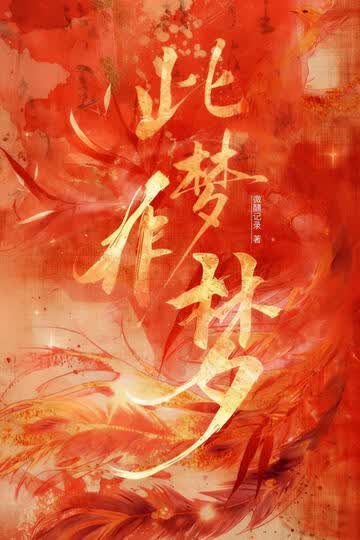
Perfect World Hao J|this Dream Is Not a Dream Modified Version
完美世界昊漪|此梦非梦修改版
by Tipsy Records (微醺记录)
Request a translationStats
Tags
- ThemeEastern Fanfiction
- POVFemale Lead
- Age18+
- Angst
- Cultural Heritage
- Destined Pairing
- Serious Drama
- Sweet Story
Synopsis
[The system of cultivating immortals is just a background board for this article because I don't like the subject of cultivating immortals, I even hate it. I will emphasize the repetition again below] It is not so much an introduction, but more like a 6k-word exercise to draft the first draft of the thesis "paper". You can selectively browse it by scrolling down the table of contents. Directory 1. Introduction: Origin and fundamental stance of creation 1.1 Emotional motivation and critical stance 1.2 Revision instructions 1.3 Observations on the existing literary environment 2. Research methods and aesthetic principles 2.1 Description of the degree of study of the original work 2.2 Core aesthetic pursuit: classical poetic language and artistic conception creation 2.3 Narrative focus and content boundaries: description of elegant events and emotional flow 2.4 Principles for handling original materials: respect but not rigidly 3. Core settings and character reconstruction 3.1 Character setting theory 3.2 Narrative time, space and originality 3.3 Integration of world views: mainly classical Chinese, supplemented by diverse elements 4. Work structure and reading guide 4.1 Core text "This dream is not a dream" 4.2 Extra chapter system description 5. Potential flaws and self-criticism 5.1 Known text flaws: 5.2 Reading threshold warning: clear positioning and precise screening 6. Conclusion ◆Instructions: Regarding the creative statement, key points, aesthetic principles and core setting outline of the fan novel "This Dream is Not a Dream". That is, creative ethics, aesthetic pursuits, and fan author-reader relationships. (Passers by may have a sense of aloofness and provocation, but that is not necessary, but it can be understood as screening and dissuading.) Abstract: I belong to the Juan Ramón Jiménez type of personality "obsessive-compulsive narrative perfectionism (OCNP)". This thesis aims to systematically and in-depth explain the creative motivation, aesthetic purpose, narrative framework and core setting of the fan fiction "This Dream Is Not a Dream". This creation stems from a deep emotional discomfort with the specific narrative logic and emotional ending of the original work. It is also an aesthetic counterattack on the current Internet literature creation ecology. With classical poetry as the spiritual core, it focuses on exploring the characters' deep emotional world and describing the elegant taste of life. This introduction adopts the form of a statement and an outline to clearly define the creative boundaries, style orientation and potential reading threshold of the work. In essence, it establishes a set of pre-existing consensus and screening mechanisms between the work and the readers. Some people may question: "It's just a fan fiction, why should it be so over-explained?" On the contrary, this "excess" is the core of my creative outlook - to use a serious creative attitude to combat the "casual and formulaic tendencies" prevalent in current online writing creation. It should be noted that this is the first and last time I have written a novel. The whole process is an "exploratory and progressive" practice, which can be classified as OJT (On-the-Job Training). Keywords: fan creation; classical aesthetics; emotional correction; Shi Hao and Qingyi; creative statement. 1. Introduction: Origin and fundamental stance of creation 1.1 Emotional motivation and critical stance The direct creative driving force of the fandom stems from the deep dissatisfaction with the emotional ending of the core characters Hao Yi in the original work, as well as the instinctive emotional rejection of the "harem" narrative mode and formulaic plots that have long existed in the field of online literature. After selectively reading the chapters related to Qingyi in the original work, the backfired feeling stuck in my throat. This dissatisfaction is a criticism based on emotional logic and aesthetic pursuit. As a typical Scorpio, I have an innate and unique possessiveness in my bones. When this trait is projected into creation, it is transformed into a creative practice with a strong "revengeful emotion" - the so-called "revenge" is not directed at the original author or other people, but at the rebellion of the "regret aesthetics". It aims to pick up and polish the emotional clues that have been simplified and diluted by the original work through text reconstruction, so as to make up for the regrets of the original narrative and correct the emotional logic. In my opinion, truly profound emotions must have "uniqueness" and "exclusivity", especially for soul mates who have experienced life and death, and spanned time and space. The "harem-style" ending not only eliminates the particularity of their emotions, but also violates the deep affection hidden in the characters' personalities. Therefore, the core appeal of this work is to construct a "consummation" for this pair of characters that conforms to their emotional logic and satisfies the readers' deep psychological expectations. This kind of perfection has nothing to do with the peak of combat power or the conquest of the world view, but rather the purity, firmness and final marriage of emotions. 1.2 Revision instructions The Chabot brand described in the chapter "Scorpio" was founded in 1743, and its Chabot Cognac. The above logic reflects the contrast between sisters. Chabot's main business is Armagnac, non-Cognac. The Chabot brand was actually founded in 1828. (Minor spoilers) In the article, Qingyi did not expose the false year 1743 but chose to ignore it. In fact, you can guess what I mean. "Que esto sólo empiez" is an excerpt of a sentence in Spanish. The French word in the text is misspelled. Not changed, understood. Wherever commas should be used in the text, commas are used instead to conform to the style and artistic conception of the text. Some expressions use the words "or or" and "zhanhuaming", including but not limited to, and need to be specially revised here: the standard written expression should be "or or" and "zhanhuaming". The reason why no modifications were made in the main text is not because of the neglect of grammatical standards, but because although the expression is not used in large quantities, it is distributed in various chapters of the full text, and the original text is long and the paragraphs are intertwined. Large-scale modification may lead to formatting disorder and poor context connection. After weighing the balance, it was decided to retain the original expression. Secondly, Chapter 13, "Poetry", created long and short sentences and wrote them into Qupai, which is also one of the mistakes. (Unrevised) There are still some grammatical errors in the text that have not been discovered, but they are only a few and do not affect reading. 1.3 Observations on the existing literary environment I hold a critical stance on the creative tendencies of contemporary Internet literature, including but not limited to "nonsense literature" and "uniform formulas." This fandom is a conscious counterattack against the above-mentioned tendencies, although it is admitted that it is difficult to completely break away from the basic framework of online literature. (Suppress contradiction) 2. Research methods and aesthetic principles 2.1 Description of the degree of study of the original work I have not paid much attention to or conducted in-depth research on Internet literature, especially Internet literature on the subject of cultivating immortals. Again, I don't like perfect novels and animations. Therefore, the introduction, thesis, and the content of the main text are somewhat personal, which are also based on personal subjectivity and even partial conjecture. The origin of this creation was purely accidental. I accidentally watched the animation and then read the original work. However, he found that the emotional ending of the original work was far from his expectations (the author of the original novel had a particularly disgusting writing technique, which also meant that the harem narrative was interspersed with psychological and emotional concepts. For example: Since it is a harem format, the focus of the character should be "generous", and personal emotions are not the focus. Just because the harem narrative is The psychological description of Haoyi in the early and middle stages gives people a misleading sense of being alone. ): Although the final ending is defined as HE (happy ending), the emotional line of the female character ends hastily, and Haoyi's relationship seems hasty and perfunctory, especially the "harem" setting, but it backfires. Based on this, my reading of the original work only stayed at about 15%, and this part of the reading content was all focused on chapters related to Qingyi. There is no systematic study of the story lines of other characters, complex worldview settings and combat power systems in the original work. The understanding mainly relies on public encyclopedia information and plot summaries compiled by the novel party. This is undoubtedly the "flaw" of this article - for those who pursue the restoration of the original work and pay attention to the integrity of the world view, such "incomplete research" may lead to some omissions in the fandom that are inconsistent with the details of the original work. The core value of fan creation lies in "emotional reconstruction" and "personal expression" rather than "academic research". Each fan creator makes secondary creations based on their own understanding of the original characters and stories, injecting their own emotions and ideas. The original intention of the creation was not to restore the entirety of the original work, but to build an aesthetic rather than textual research that could make up for emotional regrets and suit the individual based on the original work. 2.2 Core aesthetic pursuit: classical poetic language and artistic conception creation The core methodology of this work is to integrate classical poetic language and artistic conception throughout the creation, trying to create a "high-style" classical aesthetic experience. (Not pure classical Chinese and classical Chinese) This kind of aesthetic pursuit is not water without a source. Its basic aesthetic quality mainly comes from the nourishment of Chinese classical literature - from the delicate description of character moods and life scenes in "A Dream of Red Mansions" to the elegance and demeanor of celebrities in the Wei and Jin Dynasties in "Shishuoxinyu"; from the concise and solemn "Zuo Zhuan" to the implicit irony in "The Scholars". Attached is a translation of the American psychology book "Co-Dependency": "Dependence and Symbiosis" The full name is "Breaking Free of the Co-dependency Trap" translated: "Codependency Symbiosis: Dependent Personality in Intimate Relationships". The language arts and aesthetic spirit of these classic literature are all implicit references. (Not an absolute imitation) It was the first time I read the Xiu Xian online novel. The original work said that Qingyi was very beautiful, and almost every time there were long paragraphs describing her posture. In order to fit the theme characteristics of fantasy and cultivation, in the early stage, a lot of the rhetorical techniques of the female deportment in the Xiu Xian online novel were imitated. However, during the application process, a "de-vulgarization" process was carried out, and the overly exaggerated and stereotyped expressions in some online articles were abandoned, and instead we pursued an "elegant but not pretentious" expression effect. (It's just that "Mao Qiang, Li Ji, the beauty of people is that fish see it deeply, and birds see it fly high." On the one hand, there are countless appearances in the world, and beauty itself also exists in the eyes of others, and there is no absolute aesthetic standard. In the early days, a large number of imitations were drawn from the female deportment and rhetoric in the Xiuxian online article, and the vocabulary of classical aesthetic poetry was used to set off how beautiful and elegant Qingyi is. Now it seems to be a relatively contradictory description. The writing is not like this. Barely passing level) In addition, it also incorporates the narrative techniques of some modern literary works: such as the delicate emotional portrayal of long-term love and waiting in "Why is the Shengxiao Silent", the compact narrative rhythm and logical foreshadowing in "Mystery Notes", the warm and healing emotional tone in "Better Not Pout" and "Happy All the Time", and the in-depth exploration of the inner world of the characters in "Spring Things". Based on the experience of these literary creations, it provides an important reference for constructing the emotional logic of characters and controlling the narrative rhythm, allowing the organic integration of classical aesthetics and modern narrative in the work. Specifically, my pursuit of classical aesthetics is mainly reflected in three levels: first, the creation of imagery. Through images with classical cultural connotations such as "rain, bamboo, tea, incense, chess, and the moon", a tranquil, elegant, and ethereal artistic conception is constructed to highlight the emotional state of the characters and the atmosphere of the story; secondly, the refinement of language. Try to avoid colloquial and networked expressions, and use rhetorical techniques such as parallelism, parallelism, metaphors, etc. To make the language rhythmic and concise; thirdly, be emotionally implicit. Drawing on the expression characteristics of classical poetry that "words are limited but meaning is endless", the characters' emotions are not directly expressed, but are contrasted through actions, expressions, environmental descriptions, etc., Leaving room for imagination. 2.3 Narrative focus and content boundaries: description of elegant events and emotional flow Different from most fantasy cultivation novels, the narrative focus of this fanfic is not on the grand world view construction, fierce battle scenes or complex power struggles, but on the description of elegant things such as "clear rain, exile, chess games, tea ceremonies, and incense making", aiming to portray Haoyi's life interest and delicate emotional flow as a couple of gods and immortals. What's more important is the mutual support in daily interactions and the high level of spiritual compatibility. Therefore, he will use a lot of pen and ink to describe the scenes of the two people ordering tea, making incense, playing chess, and admiring the moon together: Or on a drizzly afternoon, the two people sit opposite each other by the window, making tea and discussing Taoism; The reason why the description of the battle plot and the grand world view is deliberately weakened is mainly based on two considerations: on the one hand, within the framework of fantasy cultivation, it is extremely difficult to construct a reasonable and exciting "fighting of wits" plot. The battle scenes in most works often fall into the routine of "combat power crushing", lacking real logical tension and narrative value; on the other hand, over-focusing on combat and world view will crowd out the space for emotional description of characters, and run counter to the core appeal of "emotional correction" of the fandom. Therefore, we choose to strategically abandon the in-depth exploration of these elements and only briefly mention them when necessary as a background pavement to promote the emotional development of the characters. To be clear, this narrative emphasis does not mean that the fanfic lacks plot. On the contrary, the "plot" of this fanfic mainly unfolds based on the emotional changes of the characters: from the frankness and mutual understanding of reunion after a long separation, to the steadfastness and mutual support of each other. 2.4 Principles for handling original materials: respect but not rigidly When creating fan fiction, how to deal with the relationship with the original work is a problem that every creator must face. The core principle followed by this fanfic is "respect but not rigid" - respecting the core characters, basic worldview settings and key plot nodes of the original work, while at the same time not being constrained by the details and narrative logic of the original work in order to satisfy emotional correction and aesthetic pursuits. The "non-strictness" is mainly reflected in the selective reference to the world view, interpersonal relationships and combat power system of the original work. Since the core of the author's creation is "emotional correction" rather than "textual research on the original work", the complex worldview settings (such as major secret realms, divisions of forces) and complicated combat power systems (such as realm divisions, names of exercises) in the original work are only quoted as necessary without in-depth expansion and refinement. In terms of interpersonal relationships, except for the core Shi Hao and Qingyi, other characters in the original work only appear when necessary, and their role is mainly to set off the emotional relationship of the protagonist rather than to develop an independent narrative line. 3. Core settings and character reconstruction 3.1 Character setting theory ·Shi Hao: Defined as an "all-round talent", his character is mature in public and sincere in private, and there is a tension between them. Its emotional core is interpreted as "melancholy, sentimentality" and "love brain" (not in a derogatory sense). "The "love brain" here is not ordinary, but refers to the fact that emotion occupies a central position in one's life and one is willing to sacrifice everything for his lover." ·Qingyi: His "pure heart and few desires" trait has been redefined, specifically referring to his "desire to become an immortal", which does not include his love for Shi Hao. Its emotional core is also deepened into "affectionate" and "love brain" (not in a derogatory sense). "This "love brain" is reflected in her absolute trust and lifelong persistence in Shi Hao. The long wait of half a million years has not erased her love for Shi Hao, but has made this relationship more mellow and firm. She will silently pay for Shi Hao without asking for anything in return." ·Overall relationship: Shi Hao's "turbidity" and responsibility | Qingyi's "clearness" and affectionateness. ·The core relationship established by this fan is "Golden Jade Love CP·Shi Hao X Qingyi", and emphasizes the emotional "uniqueness" and "lifelong certainty". Shi Hao and Qingyi are the only loves in each other's lives, and there are no other emotional entanglements. This setting is not only a counterattack to the "harem" narrative of the original work, but also an interpretation of the ideal form of the "fairy couple". Love in novels should be exclusive and firm, able to span time and space, resist temptation, and allow two people to support each other and grow together over a long period of time. ·Declaration: The writing inevitably incorporates personal foreign emotions to create empathy for "reunion after a long separation", aiming to deepen this feeling that has gone through many tribulations. 3.2 Narrative time, space and originality ·Timeline: The plot connects to the moment when Qingyi and Shi Hao reunited half a million years after his death. 3.3 Integration of world views: mainly classical Chinese, supplemented by diverse elements The world view of the fandom is not purely fantasy cultivation, but a mixture of [modern/ancient/classical ancient Chinese/fantasy cultivation], and the overall tone is biased towards classical ancient Chinese. This fusion is not a random splicing, but an organic integration based on aesthetic pursuits and narrative needs: ·The tone of classical ancient dialects: The core atmosphere, language style, and life scenes of the fandom are all based on classical ancient dialects. For example, the characters' clothing, etiquette, residence, and elegant things such as "tea ceremony, incense making, and chess games" are all full of the charm of classical culture, aiming to create an elegant and peaceful artistic conception; ·Fantasy cultivation background: retain the core setting of the original work as the basis for the characters to reunite across half a million years and possess extraordinary abilities, but without in-depth expansion of the worldview; ·Modern element embellishment: In some detailed descriptions, some modern emotional expressions and values will be incorporated, such as the equal concept of love, the mode of getting along with each other that respects personal wishes, etc., To make it closer to contemporary emotional cognition; ·Ancient background framework: Using the ancient social structure and lifestyle as the framework, avoid overly modern technological elements and social systems, and ensure the unity of the overall style. ·Original characters: The main text and extra chapters include several original characters (even characters from NetEase Games' Eternal Eternal Games, which was my early favorite.), But their total proportion is strictly controlled within 15% of the full text. 4. Work structure and reading guide 4.1 Core text "This dream is not a dream" ·Publication and revision history: first published on Weibo (deleted), second published on Tieba (deleted), and finally finalized in Jinjiang Literature City. After the first change in 2024 and the second change in 2025, the current status is [Completed]. ·Disclaimer: Reprinting in any form is prohibited. 4.2 Extra chapter system description The extra chapter is an independent narrative experimental field, and the style is significantly different from the main text. ·"Xiandu Lanxiao" and "Ordering Tea": These two articles are direct components of the "Pure Land" plot of the main text, and are released separately due to the word limit of the platform. ·"Pei Gu Ai", "Destiny", "Yi Dao Hua Dao": These three articles are highly OOC experimental writings with very different styles and are not recommended for regular readers. ·"Scorpio" and "Drunk": This is a parallel world story with a modern background that is independent from the main line. 5. Potential flaws and self-criticism 5.1 Known text flaws: ·The problem of rhetorical piling: In the early stages of creation, in order to pursue the expression effect of classical aesthetics, there is a certain degree of "lexical piling" in the use of language - excessive pursuit of gorgeous and elegant words, which makes the language of some paragraphs appear redundant and obscure, affecting the fluency of reading. For example, when describing the mood of characters, too frequent use of uncommon adjectives and allusions makes the sentence structure complex and the rhythm slow; ·Word errors and self-made words: Since I am not a Chinese major, my understanding of the semantics and usage of some words is not accurate enough, resulting in a small number of word errors in the article. At the same time, in order to meet the expression needs of classical aesthetics, some words were even invented (very few, which can be further understood), lacking sufficient support of language standards. ·Regrets about my early writing style: When I wrote articles in the early days, I imitated the writing method of "Female Deportment and Rhetoric in Xiuxian Online Articles". Looking at it now, I feel that it is "super substandard". That overly stereotyped and exaggerated description is contrary to the aesthetic principle of "elegant but not pretentious" pursued by this fan. Although some modifications were made in subsequent revisions, traces still remain. For me, literary creation is essentially a hobby and exploration, rather than a professional pursuit. During the creative process, I have tried my best to reduce flaws, but due to the limitations of my own abilities and knowledge reserves, omissions are inevitable. 5.2 Reading threshold warning: clear positioning and precise screening ·This work is not a "fast food" literature, but a niche work with a clear reading threshold. ·The threshold of slow pace: The work is mainly "slow-paced", focusing on the creation of artistic conception and delicate description of emotions, and lacks fast-moving plot conflicts and "cool points". For example, a whole chapter may be devoted to scenes of two people making tea and playing chess without any substantial plot progression. ·The threshold of complicated vocabulary: As mentioned above, the language of the work pursues the expression effect of classical poetry, and the wording is relatively elegant and concise, and there are even a few uncommon words and allusions. ·The threshold of aesthetic orientation: The core aesthetic pursuit of the work is classicism, elegance, and delicacy, emphasizing emotional implicitness and the creation of artistic conception. It is significantly different from the current mainstream aesthetic orientation of "shuangwen" and "sweet pet article". ·The threshold of emotional expectations: Re-emphasis on the "uniqueness" and "lifelong certainty" of emotions is a counterattack to the original "harem" narrative. Based on the above reading threshold, the target audience of this fanfic is not the broad group of online readers, but a niche group who can appreciate and immerse themselves in classical poetic language, prefer delicate emotional descriptions, and identify with the emotional concept of "only true love." 6. Conclusion The final stance of this research (creation) can be summarized by quoting Stéphane Mallarmé's philosophy: "Not for the masses, only for the minority." This outline has detailedly listed all creative premises, aesthetic pursuits and potential risks, aiming to complete the pre-screening of target readers. For readers who can accept and agree with all the above principles, this research (creation) may become the ideal text they are looking for to make up for regrets and pour sugar into it. Intention: not random derivation, not random expression.