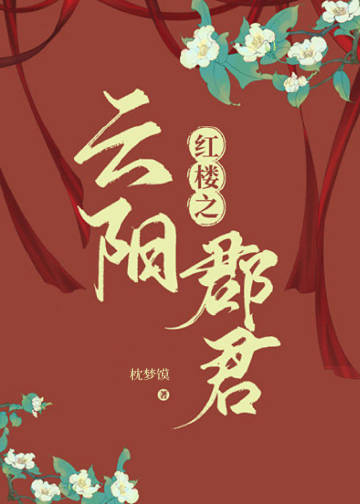
The eldest princess of the dynasty was seriously injured and comatose. After Zhao Lingyi regained consciousness, she learned the news: her mother, Queen Mother Miao, took pity on her and decided to adopt a cub for herself.
Zhao Lingyi shook his head like a rattle.
The prince-in-law died young and had no children, but he was still a princess. Where could such a good thing be found?
Whoever wants to raise cubs can raise them, she doesn't want to be a mother.
Unintentionally, I learned that after passing through the Red Mansion, my beloved sister Lin had just returned to Jia Mansion after her father's death.
Zhao Lingyi: Wait, Queen Mother, you seem to have said that I can adopt a cub?
*
Daiyu never thought that she would have another mother.
Walking into the eldest princess's mansion anxiously, she gradually discovered that life had quietly become turbulent.
Those Ginseng Yangrong Pills that are useless will no longer need to be taken. When she wanted to read a book, she could find rare and unique books all over the world. When noble ladies from other families invite her to visit her, she can also invite them to her "home" in return.
Good health, loyal maid, kind mother-in-law, and two or three close friends.
She had nothing to complain about.
People say that Zhao Lingyi is cold-blooded and ruthless.
She doesn't care about her flesh and blood, and presses hard on her husband's family step by step. The maid made a small mistake and was beaten to death with a stick.
She knows the truth and begs to differ.
Until——
One day, Zhou Rui's family gossiped about her behind her back: "Miss Lin's body can fall down when the wind blows, but the eldest princess Yongjia doesn't mind?"
Zhao Lingyi passed by and said, "I don't mind sewing your mouth shut."
Then, Zhou Ruijia's mouth was "sewn" shut with paste.
Her: What to do? Still beg to differ.
Her adoptive mother is obviously the best in the world!
*
Zhao Lingyi's daily life VS Daiyu's daily life
People: Princess Yongjia doesn't know how to raise children.
Zhao Lingyi: Raise Yu'er, protect Yu'er, love Yu'er! My daughter is really great!
Everyone: Princess Yongjia is a troublemaker.
Daiyu: My adoptive mother is the best in the world!
Tips:
1. Zhao Lingyi was 30 years old before time travel and 35 years old in the book.
2. The dynasty is just an illusion, don't pay attention to it.
3. This article is about Hei Xiangyun, Hei Xiren, and Mrs. Hei Wang. It has the emotional tendency of the author. If you don't like it, don't read it.
This article will be added to V on August 4th, when a 10,000-word update will be dropped. Little angels, please support me!
——*New article preview*——
"The First Lady of the Ming Dynasty"
Xu Miaorong never thought of becoming the most noble lady in the Ming Dynasty.
After all, before time travel, she was just a salesperson and could do nothing but make money.
After time travel, although she was a noble lady, her name was just that.
Looking at her husband who was looking coldly at her, and looking at her husband's empty wallet, Xu Miaorong turned her head resolutely and decided to run towards the new era——
Brother-in-law Zhu Di is about to ascend the throne, and the Yongle era is about to begin. The times are calling, and we are passing by, why did we miss it?
Complying with the call of the times, she rolled up her sleeves and said, just do it!
The big bet with Zhu Di was won, and the wallet that was originally not rich was bulging.
By mistake, it was recorded in the history books, and the future cabinet boss came to visit.
She became the hope of Ming Dynasty's literary world, and the man who hated her turned around.
She single-handedly led the Ming Dynasty's economy, and the entire Ming Dynasty embraced her!
Xu Miaorong: What's going on?
She just wanted to invest in herself, but ended up building the Ming Dynasty?
She is for herself, Daming is for her.
This flourishing Ming Dynasty is so fragrant!
*
Small theater:
The Ming Dynasty developed rapidly at an unprecedented speed. One day, a historian wrote a pen and wanted to truthfully record the life of the person who had won the "Medal of the Ming Dynasty".
First place: Princess An Xu Miaorong.
Historian: Friendly reminder, I won't record it if I talk too much. Please use one sentence to evaluate Princess An.
Zhu Di: I have never seen such a greedy person!
Clan: I have never seen such a wicked person!
Zhu Zhanji: I have never seen such a far-sighted person!
Yang Rong: I have never seen such a talented person!
Xu Huizu:......
Zhu Gaochi:...
Zhu Ying:......
...
Historian: ...
One sentence per person or one page of history cannot be recorded. Forget it, he'd better ask Princess An.
Historian: Princess An, how would you evaluate yourself?
Xu Miaorong: What they said is right, and I don't deny it.
Purpose: Parents love their children and have far-reaching plans
Reader comments
The fateful game under the Taoist robe - Comment on the tension in the opening chapter of "The Prince Always Wants to Take Advantage of My Merits"
When Qingyuan stood in front of Pingxi Prince's Mansion, holding a green bamboo stick, the visual collision between the Taoist robe and the Zhumen had already laid the groundwork for this fateful game that spanned life and death. "My Prince Always Wants to Take Advantage of My Merits" opens with just two chapters, creating a breathtaking narrative tension in the intertwining of historical machinations and fantasy settings, allowing the theme of rebirth and revenge to shine with a different kind of dramatic brilliance.
The dramatic tension of identity inversion is the most subtle layout in the opening chapter. Qingyuan, as a Taoist nun, asks the prince to fulfill her engagement, which in itself constitutes a strong identity paradox - the Taoist robe of birth and the engagement of the world, the humbleness of the orphan and the dignity of the palace, the cannon fodder of the past life and the game player of this life. Multiple contrasts broke out in front of the vermilion gate. The author uses the curiosity of passers-by about the Taoist robes, the scolding of the guards, and the comments of onlookers to highlight Qingyuan's incompatibility, but also lays the turning point when she hands over the token. This "reasonableness in the unreasonable" is exactly the charm of fantasy narratives: the dim light of the peach wood hairpin implies extraordinary power, and the aquatic kit contains the key to breaking the rules, making the seemingly absurd request always pending.
The narrative ingenuity of the double-line foreshadowing is even more ingenious. The bright line is Qingyuan's rebirth and self-rescue in order to save the Taoist temple. From the details of her journey on her feet to the unforgettable memory of the Emperor Fenguan, her motivation and sense of urgency are clearly outlined; the hidden line is quietly unfolded through the perspective of Pei Huaian (Li Fuking). The bloody killings in the martial arts arena, the secrets of the golden pupils, and the cleaning of Xizuo all hint at the undercurrent of power within the palace. When the two clues intersect at the "engagement contract" point, a shocking information gap is formed - Qingyuan does not know that the other party is a lonely soul who has taken away her body, and Li Fuking does not know the cause and effect of her previous life. This information asymmetry is like a taut bowstring, making every confrontation full of unknown dangers.
Character creation can be seen in the details. Qingyuan's growth arc is particularly eye-catching. From the panic when she was scolded by the guards at the beginning, to the desperate moment when the knife was placed on her neck, her courage was not achieved overnight, but was tempered by her survival instinct and obsession with revenge. The cry of "I would rather die than see the prince" is not only a desperate counterattack by the weak, but also a wise strategic choice, which perfectly combines the coldness of the Taoist nun with the tenacity of the orphan girl. Li Fuking's portrayal is full of a sense of ascetic oppression. His precision and ruthlessness when shooting arrows and his calmness in handling affairs imply what kind of turmoil is contained in this body. His examination of the kit and his "hanging" treatment of Qing Yuan are not only in line with the suspicion of those in power, but also conceal the special perception of supernatural existence.
The mise-en-scène at the beginning is very graphic. The chill after the autumn rain echoes the chilling aura of the palace. The sound of green bamboo sticks hitting the ground creates an auditory counterpoint with the sound of arrows in the martial arts arena. The simplicity of the Taoist robes and the luxury of the python-patterned brocade clothing create a visual impact. These sensory details not only create a real historical atmosphere, but also coincide with the characters' mood - the fallen leaves at Qingyuan's feet symbolize the impermanence of fate, the wild goose feather arrows shot by Li Fuking symbolize control and killing, and the opening and closing of the red door becomes the watershed between two worlds and two destinies.
When Zhan Jiao said "come with me", the story had just begun to reveal a corner of fate. This encounter that began with a marriage contract will eventually evolve into a grander game in the entanglement of merit and power, past life and present life. The author wraps the fantasy core with a solid historical texture, making rebirth no longer a simple golden finger, but a road to redemption with the weight of cause and effect. Perhaps just like the indistinguishable light on Qing Yuan's bun, everyone's destiny hides unknown secrets, and the process of uncovering the secrets is the most fascinating part of this story.


The fateful game under the Taoist robe - Comment on the tension in the opening chapter of "The Prince Always Wants to Take Advantage of My Merits" When Qingyuan stood in front of Pingxi Prince's Mansion, holding a green bamboo stick, the visual collision between the Taoist robe and the Zhumen had already laid the groundwork for this fateful game that spanned life and death. "My Prince Always Wants to Take Advantage of My Merits" opens with just two chapters, creating a breathtaking narrative tension in the intertwining of historical machinations and fantasy settings, allowing the theme of rebirth and revenge to shine with a different kind of dramatic brilliance. The dramatic tension of identity inversion is the most subtle layout in the opening chapter. Qingyuan, as a Taoist nun, asks the prince to fulfill her engagement, which in itself constitutes a strong identity paradox - the Taoist robe of birth and the engagement of the world, the humbleness of the orphan and the dignity of the palace, the cannon fodder of the past life and the game player of this life. Multiple contrasts broke out in front of the vermilion gate. The author uses the curiosity of passers-by about the Taoist robes, the scolding of the guards, and the comments of onlookers to highlight Qingyuan's incompatibility, but also lays the turning point when she hands over the token. This "reasonableness in the unreasonable" is exactly the charm of fantasy narratives: the dim light of the peach wood hairpin implies extraordinary power, and the aquatic kit contains the key to breaking the rules, making the seemingly absurd request always pending. The narrative ingenuity of the double-line foreshadowing is even more ingenious. The bright line is Qingyuan's rebirth and self-rescue in order to save the Taoist temple. From the details of her journey on her feet to the unforgettable memory of the Emperor Fenguan, her motivation and sense of urgency are clearly outlined; the hidden line is quietly unfolded through the perspective of Pei Huaian (Li Fuking). The bloody killings in the martial arts arena, the secrets of the golden pupils, and the cleaning of Xizuo all hint at the undercurrent of power within the palace. When the two clues intersect at the "engagement contract" point, a shocking information gap is formed - Qingyuan does not know that the other party is a lonely soul who has taken away her body, and Li Fuking does not know the cause and effect of her previous life. This information asymmetry is like a taut bowstring, making every confrontation full of unknown dangers. Character creation can be seen in the details. Qingyuan's growth arc is particularly eye-catching. From the panic when she was scolded by the guards at the beginning, to the desperate moment when the knife was placed on her neck, her courage was not achieved overnight, but was tempered by her survival instinct and obsession with revenge. The cry of "I would rather die than see the prince" is not only a desperate counterattack by the weak, but also a wise strategic choice, which perfectly combines the coldness of the Taoist nun with the tenacity of the orphan girl. Li Fuking's portrayal is full of a sense of ascetic oppression. His precision and ruthlessness when shooting arrows and his calmness in handling affairs imply what kind of turmoil is contained in this body. His examination of the kit and his "hanging" treatment of Qing Yuan are not only in line with the suspicion of those in power, but also conceal the special perception of supernatural existence. The mise-en-scène at the beginning is very graphic. The chill after the autumn rain echoes the chilling aura of the palace. The sound of green bamboo sticks hitting the ground creates an auditory counterpoint with the sound of arrows in the martial arts arena. The simplicity of the Taoist robes and the luxury of the python-patterned brocade clothing create a visual impact. These sensory details not only create a real historical atmosphere, but also coincide with the characters' mood - the fallen leaves at Qingyuan's feet symbolize the impermanence of fate, the wild goose feather arrows shot by Li Fuking symbolize control and killing, and the opening and closing of the red door becomes the watershed between two worlds and two destinies. When Zhan Jiao said "come with me", the story had just begun to reveal a corner of fate. This encounter that began with a marriage contract will eventually evolve into a grander game in the entanglement of merit and power, past life and present life. The author wraps the fantasy core with a solid historical texture, making rebirth no longer a simple golden finger, but a road to redemption with the weight of cause and effect. Perhaps just like the indistinguishable light on Qing Yuan's bun, everyone's destiny hides unknown secrets, and the process of uncovering the secrets is the most fascinating part of this story.